
King cake is more than just a sweet treat. It’s a soft, rich, celebratory dessert that brings warmth, tradition, and fun to any kitchen. With its tender dough, cinnamon-sugar filling, sweet glaze, and colorful topping, king cake looks impressive but is very doable for home bakers. Even if you’ve never worked with yeast before, this is a recipe you can master with patience and simple steps.
This guide covers everything you need to know about king cake, including what it is, why it’s special, how to make it from scratch, common mistakes, variations, substitutions, storage tips, and expert baking advice so you can bake with confidence.
What Is King Cake?
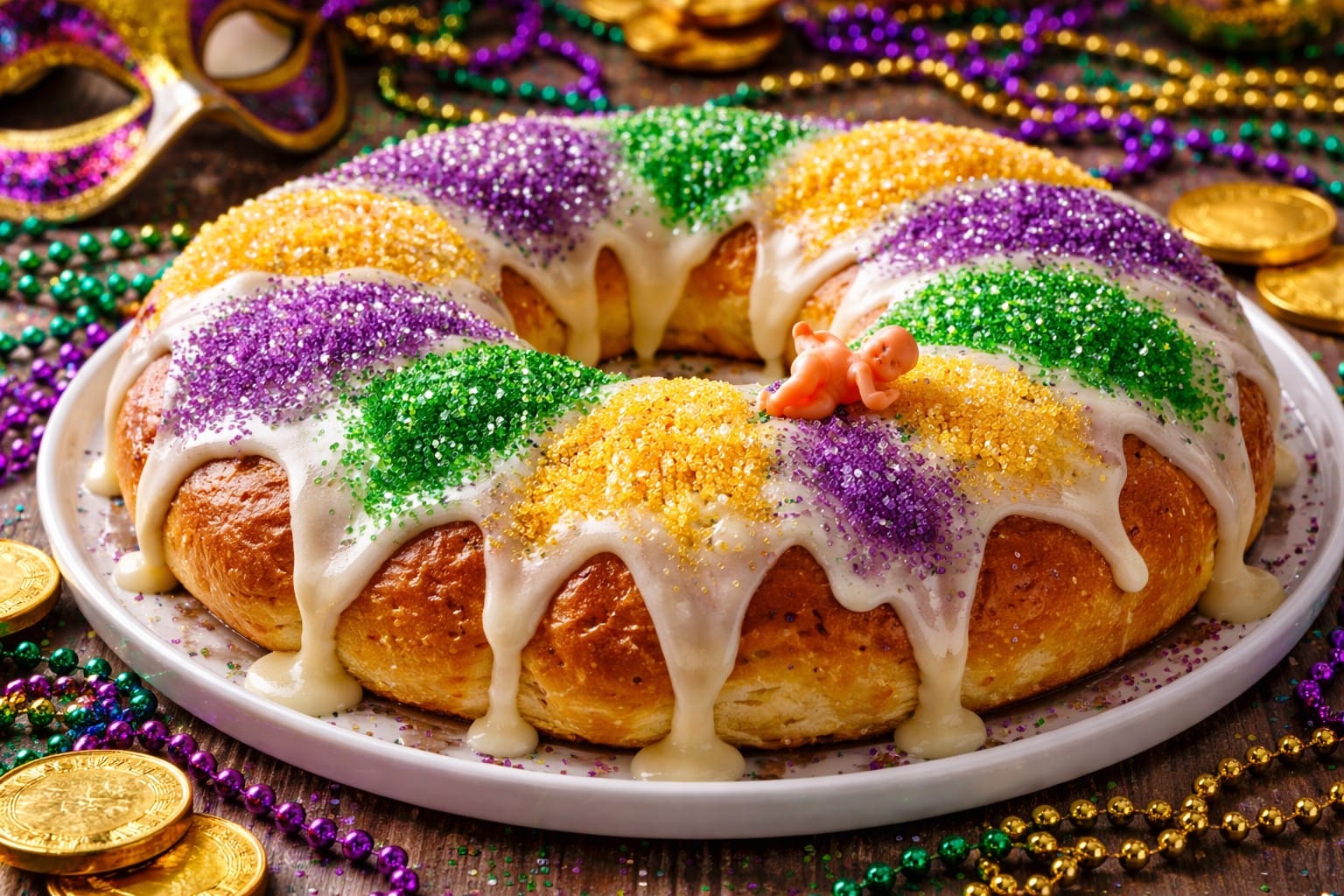
King cake is a yeast-raised cake traditionally associated with Mardi Gras celebrations. It’s shaped into a ring or oval, filled with cinnamon sugar or cream cheese, and topped with icing and purple, green, and gold sugar. A small plastic baby is often hidden inside the cake, and whoever finds it is said to have good luck.
Texture-wise, king cake is closer to a soft sweet bread than a traditional cake. Think of it as a cross between brioche and a cinnamon roll, shaped into a festive circle.
The History and Meaning of King Cake
King cake traces its roots back to Europe and is linked to Epiphany, which celebrates the Three Kings. The cake made its way to Louisiana, where it became a major part of Carnival season. Over time, it evolved into the colorful, indulgent dessert many people recognize today.
The traditional colors each have meaning. Purple represents justice, green represents faith, and gold represents power. While many people enjoy king cake purely for the flavor, these traditions add to its charm and history.
Ingredients You’ll Need
King cake uses simple ingredients, but each one plays an important role in creating its signature texture and flavor.
Dough Ingredients
All-purpose flour provides structure while keeping the cake soft. Granulated sugar lightly sweetens the dough without overpowering the filling. Yeast gives the cake its rise and fluffy texture. Warm milk activates the yeast and adds richness. Butter and eggs create a tender crumb, while salt balances the sweetness.
Filling Ingredients
Brown sugar and cinnamon form the classic filling. Softened butter helps the filling spread evenly and keeps it rich and gooey.
Icing and Topping
Powdered sugar creates a smooth glaze when mixed with milk and vanilla. Colored sanding sugar adds the traditional festive look.
Tools and Equipment
You don’t need special baking equipment to make king cake. A large mixing bowl, measuring cups, rolling pin, baking sheet, parchment paper, and a mixer or your hands for kneading are enough. A stand mixer is helpful but not required.
How to Make King Cake Step by Step
Activate the Yeast
Warm the milk until it feels warm but not hot. Stir in a small amount of sugar and the yeast, then let it sit for several minutes. When the mixture becomes foamy, the yeast is active and ready.
Make the Dough
Combine flour and salt in a bowl. Add the yeast mixture, eggs, and melted butter. Mix until a soft dough forms. Knead the dough until it becomes smooth and elastic. It should feel soft and slightly tacky, not stiff or dry.
First Rise
Place the dough in a lightly greased bowl, cover it, and let it rise in a warm place until doubled in size. This usually takes about one to one and a half hours. This rise is essential for a light, fluffy cake.
Prepare the Filling
Mix softened butter with brown sugar and cinnamon until smooth. The filling should be spreadable but thick enough not to run.
Shape the Cake
Roll the dough into a large rectangle. Spread the filling evenly, leaving a small border around the edges. Roll the dough up tightly like a jelly roll, then shape it into a ring on a lined baking sheet. Pinch the ends together to seal.
Second Rise
Cover the shaped dough and let it rise again until slightly puffy. This second rise gives the king cake its tender texture.
Bake
Bake the cake in a preheated 350°F (175°C) oven until golden brown and fully baked. Let it cool before decorating.
Ice and Decorate
Mix powdered sugar, milk, and vanilla until smooth. Drizzle the icing over the cooled cake and immediately sprinkle with colored sugar. Insert the plastic baby from the bottom once the cake has cooled completely.
Tips for the Best King Cake
Use room-temperature ingredients so the dough mixes evenly. Measure flour carefully to avoid a dry cake. Be patient with the rising time, as rushing this step leads to dense dough. Let the cake cool completely before icing so the glaze stays in place.
A good king cake should be soft, slightly chewy, and rich without feeling heavy.
Common Mistakes and How to Avoid Them
Dry king cake is often caused by too much flour or overbaking. Dense texture usually means the dough didn’t rise long enough. Filling that leaks out happens when the dough isn’t rolled tightly or sealed well. Icing that melts away is a sign the cake was still warm when decorated.
Popular King Cake Variations
Classic cinnamon king cake is just the beginning. Cream cheese king cake adds a rich, tangy layer. Praline king cake includes pecans for a Southern twist. Chocolate king cake adds chocolate chips or cocoa to the filling. Savory versions with cheese or sausage are less traditional but popular for brunch.
Ingredient Substitutions
Milk can be replaced with plant-based milk. Butter can be swapped for dairy-free alternatives. Instant yeast can replace active dry yeast without blooming. Egg substitutes work, though the texture may be slightly different.
How to Store King Cake
At room temperature, king cake stays fresh for up to two days when tightly covered. In the refrigerator, it keeps for about five days. For longer storage, freeze the cake without icing, then thaw and decorate before serving.
Serving Suggestions
King cake is best served at room temperature. It pairs well with coffee, hot chocolate, or café au lait. Extra colored sugar on top adds visual appeal for celebrations.
Frequently Asked Questions
King cake is closer to sweet bread than traditional cake. The baby inside is optional but traditional. King cake can be made a day ahead and decorated just before serving. If your king cake isn’t fluffy, the yeast may be inactive or the dough may not have risen enough.
Expert Baking Insight
King cake rewards patience. Soft dough, proper rising, and gentle handling make all the difference. The decoration may catch attention, but texture and flavor are what make people come back for another slice.
Final Thoughts
King cake is festive, comforting, and surprisingly approachable for home bakers. With simple ingredients and clear steps, you can create a bakery-style dessert that brings tradition and joy to your table. Once you make king cake from scratch, it quickly becomes a special bake worth repeating year after year.