
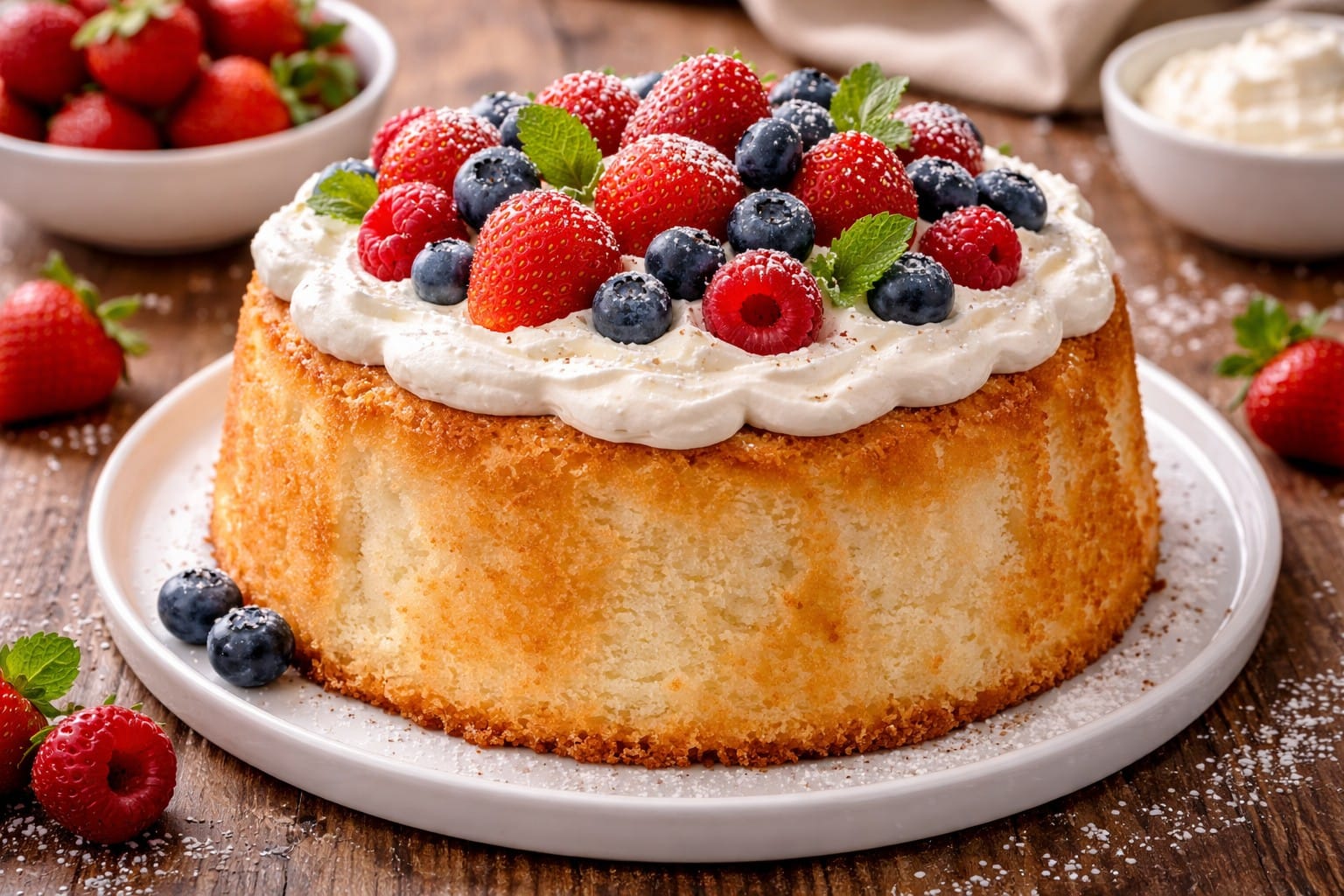
Angel food cake is the definition of light and airy. With its snow-white crumb, soft sponge texture, and delicate sweetness, this cake feels like a cloud on a plate. It’s naturally fat-free, surprisingly simple in ingredients, and perfect when you want a dessert that feels special without being heavy.
Many home bakers feel intimidated by angel food cake because it relies entirely on egg whites, but once you understand the technique, it becomes one of the most rewarding cakes to bake. This complete guide walks you through what angel food cake is, why it works, how to make it step by step, common mistakes, variations, substitutions, storage tips, and expert baking advice so you can get reliable results at home.
What Is Angel Food Cake?
Angel food cake is a foam-style cake made primarily from whipped egg whites, sugar, flour, and flavoring. Unlike butter cakes or oil-based cakes, it contains no fat. The structure comes from air whipped into the egg whites and stabilized with sugar.
Because there’s no butter or oil to weigh it down, angel food cake bakes up extremely light, tall, and fluffy. The texture is soft and springy, with a mild sweetness that pairs beautifully with fruit, whipped cream, or light sauces.
Think of angel food cake as the opposite of pound cake. Where pound cake is dense and rich, angel food cake is airy and delicate.
Why Angel Food Cake Is Unique
Angel food cake stands out for a few key reasons. It uses a large number of egg whites, usually 10 to 12. It relies on careful mixing rather than creaming or beating fat. It must cool upside down to prevent collapsing. And it’s baked in a special pan that allows the cake to cling to the sides as it rises.
Because of these differences, angel food cake teaches important baking skills like handling egg whites, folding gently, and understanding structure.
Ingredients You’ll Need
Angel food cake uses very few ingredients, which means each one matters.
Egg Whites
Fresh egg whites whip better and create a stronger structure. Avoid carton egg whites if possible, as they don’t always whip as well.
Sugar
Granulated sugar is used to stabilize the egg whites. Some of it is added during whipping, and some is mixed with the flour for even distribution.
Cake Flour
Cake flour is essential. Its lower protein content keeps the cake soft and tender. All-purpose flour will make the cake heavier.
Cream of Tartar
This helps stabilize the egg whites and keeps them from collapsing. If you don’t have it, lemon juice or white vinegar can work in small amounts.
Flavoring
Vanilla extract is classic. Almond extract is also common and adds a subtle bakery-style flavor.
Salt
Just a small amount balances the sweetness and enhances flavor.
Tools and Equipment
Angel food cake requires a few specific tools.
An ungreased tube pan is essential. The center tube helps the cake bake evenly, and the ungreased sides allow the batter to climb and rise properly. Many tube pans have little feet for cooling upside down, which is ideal.
You’ll also need a clean mixing bowl, electric mixer or stand mixer, fine mesh sieve, rubber spatula, and a serrated knife for slicing.
How to Make Angel Food Cake Step by Step
Step 1: Prepare the Pan and Ingredients
Preheat the oven to 350°F (175°C). Do not grease the pan. Sift the cake flour with part of the sugar and set aside. Make sure your bowl and beaters are completely clean and free of grease.
Even a small amount of fat can prevent egg whites from whipping properly.
Step 2: Whip the Egg Whites
Start beating the egg whites on medium speed until foamy. Add cream of tartar and salt, then continue beating until soft peaks form. Gradually add the remaining sugar while beating, then increase speed until the whites form stiff, glossy peaks.
The whites should stand up straight when you lift the beaters but still look smooth, not dry.
Step 3: Add Flavoring
Gently beat in the vanilla or almond extract just until combined. Do not overmix at this stage.
Step 4: Fold in the Flour Mixture
Sift the flour and sugar mixture over the egg whites in several additions. Use a spatula to gently fold it in, cutting down through the center and lifting the mixture up and over.
This step should be slow and gentle. Folding too aggressively will deflate the batter.
Step 5: Fill the Pan
Spoon the batter into the pan and gently smooth the top. Run a knife through the batter to remove large air pockets.
Step 6: Bake
Bake until the cake is golden on top and springs back lightly when touched. This usually takes about 35 to 40 minutes.
Step 7: Cool Upside Down
Immediately invert the pan and let the cake cool completely upside down. This prevents the cake from collapsing as it cools.
Once fully cooled, run a knife around the edges and center tube to release the cake.
Tips for Perfect Angel Food Cake
Use room-temperature egg whites for maximum volume. Separate eggs carefully so no yolk gets into the whites. Fold gently and patiently. Never grease the pan. Always cool the cake upside down.
A successful angel food cake should be tall, light, and springy, with no dense or gummy spots.
Common Mistakes and How to Avoid Them
Collapsed cake is usually caused by underwhipped egg whites or cooling the cake right-side up. Dense texture often comes from overmixing or using the wrong flour. Sticky or gummy layers can happen if the cake is underbaked. Dry, crumbly cake usually means the egg whites were overwhipped.
Angel food cake rewards precision, but small adjustments make a big difference.
Flavor Variations
Angel food cake is a great base for gentle flavors.
Lemon angel food cake uses lemon zest and a touch of juice. Chocolate angel food cake includes cocoa powder folded into the flour. Berry angel food cake swirls in pureed strawberries or raspberries. Coconut angel food cake adds coconut extract and shredded coconut on top.
Keep additions light so they don’t weigh down the batter.
Toppings and Serving Ideas
Angel food cake shines with simple toppings.
Fresh berries and whipped cream are classic. A dusting of powdered sugar keeps things elegant. Fruit compote adds moisture and color. Light chocolate drizzle works well if used sparingly.
Serve with a serrated knife and gentle sawing motion to avoid squishing the cake.
Ingredient Substitutions
Cream of tartar can be replaced with lemon juice or vinegar. Vanilla extract can be swapped for almond or citrus extracts. Sugar substitutes generally don’t work well because sugar plays a structural role, not just sweetness.
Angel food cake is naturally dairy-free and fat-free, which makes it suitable for many diets without modification.
How to Store Angel Food Cake
Store angel food cake at room temperature, covered, for up to two days. In the refrigerator, it can last up to five days but may dry out slightly.
To freeze, wrap slices tightly and freeze for up to two months. Thaw at room temperature before serving.
Avoid storing angel food cake in airtight containers that trap moisture, as this can make the surface sticky.
Frequently Asked Questions
Angel food cake cannot be made without eggs because egg whites are essential to its structure. A regular cake pan won’t work well because the cake needs to cling to the sides. If your cake shrank, the egg whites were likely underwhipped or the cake cooled improperly. Angel food cake is done when it springs back lightly and doesn’t feel wet.
Expert Baking Insight
Angel food cake is all about balance. The right amount of air, the right folding technique, and the right cooling method work together. Once you learn to read egg whites and move gently, this cake becomes predictable and reliable. It’s a great confidence builder for any baker.
Final Thoughts
Angel food cake proves that simple ingredients can create something truly special. Light, airy, and elegant, it’s perfect for warm weather, celebrations, or anytime you want a dessert that doesn’t feel heavy. With patience and care, this classic cake is well within reach of home bakers and worth mastering.
Once you bake a successful angel food cake from scratch, you’ll understand why it has remained a favorite for generations.