
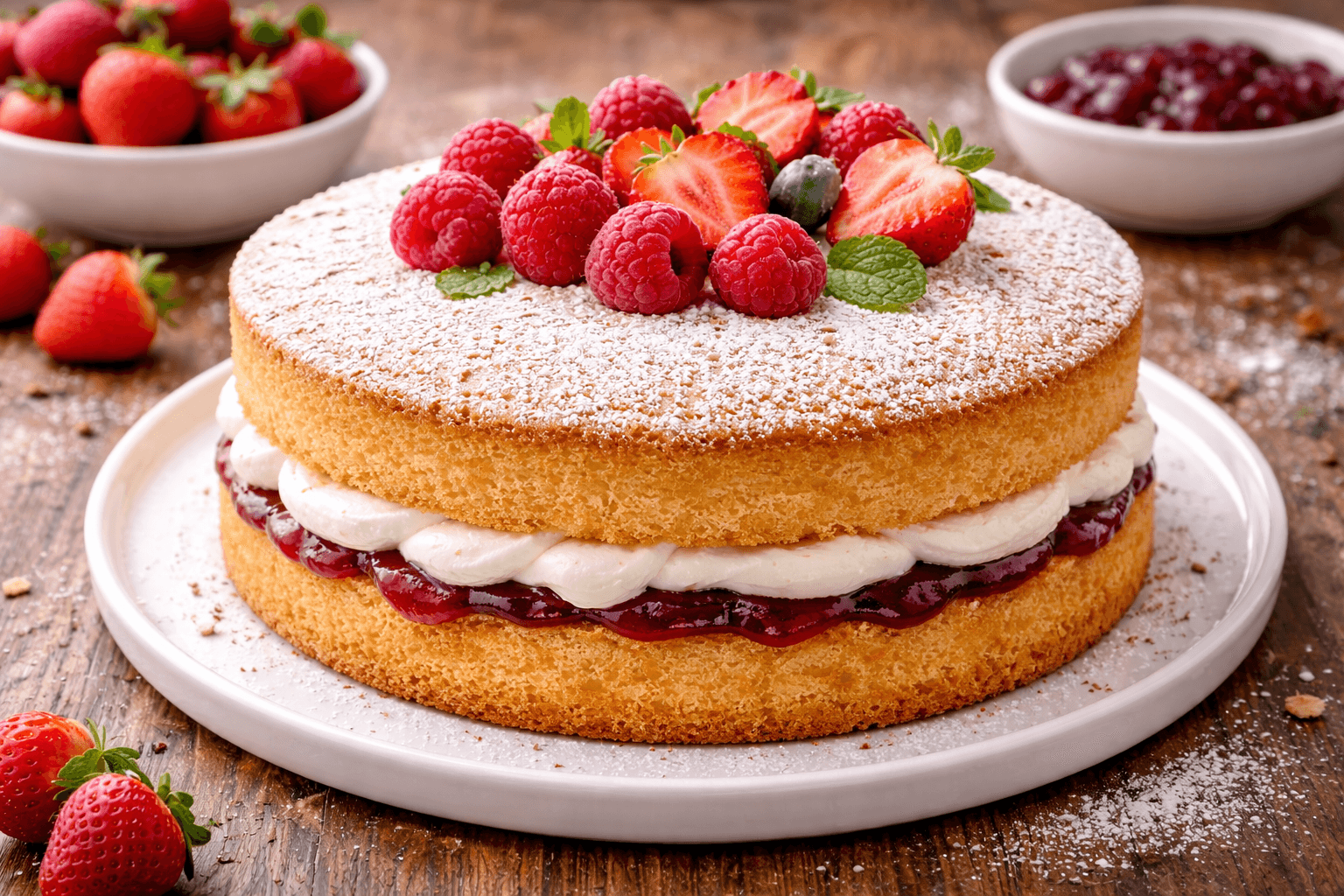
Victoria cakes, often called Victoria sponge cakes, are a true classic in home baking. Light, soft sponge layers filled with jam and cream create a cake that feels elegant yet simple. This is the kind of cake that doesn’t rely on heavy frosting or bold flavors. Instead, it shines through balance, texture, and good technique.
This guide explains what Victoria cakes are, how they differ from other sponge cakes, ingredients, step-by-step baking instructions, tips, common mistakes, variations, substitutions, storage, FAQs, and expert insights, all written clearly for home bakers.
What Are Victoria Cakes?
Victoria cakes are traditional British sponge cakes made with two light layers, sandwiched together with jam and whipped cream or buttercream. The top is usually left plain or lightly dusted with powdered sugar.
Named after Queen Victoria, this cake became popular as part of afternoon tea. The focus is on a tender crumb, even rise, and gentle sweetness rather than decoration.
Think of Victoria cake as a lesson in simplicity. When done right, it tastes clean, soft, and comforting.
What Makes Victoria Cakes Special?
Several details set Victoria cakes apart. Equal amounts of butter, sugar, eggs, and flour create balance. The sponge is airy but not dry. Fillings are light and never overpower the cake itself. Because there’s nowhere to hide mistakes, good mixing and baking matter more here than fancy decoration.
This cake rewards precision and gentle handling.
Ingredients You’ll Need
Victoria cakes use very basic ingredients, which means quality and accuracy are important.
Sponge Cake Ingredients
Unsalted butter provides richness and flavor. Granulated sugar adds sweetness and structure. Eggs give lift and softness. Self-rising flour creates a light crumb. Vanilla extract adds gentle flavor. Milk is sometimes added to loosen the batter.
Filling Ingredients
Strawberry or raspberry jam is traditional. Whipped cream or light buttercream adds softness between the layers. Powdered sugar is used for dusting the top.
Tools and Equipment
You’ll need two round cake pans, mixing bowls, a hand or stand mixer, measuring tools, a spatula, parchment paper, and a cooling rack. A serrated knife helps with clean slicing.
How to Make Victoria Cakes Step by Step
Step 1: Prepare the Pans
Preheat your oven to 350°F (175°C). Grease and line two cake pans with parchment paper so the cakes release easily.
Step 2: Cream Butter and Sugar
Beat softened butter and sugar together until pale and fluffy. This step adds air, which helps the sponge rise evenly.
Step 3: Add Eggs and Vanilla
Add the eggs one at a time, mixing well after each addition. Stir in vanilla extract. If the mixture looks slightly curdled, a spoonful of flour will bring it back together.
Step 4: Fold in the Flour
Gently fold in the self-rising flour using a spatula. Add a small splash of milk if the batter feels too thick. The texture should drop easily from a spoon.
Step 5: Bake
Divide the batter evenly between the pans. Bake until the cakes are golden and spring back when lightly pressed. Let them cool briefly, then turn out onto a rack to cool completely.
Step 6: Fill and Assemble
Spread jam over one sponge layer. Add whipped cream or buttercream, then place the second sponge on top. Finish with a light dusting of powdered sugar.
Tips for Perfect Victoria Cakes
Use room-temperature ingredients for smooth batter. Weigh ingredients when possible for accuracy. Avoid overmixing once flour is added. Bake the layers on the same oven rack so they rise evenly. Let the cakes cool fully before filling to prevent melting.
A good Victoria cake should be light, soft, and evenly baked with no domed tops.
Common Mistakes and How to Avoid Them
Dense sponge usually means overmixing or under-creaming the butter and sugar. Dry texture often comes from overbaking. Uneven layers can result from poorly measured batter. Jam leaking out happens when too much filling is used.
Victoria cakes are simple, but they demand care.
Victoria Cake Variations
Victoria cakes adapt beautifully while keeping their classic feel.
Lemon Victoria cake adds lemon zest to the sponge and lemon curd as filling. Chocolate Victoria cake uses cocoa powder in the batter. Berry Victoria cake includes fresh berries with the cream. Mini Victoria cakes are perfect for individual servings.
Even with variations, restraint keeps the cake elegant.
Ingredient Substitutions
All-purpose flour with baking powder can replace self-rising flour if needed. Dairy-free butter and plant-based milk work well for dairy-free versions. Jam can be swapped for curd or fruit compote. Whipped cream can be replaced with lightly sweetened mascarpone.
Avoid heavy frostings, as they overpower the sponge.
How to Store Victoria Cakes
Victoria cakes are best eaten the day they’re assembled. When stored, keep them covered in the refrigerator for up to two days. Bring slices to room temperature before serving for the best texture.
Unfilled sponge layers can be wrapped and frozen for up to one month.
Serving Suggestions
Serve Victoria cake with tea or coffee for a classic experience. Clean slices look best when cut with a serrated knife using a gentle sawing motion. Keep plating simple to let the cake speak for itself.
Frequently Asked Questions
Victoria cakes traditionally use jam and cream, not buttercream-heavy frosting. The sponge should be pale and soft, not browned and crusty. Baking both layers together helps ensure even texture. This cake is meant to be light rather than rich.
Expert Baking Insight
Victoria cakes teach an important baking lesson. When ingredients are simple, technique matters more. Careful mixing, gentle folding, and accurate baking times create a cake that feels effortless yet refined. Once you master this sponge, many other cakes become easier.
Final Thoughts
Victoria cakes prove that simple baking can be just as impressive as elaborate desserts. With soft sponge layers, gentle sweetness, and classic fillings, this cake remains a favorite for good reason.
Once you perfect a Victoria cake at home, it becomes a reliable go-to for everyday treats and special moments alike.