
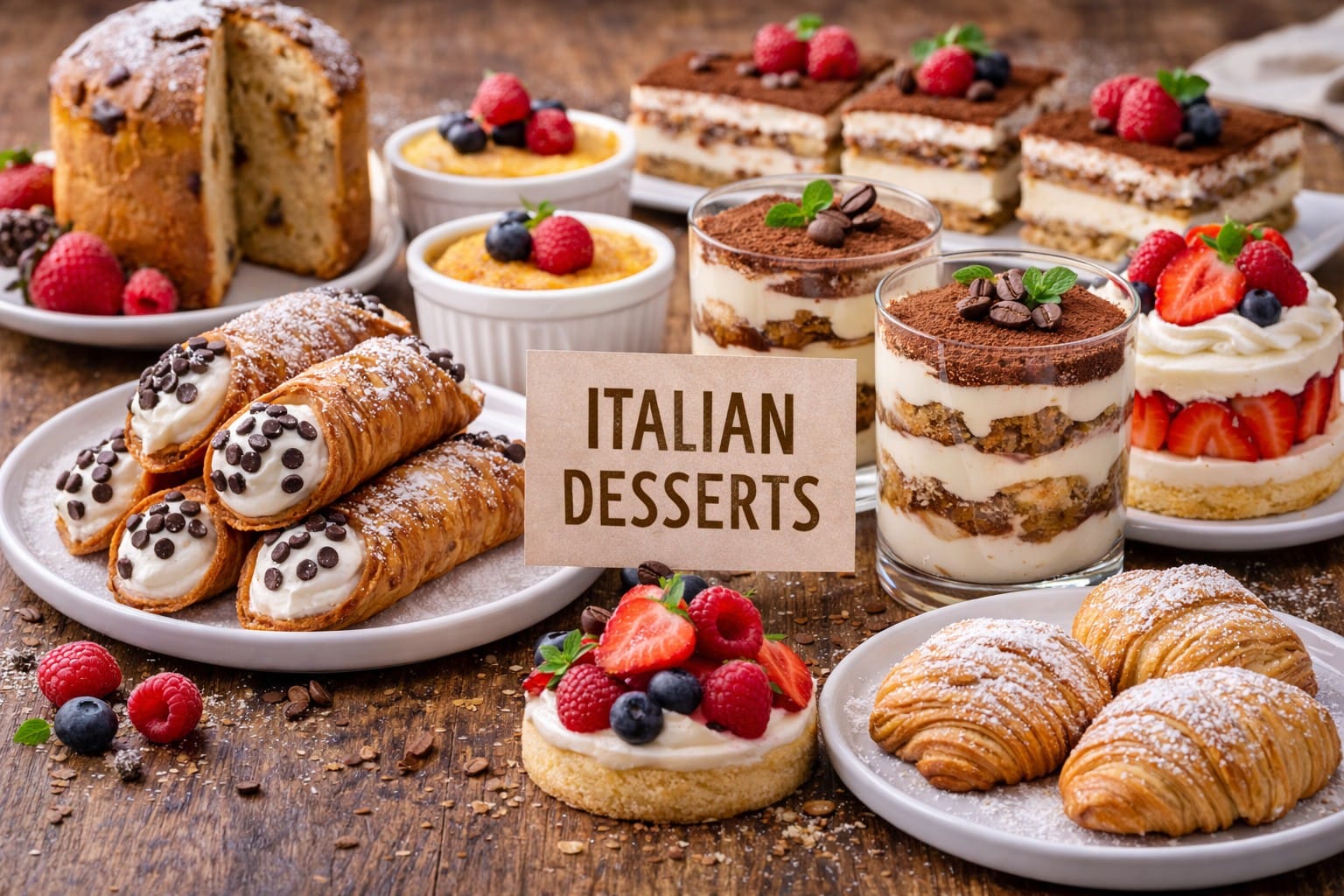
Italian desserts have a special kind of charm. They’re not about heavy sweetness or flashy decoration. Instead, they focus on simple ingredients, balanced flavors, and textures that feel comforting and familiar. Many Italian desserts are surprisingly easy to make at home, even if you’re not an experienced baker.
This guide explores what makes Italian desserts unique, classic Italian sweets, key ingredients, easy homemade options, tips, common mistakes, variations, substitutions, storage, FAQs, and expert insights, all written with home bakers in mind.
What Makes Italian Desserts Different?
Italian desserts are built on restraint. Sugar is used carefully. Flavors are clean and recognizable. Texture matters just as much as taste. Rather than piling on frosting or fillings, Italian baking lets ingredients speak for themselves.
Another defining feature is freshness. Many desserts are best eaten the same day or shortly after making them. Creams are light, pastries are delicate, and cakes are often paired with coffee instead of eaten alone.
If you enjoy desserts that feel satisfying without being overwhelming, Italian sweets are a perfect match.
Classic Italian Desserts Everyone Should Know
Italy has hundreds of regional desserts, but a few classics are loved around the world.
Tiramisu
Tiramisu is a no-bake dessert made with espresso-soaked ladyfingers, mascarpone cream, and cocoa powder. It’s rich yet airy, with bitterness from coffee balancing the sweetness. Proper chilling is key to its texture.
Cannoli
Cannoli are crisp pastry shells filled with sweetened ricotta cream. The contrast between crunchy shell and creamy filling is what makes them special. They’re best filled just before serving to keep the shells crisp.
Panna Cotta
Panna cotta is a silky cream dessert set with gelatin. It’s lightly sweet and often served with fruit sauce or caramel. Because it’s simple, quality cream and careful measuring matter.
Torta della Nonna
This custard-filled cake has a soft crust, creamy center, and pine nuts on top. It’s comforting and homey, the kind of dessert that feels like it came straight from a family kitchen.
Biscotti
Biscotti are twice-baked cookies designed for dipping into coffee or wine. They’re firm, lightly sweet, and perfect for storage.
Italian Cakes and Baked Desserts
Italian cakes are usually lighter than American-style cakes and less frosted.
Olive oil cake uses olive oil instead of butter, giving it a moist crumb and subtle flavor. Ricotta cake stays soft and tender thanks to the cheese. Semolina cake has a slightly grainy texture that pairs well with citrus or syrup. Panettone, a holiday favorite, is a tall, airy bread-like cake filled with dried fruit.
These cakes rely on texture and flavor rather than decoration.
Ingredients Commonly Used in Italian Desserts
Understanding a few key ingredients makes Italian baking much easier.
Mascarpone is a rich, creamy cheese used in tiramisu and fillings. Ricotta adds moisture and lightness to cakes and pastries. Espresso or strong coffee brings bitterness and depth. Citrus zest, especially lemon and orange, adds brightness. Almonds and hazelnuts appear often, either ground or chopped. Olive oil replaces butter in many cakes, creating a soft crumb.
Most Italian desserts use fewer ingredients than you might expect.
Easy Italian Desserts to Make at Home
You don’t need special tools or advanced skills to start.
No-bake tiramisu is beginner-friendly and forgiving. Panna cotta comes together quickly and sets in the fridge. Almond biscotti require simple mixing and baking. Olive oil cake uses one bowl and basic ingredients. Ricotta cookies stay soft and are easy to shape.
Starting with these builds confidence fast.
Tips for Better Results with Italian Desserts
Use good-quality ingredients, especially dairy and chocolate. Measure carefully, since balance matters. Don’t over-sweeten; Italian desserts are meant to be subtle. Let chilled desserts rest properly before serving. Follow texture cues instead of relying only on time.
Patience often makes the biggest difference.
Common Mistakes to Avoid
Overmixing batters can make cakes dense. Too much sugar can overpower delicate flavors. Filling pastries too early leads to soggy textures. Skipping chill time ruins desserts like tiramisu and panna cotta.
Italian desserts reward a calm, steady approach.
Italian Dessert Variations
Many classic desserts have flexible versions.
Tiramisu can be made with fruit instead of coffee. Cannoli fillings can include chocolate chips or citrus zest. Panna cotta works with vanilla, coffee, or berry flavors. Biscotti can include nuts, dried fruit, or chocolate. Olive oil cake pairs beautifully with lemon, orange, or rosemary.
Variations should enhance, not overwhelm.
Ingredient Substitutions
Mascarpone can be replaced with a cream cheese and cream mixture in a pinch. Ricotta should be well-drained if watery. Espresso powder can replace brewed coffee. Almond flour can stand in for ground nuts. Butter can sometimes replace olive oil, though flavor will change.
When substituting, aim to preserve texture first, flavor second.
How to Store Italian Desserts
Many Italian desserts are best fresh. Cakes can be stored covered at room temperature for one to two days. Cream-based desserts should be refrigerated. Biscotti store well for weeks in airtight containers. Freezing works for unfrosted cakes and cookies but not for cream-filled pastries.
Always bring chilled desserts slightly closer to room temperature before serving.
Serving Italian Desserts
Italian desserts are often served in modest portions. Pair them with espresso, cappuccino, or tea. Keep garnishes simple, like cocoa powder, powdered sugar, or fresh fruit.
Presentation should feel relaxed, not overworked.
Frequently Asked Questions
Italian desserts are generally less sweet than American ones. Many can be made a day ahead. Not all require baking. Italian cakes are usually unfrosted or lightly finished. Quality ingredients matter more than decoration.
Understanding these differences helps set the right expectations.
Expert Insight
Italian desserts follow a simple philosophy. Use good ingredients. Treat them gently. Stop before going too far. When home bakers try to “improve” these desserts with extra sugar or toppings, the balance is lost. Respecting the original idea leads to better results.
That mindset is the secret behind their lasting appeal.
Final Thoughts
Italian desserts prove that simplicity can be deeply satisfying. With clean flavors, comforting textures, and approachable techniques, they’re ideal for home bakers who value consistency and balance.
Once you start baking Italian desserts at home, you may find yourself enjoying smaller portions more often, savoring each bite instead of rushing through it. That quiet pleasure is what makes Italian sweets truly special.