
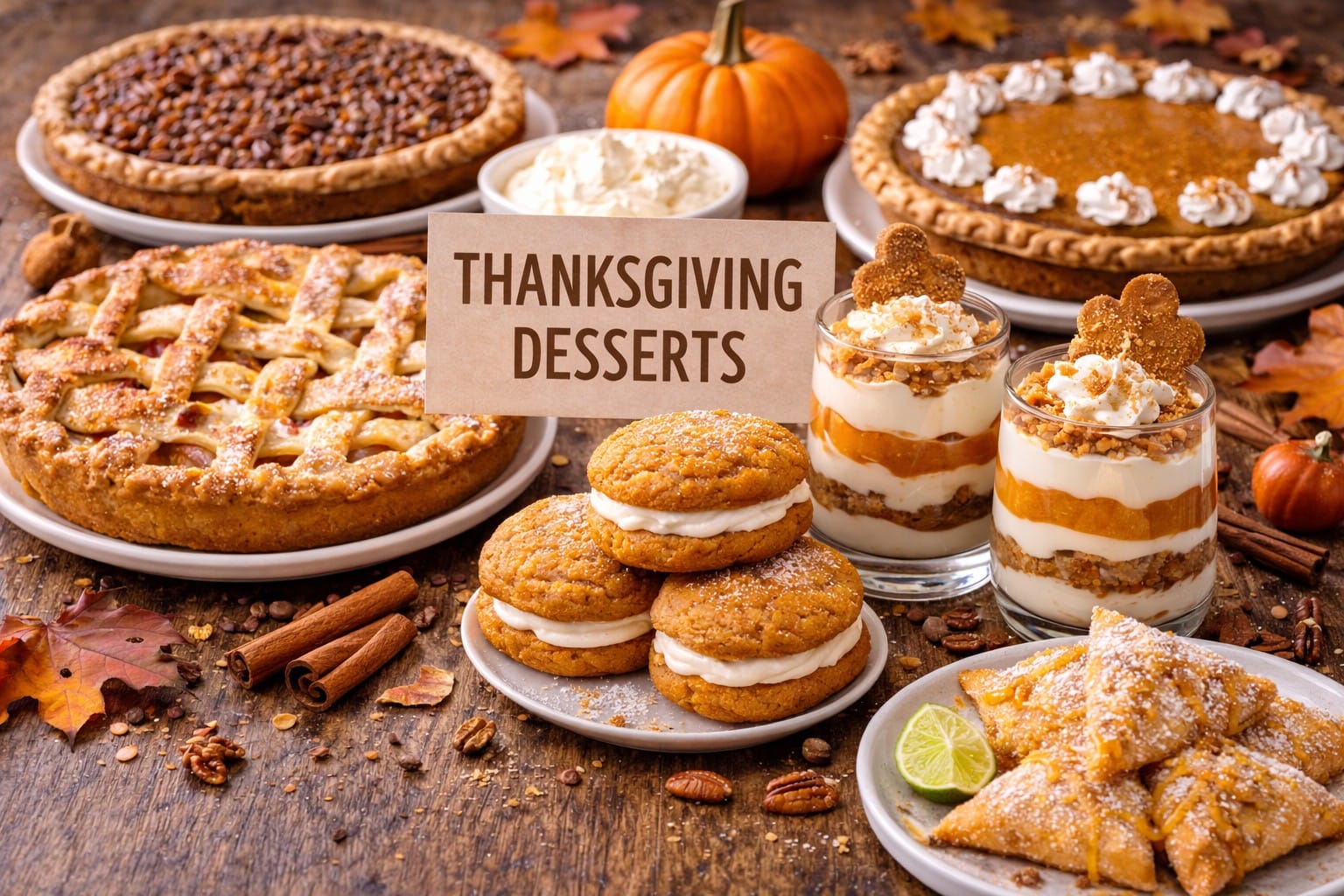
Thanksgiving desserts are all about comfort, nostalgia, and sharing something sweet at the end of a long, cozy meal. These are the desserts people remember. They don’t need fancy decoration or complicated steps. What matters most is warm flavor, familiar spices, and textures that feel like home.
This guide walks through classic Thanksgiving desserts, key ingredients, easy options for home bakers, tips for success, common mistakes, variations, substitutions, storage advice, FAQs, and expert insights, all written to help you bake with confidence.
What Makes Thanksgiving Desserts Unique?
Thanksgiving desserts lean heavily on warmth and tradition. Spices like cinnamon, nutmeg, ginger, and cloves show up again and again. Flavors such as pumpkin, apple, pecan, sweet potato, and cranberry take center stage.
Another defining feature is generosity. These desserts are meant to serve a crowd and travel well. Most can be made ahead, sliced easily, and enjoyed without needing last-minute fuss.
They’re less about perfection and more about comfort.
Classic Thanksgiving Desserts Everyone Expects
Some desserts feel almost mandatory on a Thanksgiving table.
Pumpkin pie is smooth, spiced, and lightly sweet, usually baked in a flaky crust. Apple pie brings tartness and warmth, especially when made with a mix of apple varieties. Pecan pie is rich and gooey with a crunchy top. Sweet potato pie has a creamier texture and deeper flavor than pumpkin. Cranberry desserts add brightness to balance the heavier sweets.
These classics stick around for a reason.
Cakes and Alternative Thanksgiving Desserts
Not every Thanksgiving dessert has to be pie.
Pumpkin roll offers soft cake with cream cheese filling. Spice cake feels warm and moist without being heavy. Apple crisp and crumble deliver fruit flavor with less effort than pie. Bread pudding works beautifully with fall spices and stale bread. Cheesecake, especially pumpkin or caramel versions, adds a creamy option to the table.
Offering variety makes everyone happy.
Key Ingredients in Thanksgiving Desserts
A few ingredients define the season.
Pumpkin purée provides smooth texture and earthy sweetness. Apples bring freshness and structure. Pecans and walnuts add crunch and richness. Brown sugar deepens flavor. Butter creates richness and flakiness. Cream and milk soften textures. Spices tie everything together and create that unmistakable holiday aroma.
Good ingredients do most of the work for you.
Easy Thanksgiving Desserts for Home Bakers
Thanksgiving baking doesn’t need to be stressful.
No-bake pumpkin cheesecake saves oven space. Apple crisp requires simple mixing and forgiving baking. Dump cakes are quick and crowd-friendly. Sheet pan desserts cut easily and travel well. Mini pies help with portion control and presentation.
Choosing simpler desserts keeps the focus on enjoying the day.
Tips for Baking Thanksgiving Desserts Successfully
Bake ahead whenever possible to reduce stress. Taste fillings before baking to adjust sweetness and spice. Use room-temperature ingredients for smooth mixing. Allow pies and cakes to cool fully so they set properly. Keep flavors balanced instead of overly sweet.
Planning ahead is your best tool.
Common Thanksgiving Dessert Mistakes
Over-spicing can overwhelm delicate flavors. Underbaking pies leads to runny fillings. Overbaking dries out cakes and bars. Skipping chill time ruins texture. Trying too many new recipes at once adds unnecessary pressure.
Stick to what you know and add one new item if desired.
Popular Variations and Twists
Classic desserts welcome gentle updates.
Pumpkin pie can include maple syrup or brown butter. Apple pie works well with caramel or cranberry added. Pecan pie becomes lighter with chocolate or bourbon. Sweet potato pie pairs beautifully with marshmallow or pecan topping. Cranberry desserts shine with orange zest.
Small changes keep traditions fresh.
Ingredient Substitutions
Canned pumpkin can replace homemade purée easily. Dairy-free milk works well in most pies. Coconut cream substitutes for heavy cream in many recipes. Gluten-free crusts can be used for pies and cheesecakes. Maple syrup or honey can replace part of the sugar for deeper flavor.
Choose substitutions that preserve texture first.
How to Store Thanksgiving Desserts
Most pies should be refrigerated once cooled. Fruit-based desserts can sit at room temperature for a short time. Cakes store best covered and chilled. Bars and cookies keep well in airtight containers. Freezing works for pies, unfrosted cakes, and cookies made ahead of time.
Labeling containers helps during busy holidays.
Serving Thanksgiving Desserts
Let desserts come slightly closer to room temperature before serving. Offer whipped cream, ice cream, or sauces on the side. Keep slices modest since the meal is already filling. Arrange desserts simply so guests can choose easily.
A relaxed presentation feels more welcoming.
Frequently Asked Questions
Thanksgiving desserts can be made one to three days ahead. Pumpkin and pecan pies need refrigeration. Apple desserts are forgiving and travel well. Not every dessert has to be pie. Simpler recipes often get the best response.
Knowing this takes pressure off the baker.
Expert Insight
The best Thanksgiving desserts aren’t about impressing anyone. They’re about comfort, familiarity, and balance. When bakers focus on flavor and texture instead of decoration, the result feels more meaningful and memorable.
That’s why the simplest desserts are often the most loved.
Final Thoughts
Thanksgiving desserts bring warmth to the table in a quiet, powerful way. They close the meal, spark conversation, and create memories that last far beyond the holiday.
With thoughtful planning and approachable recipes, you can bake desserts that feel special without feeling stressful, and that’s exactly what Thanksgiving is meant to be about.