
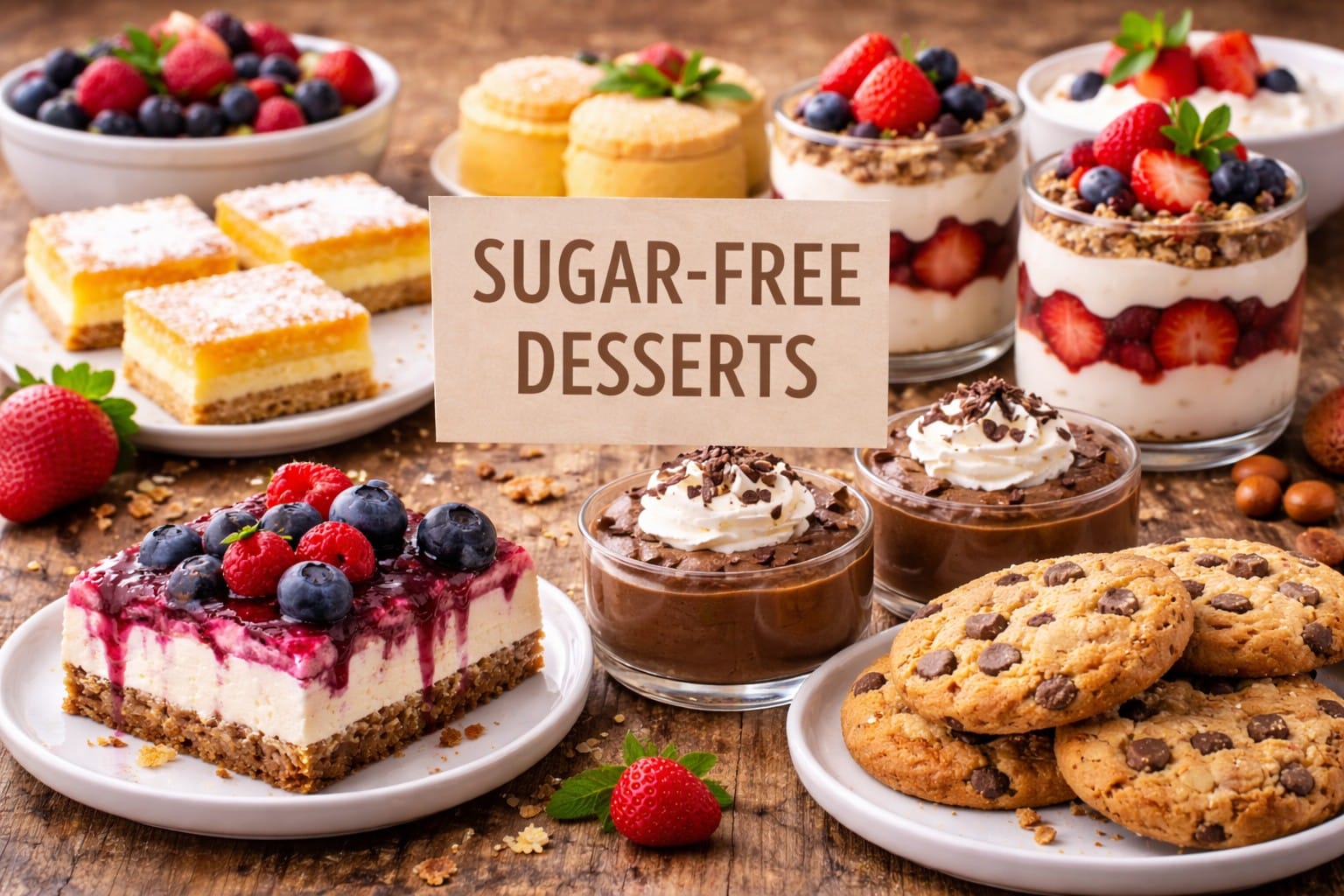
Sugar free desserts don’t have to feel like a compromise. When they’re made with the right ingredients and expectations, they can be rich, satisfying, and genuinely enjoyable. Whether you’re cutting back on sugar for health reasons or simply want lighter sweets, sugar free desserts offer plenty of options that still feel like dessert.
This guide covers what sugar free desserts really are, common sweeteners, essential ingredients, easy recipes, tips for success, common mistakes, variations, substitutions, storage, FAQs, and expert insight, all written for home bakers who want reliable, realistic results.
What Are Sugar Free Desserts?
Sugar free desserts are sweets made without added refined sugar such as white sugar, brown sugar, or corn syrup. Instead, they rely on sugar alternatives or natural sweetness from ingredients like fruit.
This does not mean flavor-free or joyless. It simply means sweetness is handled differently. Texture, fat, and flavor become more important, while sweetness plays a supporting role instead of dominating the dessert.
Understanding that shift makes sugar free baking much more enjoyable.
Sugar Free vs No Sugar Added
These terms often get confused.
Sugar free usually means no added sugar at all, including honey or maple syrup. No sugar added means the recipe doesn’t include added sugars but may still contain natural sugars from fruit or dairy.
Always read labels carefully, especially when baking for specific dietary needs.
Common Sweeteners Used in Sugar Free Desserts
Choosing the right sweetener makes a big difference.
Erythritol is popular because it has little aftertaste and doesn’t raise blood sugar much. Monk fruit is very sweet and often blended with erythritol for balance. Stevia is strong and used in small amounts. Allulose behaves more like real sugar and browns well. Unsweetened applesauce or mashed fruit can also add mild sweetness and moisture.
Each sweetener behaves differently, so results vary.
Key Ingredients for Sugar Free Baking
Without sugar, other ingredients must carry more responsibility.
Almond flour and oat flour add texture and richness. Cocoa powder brings depth and bitterness. Eggs provide structure and moisture. Butter and cream improve mouthfeel. Vanilla, cinnamon, and citrus zest enhance perceived sweetness.
Flavor layering becomes essential.
Easy Sugar Free Desserts to Make at Home
Many sugar free desserts are beginner-friendly.
Sugar free cheesecake stays creamy and rich. Chocolate mousse made with cocoa and cream feels indulgent. Baked custards rely on eggs more than sugar. Peanut butter cookies with sugar substitutes come together quickly. Chia pudding sweetened lightly with fruit works as a no-bake option.
Starting simple builds confidence fast.
Texture Expectations with Sugar Free Desserts
Sugar affects moisture, browning, and structure, so sugar free desserts behave differently.
Cakes may be slightly denser. Cookies often spread less. Desserts can feel less sticky or syrupy. Sweetness tends to fade faster on the palate, which is not a bad thing.
Focusing on richness and balance instead of sweetness helps avoid disappointment.
Tips for Better Sugar Free Desserts
Taste your sweetener before baking to understand its strength. Don’t overdo sweetness, as many substitutes intensify when baked. Add fat or moisture to prevent dryness. Bake gently and avoid overbaking. Let desserts rest, since texture often improves as they cool.
Small adjustments improve results dramatically.
Common Mistakes to Avoid
Using too much sweetener causes bitterness or cooling aftertaste. Swapping sugar substitutes one-for-one without testing leads to texture problems. Overbaking dries out cakes quickly. Expecting sugar free desserts to taste exactly like sugary ones creates frustration.
Treat these desserts as their own category.
Popular Sugar Free Dessert Variations
Many classic desserts adapt well.
Sugar free brownies rely on cocoa and fat for richness. Sugar free ice cream uses cream and alternative sweeteners. Fruit-forward desserts use berries for natural sweetness. Mug cakes provide quick single servings. Sugar free puddings and custards work beautifully with eggs and milk.
Variety keeps things interesting.
Ingredient Substitutions
Unsweetened applesauce can replace part of the fat and sweetener. Greek yogurt adds creaminess and protein. Coconut flour works in small amounts but absorbs moisture quickly. Dark chocolate with no added sugar adds depth. Spices can boost sweetness perception without sugar.
Texture should always guide substitutions.
Baking Without Sweeteners at All
Some desserts don’t need sweeteners.
Fruit-based desserts rely on natural sugars. Dark chocolate desserts focus on bitterness and richness. Nut-based treats use fat and salt for satisfaction. Cheesecakes with minimal sweetness can still feel indulgent.
Not every dessert needs to be sweet to feel complete.
How to Store Sugar Free Desserts
Most sugar free desserts store best in the refrigerator. Cakes and bars should be wrapped tightly to prevent drying. Custards and cheesecakes need chilling. Cookies store well in airtight containers. Freezing works for many sugar free baked goods, especially brownies and muffins.
Always allow desserts to cool fully before storing.
Serving Sugar Free Desserts
Serve slightly chilled or at cool room temperature. Keep portions modest, as richness replaces sweetness. Pair with coffee or tea to enhance flavor. Garnish with berries, whipped cream, or nuts instead of sugary toppings.
Simple serving works best.
Frequently Asked Questions
Sugar free desserts can taste very good when balanced properly. Not all sweeteners behave the same. Sugar free does not always mean low calorie. Many sugar free desserts are naturally gluten-free. Flavor matters more than sweetness.
Knowing this sets realistic expectations.
Expert Insight
The secret to good sugar free desserts is shifting focus. Instead of chasing sweetness, lean into texture, fat, and flavor. When desserts feel rich and satisfying, the absence of sugar becomes almost irrelevant.
That mindset makes sugar free baking successful and enjoyable.
Final Thoughts
Sugar free desserts don’t have to feel like a downgrade. With the right ingredients, thoughtful techniques, and clear expectations, they can be comforting, indulgent, and deeply satisfying.
Once you stop trying to recreate sugar-based desserts exactly and start embracing what sugar free baking does best, you’ll find yourself enjoying dessert in a whole new way.