
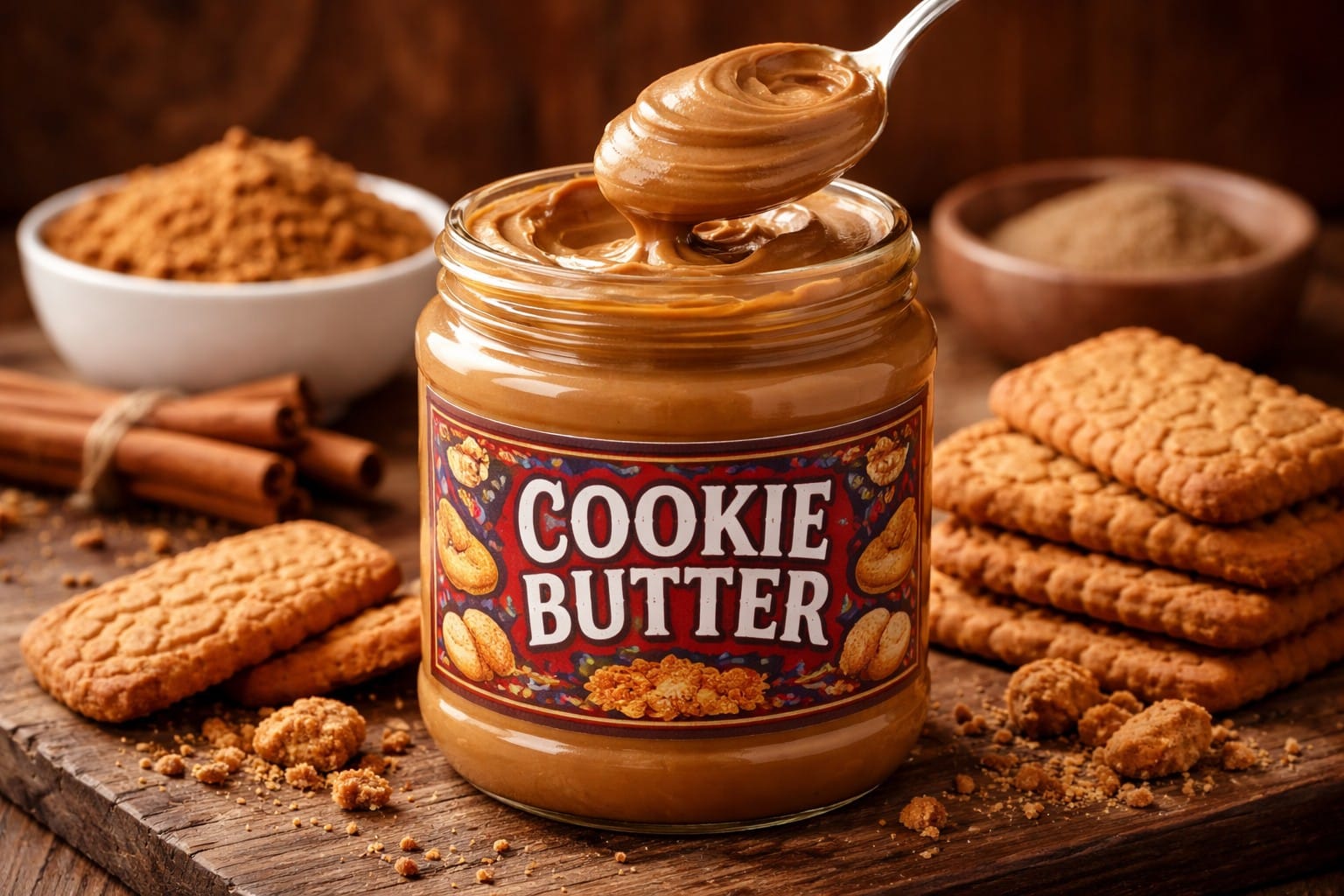
Cookie butter is one of those spreads that people try once and then can’t stop thinking about. It’s creamy, sweet, warmly spiced, and tastes like cookies in spreadable form. Whether you’ve seen it in jars at the store or heard people rave about it online, cookie butter has earned its place as a pantry favorite for dessert lovers.
This article explains what cookie butter is, what it’s made from, how it tastes, ways to use it, baking tips, common mistakes, variations, substitutions, storage advice, FAQs, and expert insight, written clearly for home bakers and dessert fans.
What Is Cookie Butter?
Cookie butter is a smooth spread made from crushed cookies blended with oil and sugar until it reaches a peanut-butter-like consistency. Instead of nuts, the base flavor comes from spiced cookies, most commonly speculoos or Biscoff-style cookies.
The result is rich, sweet, and aromatic, with notes of caramel, cinnamon, and warm spices. It spreads easily and melts slightly when warmed, making it incredibly versatile.
Cookie butter is not meant to be healthy. It’s meant to be comforting and indulgent.
What Does Cookie Butter Taste Like?
Cookie butter tastes like a spiced cookie turned into a creamy spread. The flavor is sweet but not sharp, with warm notes similar to gingerbread, cinnamon cookies, or graham crackers with caramel.
The texture is smooth and thick, sometimes with a slight grain depending on the brand or recipe. When heated, it becomes glossy and pourable, which makes it perfect for desserts.
It’s familiar, cozy, and hard to resist.
What Is Cookie Butter Made Of?
Most cookie butter contains a short list of ingredients.
Crushed spiced cookies provide flavor and structure. Oil creates a spreadable texture. Sugar enhances sweetness. Sometimes milk powder, vanilla, or spices are added for depth. Salt balances everything.
Homemade versions often use neutral oil or butter and allow more control over sweetness and spice.
Why Cookie Butter Is So Popular
Cookie butter became popular because it combines nostalgia and convenience. People love cookies, and spreading that flavor on toast or swirling it into desserts feels effortless.
It’s also versatile. You can eat it straight from the jar, bake with it, drizzle it, or mix it into fillings. That flexibility makes it appealing to both casual snackers and home bakers.
The flavor feels indulgent without being overwhelming.
How to Use Cookie Butter
Cookie butter works in more ways than most people expect.
Spread it on toast, waffles, pancakes, or crepes. Swirl it into oatmeal or yogurt. Use it as a dip for apples or pretzels. Warm it slightly and drizzle over ice cream or brownies. Add it to frosting, cheesecake filling, or mousse.
A little goes a long way.
Baking With Cookie Butter
Cookie butter behaves differently than nut butters in baking.
It adds sweetness and flavor but not much structure. Recipes often need less sugar when cookie butter is added. It works best in bars, cheesecakes, fillings, and swirled batters rather than as a full butter replacement.
When baking with it, think of cookie butter as a flavor booster, not a structural ingredient.
Easy Desserts Made With Cookie Butter
Many cookie butter desserts are beginner-friendly.
No-bake cheesecakes set beautifully with cookie butter mixed in. Cookie butter brownies feel rich and swirled. Blondies take on warm spice notes. Cookie butter frosting pairs well with vanilla or chocolate cake. Truffles made with cookie butter are quick and elegant.
Simple recipes let the flavor shine.
Cookie Butter vs Peanut Butter
These spreads are used similarly but taste very different.
Peanut butter is savory and nutty, while cookie butter is sweet and spiced. Peanut butter adds protein and structure, while cookie butter adds flavor and indulgence. One isn’t better than the other; they just serve different purposes.
Cookie butter is more dessert-focused.
Popular Variations of Cookie Butter
Cookie butter comes in several forms.
Smooth versions are the most common. Crunchy styles include cookie bits for texture. Chocolate cookie butter blends cocoa with spice. Homemade versions allow control over sweetness and spice level. Vegan versions use plant-based ingredients easily.
Each version offers a slightly different experience.
Making Cookie Butter at Home
Homemade cookie butter is surprisingly simple.
Crushed cookies are blended with oil, sugar, and a pinch of salt until smooth. Spices can be adjusted to taste. Milk or cream helps control texture. A food processor works best for achieving smoothness.
Homemade versions often taste fresher and less sweet.
Ingredient Substitutions
If speculoos cookies aren’t available, graham crackers or digestive biscuits work well. Coconut oil can replace neutral oil. Maple syrup or honey can replace some sugar. Dairy-free milk works for vegan versions. Cinnamon and nutmeg enhance flavor when cookies are mild.
Always blend until fully smooth.
Common Mistakes to Avoid
Adding too much oil makes the spread greasy. Over-sweetening hides the spice notes. Under-blending leaves a gritty texture. Using strongly flavored oil changes the taste. Expecting cookie butter to behave like peanut butter leads to baking issues.
Balance is key.
Storage and Shelf Life
Store-bought cookie butter is shelf-stable until opened. Once opened, it can be kept at room temperature or refrigerated. Homemade cookie butter should be refrigerated and used within two weeks.
Always use clean utensils to prevent spoilage.
Serving Ideas That Feel Special
Warm cookie butter slightly before serving. Drizzle it over desserts for a glossy finish. Pair it with fruit for balance. Use it between cake layers sparingly. Swirl it into whipped cream for an easy topping.
Presentation enhances indulgence.
Frequently Asked Questions
Cookie butter contains no nuts unless added. It is sweet and dessert-like. It can be made at home easily. Baking with it requires recipe adjustments. A small amount delivers strong flavor.
These answers help set expectations.
Expert Insight
Cookie butter works best when treated like a flavor accent rather than the main ingredient. Its strength is warmth and familiarity, not structure. When bakers use it thoughtfully, desserts feel cozy and intentional instead of overly sweet.
Less often delivers more impact.
Final Thoughts
Cookie butter is a simple pleasure that feels special every time. Its warm spice, smooth texture, and versatility make it a favorite for spreading, baking, and dessert-making alike.
For home bakers and dessert lovers, keeping a jar on hand opens the door to countless easy treats that feel comforting, indulgent, and endlessly satisfying.