
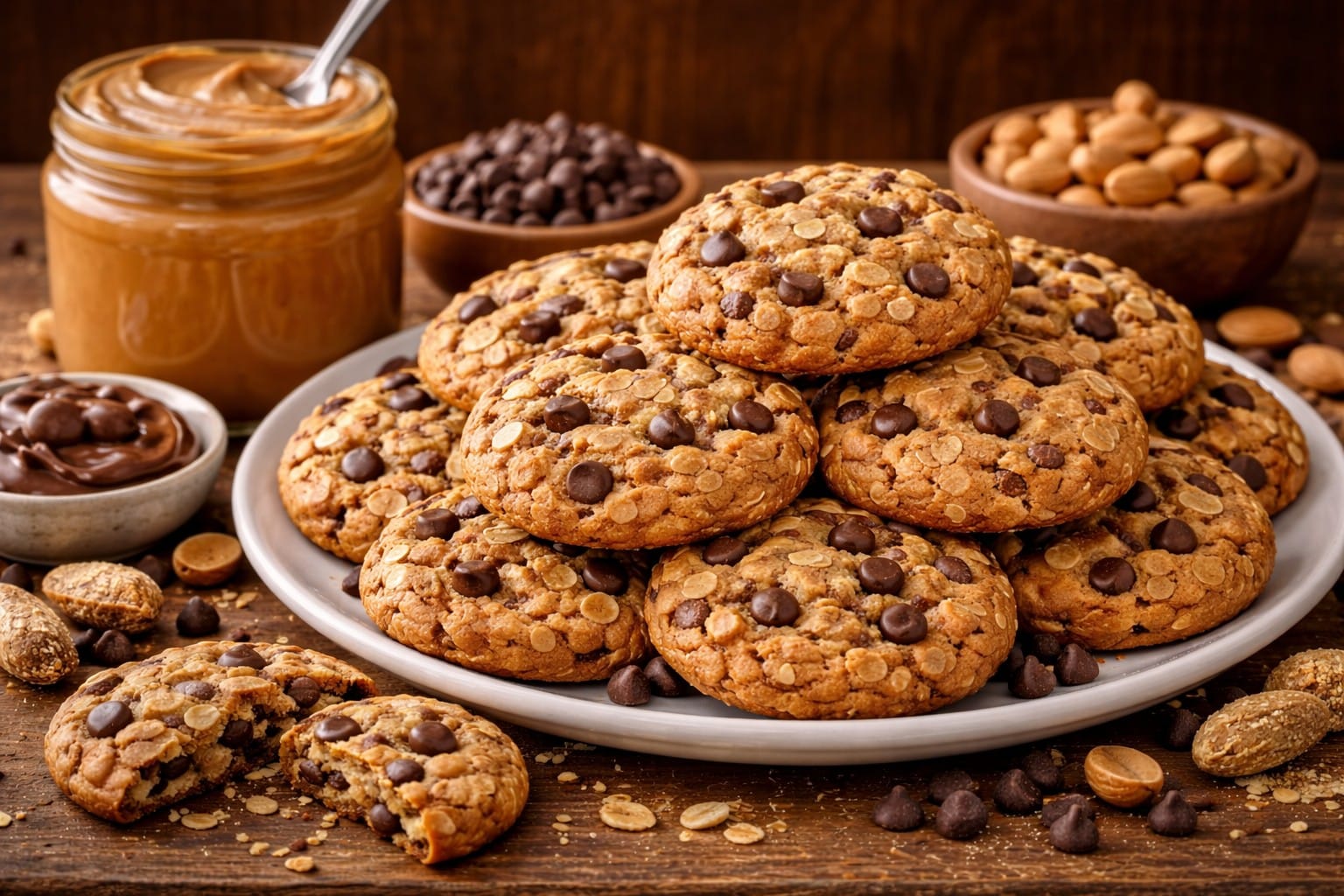
Peanut butter chocolate chip cookies bring together two flavors that feel like they were made for each other. The nutty richness of peanut butter and the sweetness of chocolate chips create a cookie that’s comforting, familiar, and deeply satisfying. These cookies are easy enough for beginners but rewarding enough that experienced home bakers keep coming back to them.
This article covers everything you need to know about peanut butter chocolate chip cookies, including what makes them special, ingredients, step-by-step guidance, baking tips, common mistakes, variations, substitutions, storage, FAQs, and expert insight, all written to help you get consistent, bakery-style results at home.
What Makes Peanut Butter Chocolate Chip Cookies So Good
These cookies work because they balance flavor, texture, and nostalgia. Peanut butter adds richness, moisture, and depth, while chocolate chips bring sweetness and contrast. Together, they create a cookie that feels indulgent without being overly sweet.
Texture also plays a big role. Peanut butter naturally creates a soft, tender crumb, which pairs beautifully with melty chocolate. When baked correctly, the cookies have lightly crisp edges and chewy centers that stay soft for days.
They’re familiar, reliable, and almost always a crowd favorite.
Choosing the Right Peanut Butter
Not all peanut butter works the same in baking.
Creamy peanut butter gives the smoothest texture and most predictable results. Natural peanut butter can work, but it must be well mixed and may create a slightly crumblier cookie. Peanut butter with added sugar and stabilizers usually performs best for classic cookies.
Chunky peanut butter adds texture but can interfere with spreading. For first-time bakers, creamy peanut butter is the safest choice.
Best Chocolate Chips to Use
Chocolate chips affect both flavor and texture.
Semi-sweet chocolate chips are the classic choice and balance the peanut butter well. Milk chocolate chips create a sweeter cookie. Dark chocolate chips add contrast and depth. Chocolate chunks melt more irregularly, creating pockets of chocolate throughout the cookie.
Using a mix of chips and chunks often gives the best results.
Essential Ingredients You’ll Need
Peanut butter chocolate chip cookies rely on simple pantry staples.
Butter adds richness and flavor. Peanut butter brings structure and moisture. Sugar sweetens and affects texture. Brown sugar adds chew and depth. Eggs bind everything together. Vanilla enhances flavor. Flour provides structure. Baking soda helps with lift. Salt balances sweetness. Chocolate chips finish the cookie.
Each ingredient has a purpose, so careful measuring matters.
Step-by-Step Overview
Start by creaming butter, peanut butter, and sugars until smooth and fluffy. This step helps create a tender cookie with even spread.
Add eggs and vanilla, mixing just until combined. Overmixing at this stage can make cookies dense.
Whisk dry ingredients separately to evenly distribute the baking soda and salt. Gradually add them to the wet mixture, mixing gently.
Fold in chocolate chips by hand to avoid overworking the dough. Scoop evenly sized portions and chill briefly if the dough feels soft.
Bake until the edges are set and lightly golden while the centers still look slightly underbaked. Cooling finishes the process.
Why Chilling the Dough Helps
Chilling peanut butter cookie dough improves texture and flavor.
Resting allows the flour to hydrate fully. It also controls spreading and helps the cookies bake more evenly. Even thirty minutes can make a noticeable difference.
Skipping this step often leads to flatter cookies.
Tips for Soft and Chewy Cookies
Use more brown sugar than white sugar. Avoid overbaking, even if the centers look soft. Let cookies cool on the baking sheet for a few minutes before transferring. Use room-temperature ingredients for better mixing. Measure flour carefully to avoid dryness.
Small details lead to better texture.
Common Mistakes to Avoid
Using natural peanut butter without adjustment can cause dryness. Overbaking makes cookies crumbly. Skipping salt dulls flavor. Overmixing the dough creates dense cookies. Expecting cookies to firm up in the oven instead of during cooling leads to overbaking.
Understanding these issues prevents disappointment.
Classic Peanut Butter Chocolate Chip Cookie Texture
These cookies are meant to be tender, not crunchy throughout.
Edges should be lightly crisp. Centers should stay soft and slightly chewy. Chocolate should melt into the cookie instead of sitting stiffly on top.
If you prefer crisp cookies, baking time and sugar ratios can be adjusted.
Popular Variations to Try
Peanut butter chocolate chip cookies adapt easily.
Add chopped peanuts for crunch. Use dark chocolate for a less sweet cookie. Add a pinch of cinnamon or espresso powder for depth. Swirl in peanut butter chips for extra flavor. Sprinkle sea salt on top before baking to enhance contrast.
Variations keep the recipe exciting.
Peanut Butter Chocolate Chip Cookie Bars
Turning the dough into bars is an easy option.
Press the dough into a lined baking pan. Bake until the center is just set. Cool completely before slicing. Bars stay soft longer and are easier to serve for groups.
This version works well for potlucks and parties.
Ingredient Substitutions
Dairy-free butter substitutes work well. Almond butter can replace peanut butter, though flavor changes. Coconut sugar adds depth but darkens the cookie. Gluten-free flour blends usually work with minimal adjustment. Egg substitutes work best in softer cookie styles.
Always consider texture when substituting.
Making the Dough Ahead of Time
Peanut butter cookie dough stores well.
Refrigerated dough keeps for up to three days. Dough balls freeze well and can be baked directly from frozen with a slight time increase. Make-ahead dough helps with planning and consistency.
Fresh-baked cookies anytime is a bonus.
Storage Tips
Store baked cookies in an airtight container at room temperature for up to four days. Adding a slice of bread helps keep them soft. Freeze baked cookies for longer storage. Avoid refrigeration, as it dries cookies out.
Proper storage preserves texture.
Serving Ideas
Serve warm for gooey chocolate. Pair with milk, coffee, or tea. Stack cookies for casual gatherings. Use them for ice cream sandwiches. Crumble leftovers over ice cream or yogurt.
Simple serving keeps focus on flavor.
Frequently Asked Questions
Peanut butter chocolate chip cookies should be soft, not dry. Natural peanut butter needs adjustment. Chilling dough improves results. Cookies firm up as they cool. Brown sugar increases chew.
These answers solve common problems.
Expert Insight
The secret to great peanut butter chocolate chip cookies is balance. Peanut butter is rich, so sweetness, salt, and baking time must be carefully controlled. When bakers resist the urge to overbake and let the cookies set naturally, the result is a cookie that stays soft and flavorful long after cooling.
Patience matters more than precision.
Final Thoughts
Peanut butter chocolate chip cookies are a classic for good reason. They’re comforting, easy to make, and endlessly satisfying. With the right ingredients and a few smart techniques, home bakers can achieve cookies that are soft, chewy, and packed with flavor every time.
Whether baked for a family treat, a gathering, or a quiet moment with a glass of milk, these cookies always deliver the kind of comfort that keeps people coming back for more.