
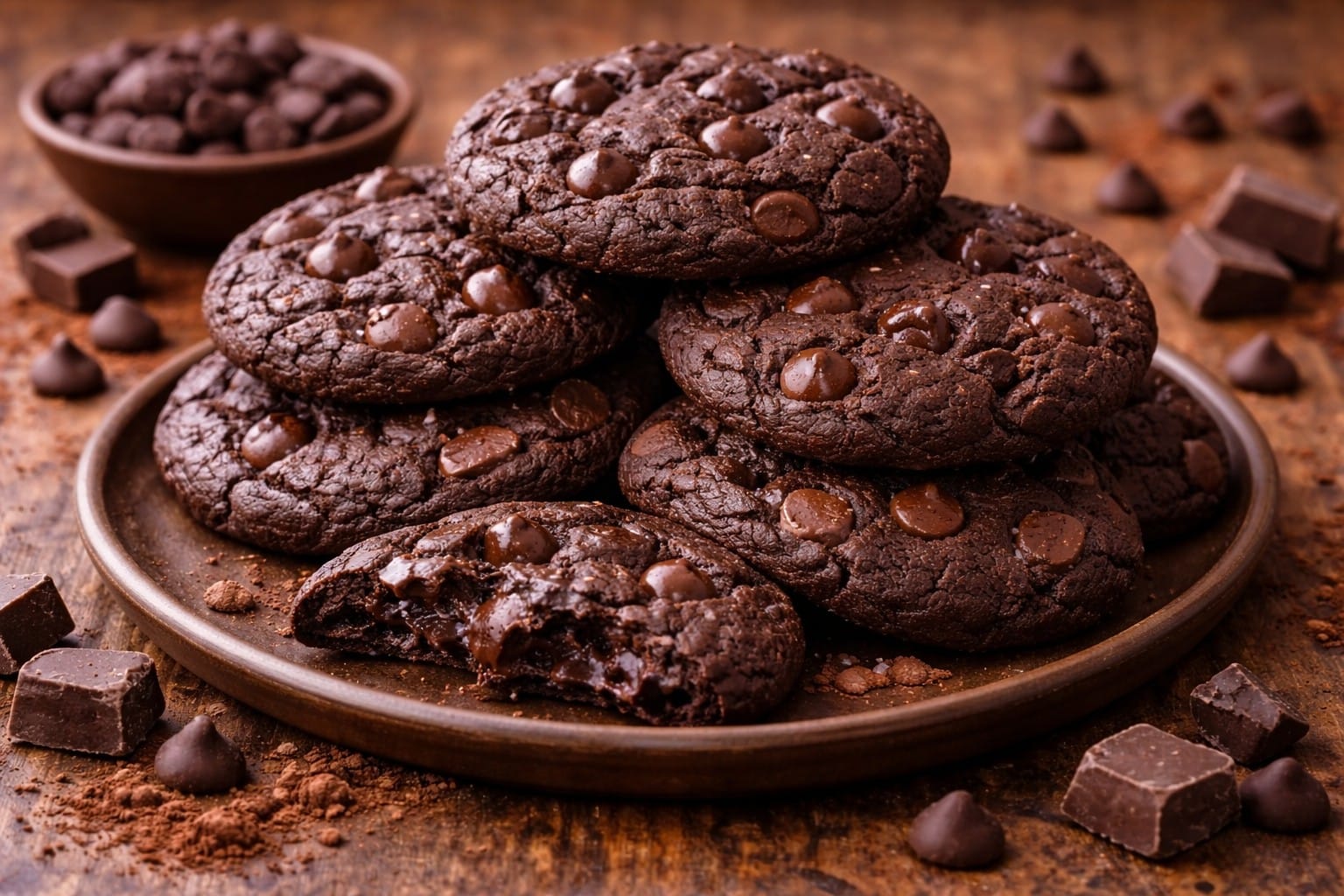
Double chocolate cookies are made for serious chocolate lovers. They use chocolate in two forms, usually cocoa powder in the dough and chocolate chips or chunks mixed in. The result is a cookie that’s deep, rich, and indulgent, with a soft center and pockets of melted chocolate in every bite.
This article covers what double chocolate cookies are, why they work so well, ingredients, step-by-step guidance, baking tips, common mistakes, variations, substitutions, storage, FAQs, and expert insight, written clearly for home bakers who want reliable, bakery-style results at home.
What Are Double Chocolate Cookies?
Double chocolate cookies are cookies that get chocolate flavor from both the dough and add-ins. The dough is made with cocoa powder or melted chocolate, while chocolate chips, chunks, or chunks are folded in for extra richness.
Unlike regular chocolate chip cookies, where vanilla dough is the base, these cookies are chocolate from start to finish. They’re bold, indulgent, and meant to satisfy strong chocolate cravings.
Why Double Chocolate Cookies Are So Popular
These cookies deliver intensity without being complicated. Chocolate lovers appreciate the depth of flavor, while home bakers like that the recipe follows familiar cookie techniques.
They also feel more decadent than standard cookies, which makes them popular for gifting, holidays, and special occasions. Even a small cookie feels satisfying because of how rich it is.
Flavor and Texture Expectations
A good double chocolate cookie should taste rich, not bitter. Cocoa adds depth, while sugar balances the intensity. Chocolate chips provide sweetness and texture contrast.
Texture depends on the recipe style. Some versions are soft and brownie-like. Others are chewy with crisp edges. Crisp-only versions exist but are less common.
Most people prefer a fudgy center with slightly set edges.
Key Ingredients You’ll Need
Double chocolate cookies rely on simple ingredients, but balance matters.
Butter adds flavor and tenderness. Sugar sweetens and controls spread. Brown sugar adds moisture and chew. Eggs bind everything together. Cocoa powder provides chocolate flavor. Flour gives structure. Baking soda helps with lift. Salt balances sweetness. Chocolate chips or chunks add texture and richness. Vanilla enhances overall flavor.
Using quality cocoa and chocolate makes a noticeable difference.
Cocoa Powder: Natural vs Dutch-Process
Cocoa powder choice affects flavor and color.
Natural cocoa powder has a sharper, more intense chocolate taste. Dutch-process cocoa is smoother, darker, and less acidic. Either works, but the recipe should match the cocoa type used.
For deep color and mellow flavor, Dutch-process cocoa is often preferred.
Step-by-Step Overview
Begin by creaming butter and sugars until smooth and slightly fluffy. This step affects texture more than many realize.
Add eggs and vanilla, mixing just until combined. Overmixing at this stage can make cookies dense.
Whisk dry ingredients separately to evenly distribute cocoa, salt, and leavening. Add them to the wet ingredients gradually, mixing gently.
Fold in chocolate chips by hand. Scoop dough evenly and chill briefly if the dough feels soft.
Bake until edges are set and centers still look slightly underbaked. Cooling finishes the structure and deepens flavor.
Why Chilling the Dough Helps
Chilling improves both texture and flavor.
It allows the flour and cocoa to hydrate properly. It also prevents excessive spreading and helps create thicker cookies. Even thirty minutes can improve results.
Skipping chilling often leads to flat cookies.
Tips for Perfect Double Chocolate Cookies
Measure cocoa carefully to avoid bitterness. Use brown sugar for chewiness. Don’t overbake, as chocolate cookies firm up while cooling. Let cookies rest on the baking sheet briefly before moving. Use room-temperature ingredients for smoother dough.
Small details make a big difference.
Common Mistakes to Avoid
Adding too much cocoa makes cookies dry or bitter. Overbaking removes fudginess. Skipping salt flattens flavor. Overmixing creates dense cookies. Expecting visual doneness to match vanilla cookies leads to overbaking.
Chocolate cookies need trust and timing.
Popular Variations to Try
Double chocolate cookies are easy to customize.
Add white chocolate chips for contrast. Mix in chopped walnuts or pecans for crunch. Use dark chocolate chunks for intensity. Add espresso powder to deepen chocolate flavor. Sprinkle flaky sea salt on top before baking.
Each variation keeps the cookie exciting.
Brownie-Style Double Chocolate Cookies
Some recipes lean toward a brownie texture.
These versions use melted chocolate instead of cocoa powder. They’re softer, fudgier, and slightly shiny on top. They often require chilling and careful baking to stay gooey.
Brownie-style cookies are especially popular for chocolate lovers.
Ingredient Substitutions
Dairy-free butter substitutes work well. Coconut sugar adds depth but darkens the cookie. Gluten-free flour blends usually work with minimal adjustment. Egg substitutes work best in softer versions. Chocolate chunks can replace chips easily.
Always watch texture when substituting.
Making Double Chocolate Cookie Dough Ahead
The dough stores very well.
Refrigerated dough keeps for up to three days. Dough balls freeze beautifully and can be baked straight from frozen with a slight increase in baking time. Make-ahead dough makes fresh cookies easy anytime.
Flavor often improves with rest.
Storage Tips
Store baked cookies in an airtight container at room temperature for up to four days. Add a slice of bread to keep them soft. Freeze baked cookies for longer storage. Avoid refrigeration, which dries cookies out.
Proper storage keeps them fudgy.
Serving Ideas
Serve slightly warm for melted chocolate pockets. Pair with milk, coffee, or espresso. Stack on a plate for casual gatherings. Use as ice cream sandwich cookies. Crumble leftovers over ice cream or yogurt.
Simple serving highlights richness.
Frequently Asked Questions
Double chocolate cookies should not taste bitter. Cocoa choice affects flavor. Cookies firm up after cooling. Chilling dough helps thickness. Brown sugar improves chewiness.
These answers solve common issues.
Expert Insight
Great double chocolate cookies rely on balance, not excess. Adding more chocolate doesn’t always improve flavor. When sweetness, cocoa, fat, and baking time are balanced, the cookie tastes rich without being heavy or dry.
Trust the process and resist overbaking.
Final Thoughts
Double chocolate cookies are a dream dessert for chocolate lovers. They’re rich, comforting, and easy to make with familiar ingredients. With careful measuring and gentle baking, home bakers can achieve cookies that are soft, fudgy, and packed with chocolate flavor every single time.
Whether baked for sharing or enjoyed straight from the oven, these cookies deliver exactly what their name promises.