
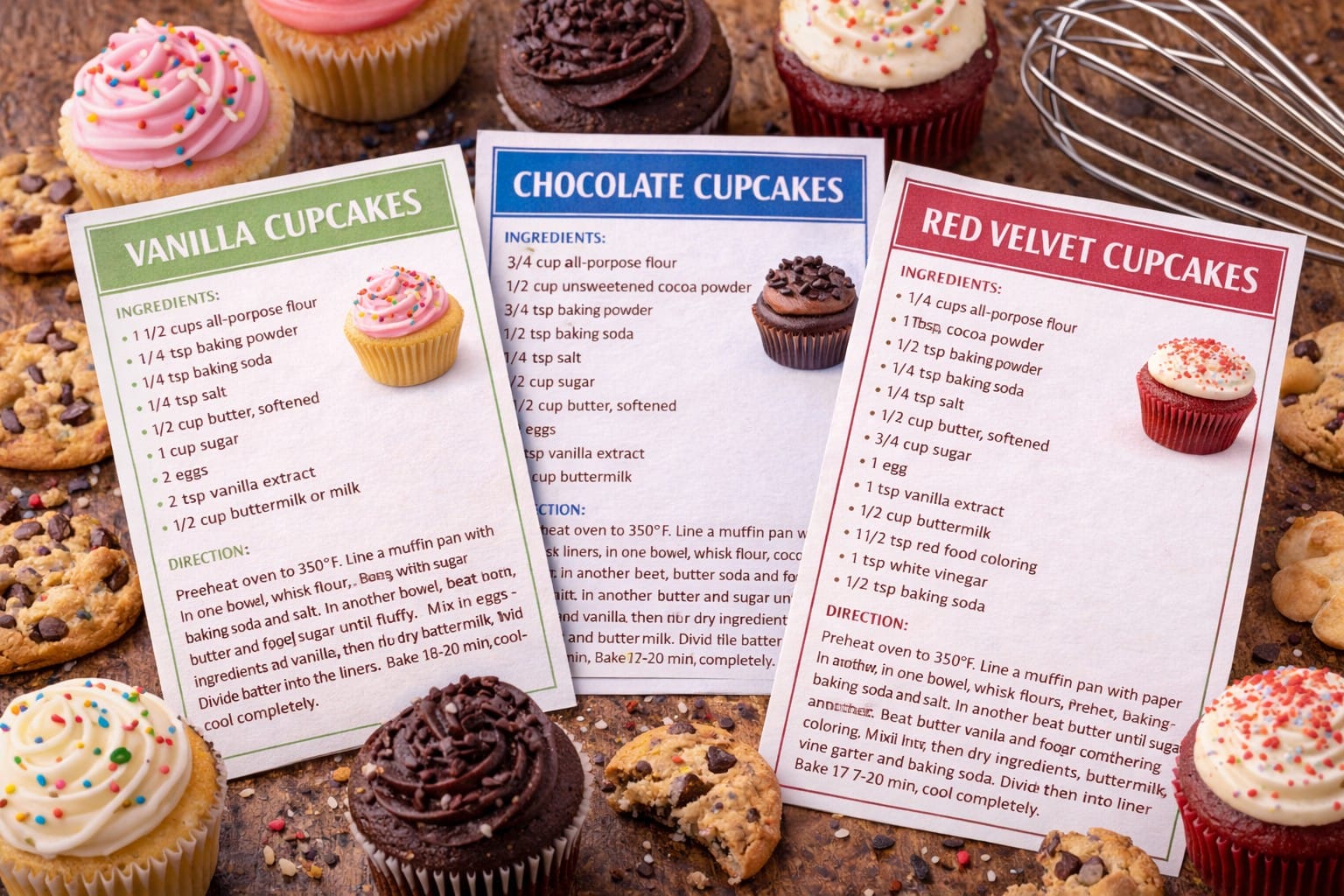
Cupcakes are one of those desserts that feel joyful from start to finish. They’re small, personal, easy to share, and endlessly customizable. One good cupcake recipe can turn into dozens of flavors with just a few simple changes. For home bakers, cupcakes are also forgiving, fast to bake, and perfect for learning basic baking skills.
This guide walks through everything you need to know about cupcake recipes, from core ingredients and step-by-step methods to common mistakes, flavor variations, frosting ideas, storage tips, and answers to popular questions. Whether you’re baking for a party or just craving something sweet, these tips will help you get reliable, bakery-style results at home.
What Makes a Good Cupcake Recipe?
A good cupcake recipe balances three things: flavor, texture, and structure. The cupcake should be moist but not dense, soft but not crumbly, and flavorful without being heavy.
Unlike cakes, cupcakes bake quickly and have less margin for error. That’s why clear ratios and proper mixing matter more than fancy techniques.
Great cupcake recipes also adapt well. The same base batter can become vanilla, chocolate, lemon, or spice cupcakes with small adjustments.
Basic Ingredients You’ll Use Most Often
Most cupcake recipes rely on pantry staples. Knowing what each ingredient does helps you troubleshoot problems later.
Flour provides structure. All-purpose flour works best for most recipes. Sugar adds sweetness and moisture while helping with browning. Butter or oil creates tenderness and flavor. Eggs bind everything together and add richness. Milk or buttermilk keeps cupcakes soft and moist. Baking powder or baking soda gives lift. Salt sharpens flavor, even in sweet recipes. Vanilla extract adds warmth and depth.
Simple ingredients, used correctly, make the best cupcakes.
Butter vs Oil in Cupcake Recipes
Butter gives cupcakes flavor and a classic cake-like texture. Oil produces cupcakes that stay moist longer and feel lighter.
Many bakers prefer butter for vanilla and chocolate cupcakes. Oil works well for carrot cupcakes, spice cupcakes, and recipes meant to stay soft for days.
Some recipes use both to get the best of each.
Essential Tools for Cupcake Baking
You don’t need special equipment, but a few tools make the process smoother.
A standard muffin pan ensures even baking. Paper liners prevent sticking and make cleanup easy. A hand mixer or stand mixer helps with creaming butter and sugar. Mixing bowls, a rubber spatula, and measuring cups are essentials. An ice cream scoop helps portion batter evenly.
Even cupcakes bake better when they’re the same size.
Step-by-Step Cupcake Baking Method
Most cupcake recipes follow a similar process.
Start by preheating the oven and lining your pan. Mix dry ingredients in one bowl. Cream butter and sugar until light and fluffy. Add eggs one at a time, mixing gently. Stir in vanilla. Alternate adding dry ingredients and liquid, mixing just until combined. Fill liners about two-thirds full. Bake until the tops spring back lightly.
Let cupcakes cool completely before frosting.
Why Mixing Matters
Overmixing is one of the most common cupcake mistakes.
Once flour is added, mixing too much develops gluten. That leads to dense, tough cupcakes instead of soft ones.
Stir gently and stop as soon as the batter looks smooth.
Classic Vanilla Cupcake Recipe Base
Vanilla cupcakes are the foundation of many recipes.
They’re light, soft, and neutral enough to pair with any frosting. A good vanilla cupcake should taste buttery and fragrant, not bland.
This base works for birthdays, holidays, and everyday baking.
Chocolate Cupcake Variations
Chocolate cupcakes can range from light and fluffy to rich and fudgy.
Using cocoa powder creates a classic chocolate flavor. Adding melted chocolate makes cupcakes richer. Coffee or espresso powder deepens chocolate flavor without tasting like coffee.
Chocolate cupcakes pair well with buttercream, ganache, or cream cheese frosting.
Moist Cupcake Tips That Actually Work
Moist cupcakes don’t come from extra sugar alone.
Use room-temperature ingredients so they blend evenly. Don’t overbake, even by a few minutes. Measure flour correctly by spooning and leveling. Add sour cream, yogurt, or buttermilk for extra tenderness.
Small details make a big difference.
Common Cupcake Mistakes and How to Fix Them
Flat cupcakes often mean expired leavening or overmixing. Dry cupcakes usually come from overbaking. Sunken centers can happen when the oven door is opened too early. Greasy liners often indicate too much fat or underbaking.
Most cupcake problems are easy to fix once you know the cause.
Easy Cupcake Flavor Ideas
Once you master a base recipe, flavors become simple.
Add lemon zest and juice for lemon cupcakes. Stir in cocoa powder for chocolate. Mix cinnamon and nutmeg for spice cupcakes. Fold in sprinkles for funfetti. Add mashed banana for banana cupcakes.
One batter, many possibilities.
Filled Cupcakes Explained
Filled cupcakes feel extra special but aren’t hard to make.
After baking and cooling, remove a small center with a knife or cupcake corer. Fill with jam, pastry cream, chocolate ganache, or frosting. Replace the top or cover with frosting.
The surprise inside makes cupcakes feel bakery-level.
Frosting Options for Cupcakes
Frosting can be simple or fancy.
Buttercream is classic and easy to pipe. Cream cheese frosting pairs well with carrot and red velvet cupcakes. Whipped frosting feels lighter and less sweet. Ganache adds richness and shine.
Choose frosting based on flavor balance, not just looks.
How Much Frosting Is Enough?
Too much frosting can overpower a cupcake.
A swirl that matches the cupcake size works best. For filled cupcakes, use slightly less frosting to keep balance.
Flavor should always come first.
Decorating Cupcakes Without Fancy Skills
Cupcakes don’t need perfect piping to look good.
Use a spoon or offset spatula for rustic swirls. Add sprinkles, chocolate shavings, fruit, or nuts. Dust lightly with cocoa powder or powdered sugar.
Simple decorations often look the most inviting.
Making Cupcakes Ahead of Time
Cupcakes are great for planning ahead.
Bake unfrosted cupcakes one day in advance and store them covered. Frost the day you serve for best texture. Some frostings can be made ahead and refrigerated.
This approach saves time and stress.
Storing Cupcakes Properly
Unfrosted cupcakes keep well at room temperature for one to two days. Frosted cupcakes should be stored based on frosting type.
Buttercream cupcakes can sit at room temperature briefly. Cream cheese frosting requires refrigeration. Always bring chilled cupcakes to room temperature before serving.
Cold cupcakes taste less flavorful.
Freezing Cupcakes
Cupcakes freeze surprisingly well.
Freeze unfrosted cupcakes wrapped tightly. Thaw at room temperature before frosting. Some frostings, like buttercream, also freeze well.
Freezing helps with batch baking and busy schedules.
Cupcakes for Special Diets
Many cupcake recipes adapt easily.
Gluten-free cupcakes work well with quality gluten-free flour blends. Dairy-free cupcakes use oil and plant-based milk. Egg-free versions rely on vinegar and baking soda or commercial egg replacers.
Texture may change slightly, but flavor can still shine.
Frequently Asked Questions
Cupcakes usually bake at 350°F. Most recipes yield 12 cupcakes. Liners prevent sticking and make cleanup easier. Filling liners two-thirds full gives the best rise. Cupcakes are done when a toothpick comes out clean.
These basics solve most cupcake worries.
Expert Baking Insight
Cupcakes teach restraint. Small portions mean every step matters, from measuring to mixing to timing. When you treat cupcakes with the same care as a full cake, they reward you with consistent, satisfying results.
Master one good recipe and you unlock dozens of desserts.
Final Thoughts
Cupcake recipes are a home baker’s best friend. They’re quick, flexible, and endlessly fun to make. With a solid base recipe, a few flavor ideas, and simple frosting techniques, you can create cupcakes for any occasion without stress.
Once you bake a few batches, cupcakes stop feeling like a recipe and start feeling like second nature.