
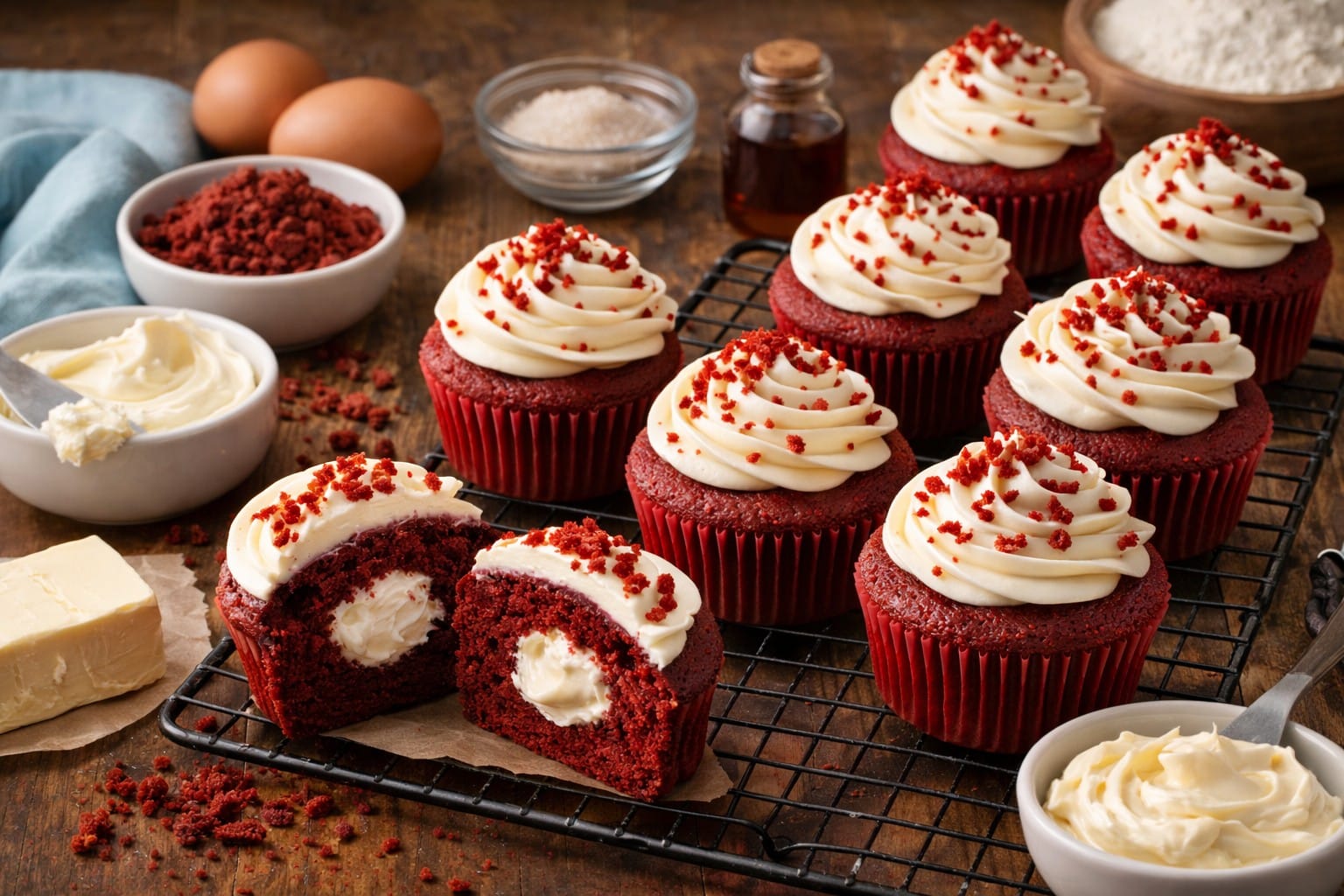
Red velvet cupcakes are one of those desserts that feel special without being complicated. They’re soft, lightly chocolatey, rich without being heavy, and finished with tangy cream cheese frosting that balances every bite. When made right, red velvet cupcakes are moist, tender, and flavorful, not dry, bland, or overly sweet.
This guide walks you through everything you need to know about red velvet cupcakes, from what actually makes them red velvet to a reliable cupcake method, common mistakes, variations, storage tips, and expert baking advice. Whether you’re baking for a celebration or just because, these cupcakes are always a crowd favorite.
What Makes Red Velvet Cupcakes Different?
Red velvet isn’t just chocolate cake with red food coloring. The flavor sits somewhere between vanilla and chocolate, with a subtle cocoa taste and a slight tang.
That tang traditionally comes from buttermilk and a small amount of vinegar. Together, they soften the crumb and enhance flavor. The cocoa is used sparingly, so it doesn’t overpower the cake.
The result is a cupcake that tastes smooth, balanced, and unique.
The Role of Color in Red Velvet Cupcakes
The deep red color is part of the charm.
Originally, red velvet cakes got their color from a reaction between natural cocoa powder and acidic ingredients. Modern recipes usually rely on red food coloring to achieve that classic look.
The color doesn’t affect flavor, but it does affect expectations. A rich red cupcake signals something indulgent and celebratory before the first bite.
Ingredients You’ll Need
Red velvet cupcakes use simple ingredients, but balance matters.
All-purpose flour provides structure. Granulated sugar adds sweetness and moisture. Unsweetened natural cocoa powder gives subtle chocolate flavor. Baking soda helps the cupcakes rise. Salt enhances flavor. Vegetable oil keeps the cupcakes moist. Eggs bind the batter. Buttermilk adds tenderness and tang. Vinegar activates baking soda and improves texture. Vanilla extract rounds out the flavor. Red food coloring gives the signature color.
Each ingredient plays a specific role.
Why Oil Works Better Than Butter Here
Most red velvet cupcake recipes use oil instead of butter.
Oil keeps cupcakes moist longer and creates a softer crumb. Butter can firm up when cold, which isn’t ideal for red velvet’s tender texture.
The flavor comes from cocoa, vanilla, and buttermilk, so butter isn’t necessary.
Cocoa Powder: How Much Is Enough?
Red velvet cupcakes only need a small amount of cocoa powder.
Too much cocoa turns them into chocolate cupcakes. Too little makes them taste flat. The goal is a hint of chocolate, not dominance.
Natural cocoa powder works best because it reacts with baking soda and acidic ingredients.
Step-by-Step Red Velvet Cupcake Recipe Method
Start by preheating your oven to 350°F and lining a muffin pan with paper liners.
In a bowl, whisk together flour, cocoa powder, baking soda, and salt.
In another bowl, mix sugar and oil until combined. Add eggs one at a time, mixing gently. Stir in vanilla and red food coloring.
Add the dry ingredients and buttermilk in alternating additions, mixing just until combined.
Stir in vinegar last. The batter will be smooth and slightly thick.
Fill liners about two-thirds full. Bake for 18 to 22 minutes, until the tops spring back lightly.
Cool completely before frosting.
Why Vinegar Is Important
Vinegar doesn’t make cupcakes taste sour.
It reacts with baking soda to help cupcakes rise and creates a finer, softer crumb. It also enhances the slight tang that defines red velvet.
Skipping vinegar often results in denser cupcakes.
How to Tell When Red Velvet Cupcakes Are Done
Red velvet cupcakes can be tricky because the color hides visual cues.
Look for set tops that spring back lightly when touched. A toothpick should come out clean or with a few moist crumbs.
Avoid overbaking, which dries them out quickly.
Common Red Velvet Cupcake Mistakes
Dry cupcakes usually mean overbaking or too much flour. Brown or dull color often comes from not using enough food coloring. Bitter flavor can come from too much cocoa powder. Dense texture often means overmixing.
Red velvet rewards gentle handling.
Cream Cheese Frosting: The Classic Choice
Cream cheese frosting is the traditional pairing for red velvet cupcakes.
Its tangy flavor balances the sweetness of the cupcake perfectly. The soft, creamy texture complements the tender crumb.
This combination is what most people expect when they bite into red velvet.
Simple Cream Cheese Frosting Recipe
Cream cheese frosting is easy to make.
Beat softened cream cheese and butter until smooth. Add powdered sugar gradually. Mix in vanilla and a pinch of salt.
The frosting should be creamy, not runny. Chill briefly if needed before piping.
Frosting Alternatives If You Want a Change
If cream cheese frosting isn’t your favorite, there are options.
Vanilla buttercream creates a sweeter cupcake. Swiss meringue buttercream feels lighter. Whipped frosting reduces sweetness. Chocolate frosting adds richness but changes the classic flavor profile.
Choose based on balance and preference.
Decorating Red Velvet Cupcakes
Red velvet cupcakes look best with simple decoration.
A swirl of cream cheese frosting is enough. Add red velvet crumbs, white chocolate curls, or a light dusting of cocoa powder.
Let the color do the work.
Flavor Variations You Can Try
Red velvet cupcakes adapt well to small changes.
Add espresso powder to deepen cocoa flavor. Use beet powder for natural coloring. Add orange zest for warmth. Mix mini chocolate chips into the batter for texture.
Keep changes subtle to preserve the red velvet identity.
Filled Red Velvet Cupcakes
Filled cupcakes feel extra indulgent.
Try cream cheese filling, chocolate ganache, or raspberry jam. Remove a small center after baking, fill, and frost.
The filling adds moisture and surprise.
Making Red Velvet Cupcakes Ahead of Time
Unfrosted cupcakes can be baked a day in advance and stored covered at room temperature.
Frosting can be made ahead and refrigerated. Bring it to room temperature and rewhip before using.
This makes party prep much easier.
How to Store Red Velvet Cupcakes
Frosted red velvet cupcakes should be stored in the refrigerator because of the cream cheese frosting.
Bring them to room temperature before serving for best flavor and texture.
Unfrosted cupcakes can sit at room temperature for up to two days.
Freezing Red Velvet Cupcakes
Red velvet cupcakes freeze well when unfrosted.
Wrap them tightly and freeze for up to three months. Thaw at room temperature, then frost.
Freezing helps when baking ahead for events.
Making Red Velvet Cupcakes Gluten-Free
Use a one-to-one gluten-free flour blend.
Make sure your cocoa powder and baking soda are gluten-free. Texture may be slightly softer, but flavor remains excellent.
Red velvet adapts well to gluten-free baking.
Dairy-Free Options
Dairy-free red velvet cupcakes work using plant-based buttermilk.
Mix plant milk with a little vinegar or lemon juice. Use dairy-free cream cheese and butter for frosting.
The cupcakes stay moist and flavorful.
Frequently Asked Questions
Red velvet cupcakes bake at 350°F. They taste lightly chocolatey with a tangy finish. Vinegar improves texture without affecting flavor. Cream cheese frosting is traditional. Natural cocoa powder works best.
These answers cover most common concerns.
Expert Baking Tips
Measure flour carefully to avoid dryness. Use gel food coloring for deeper color with less liquid. Mix gently once flour is added. Always cool cupcakes fully before frosting.
Consistency comes from small details.
Final Thoughts
Red velvet cupcakes are classic for a reason. They’re soft, balanced, and visually striking, with a flavor that feels both familiar and special. When baked with care, they deliver a perfect mix of sweetness, tang, and tenderness.
Once you master red velvet cupcakes, they become a go-to dessert for celebrations, holidays, and moments that deserve something a little extra.