
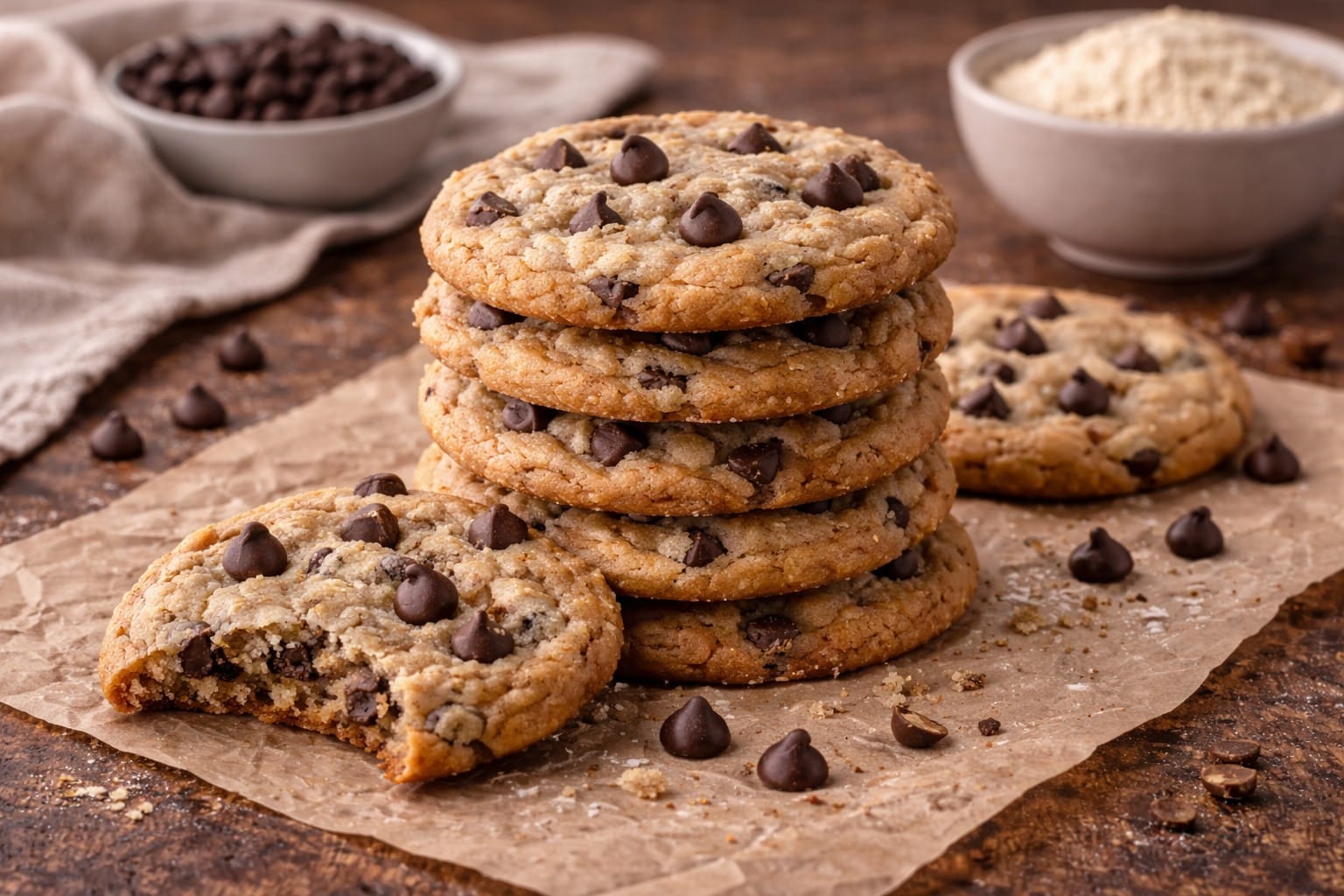
Gluten free chocolate chip cookies have a bad reputation, and honestly, it’s not fair. When they’re done right, you should never be able to tell they’re gluten free. They should be soft in the center, slightly crisp on the edges, loaded with chocolate, and full of that familiar cookie flavor everyone loves.
This guide gives you a reliable, beginner-friendly gluten free chocolate chip cookies recipe along with everything you need to know to get perfect results. You’ll learn which ingredients matter most, how to avoid dry or gritty cookies, smart substitutions, storage tips, and expert baking advice that actually works at home.
What Makes Gluten Free Chocolate Chip Cookies Different
The biggest difference is structure.
Regular cookies rely on gluten to give them chew and hold. Gluten free cookies need the right blend of flours and fats to create that same texture without becoming crumbly or dry.
Think of gluten as the glue. When it’s gone, the recipe has to be balanced carefully so the cookies still stick together and feel satisfying.
Ingredients You’ll Need
These are common, easy-to-find ingredients. No complicated blends required.
For the cookies
Gluten free all-purpose flour blend with xanthan gum
Baking soda
Salt
Unsalted butter, melted and cooled slightly
Brown sugar
Granulated sugar
Egg
Vanilla extract
Chocolate chips
Using a good gluten free flour blend is the single most important factor for success.
Choosing the Best Gluten Free Flour Blend
Not all gluten free flours behave the same.
Look for a 1:1 or measure-for-measure gluten free flour that already contains xanthan gum. This ingredient replaces elasticity and prevents cookies from falling apart.
Avoid single flours like almond or coconut flour unless the recipe is designed specifically for them. Those require very different ratios.
Why Brown Sugar Matters More Than White Sugar
Brown sugar adds moisture and chew.
Gluten free baked goods dry out more easily than regular ones. Brown sugar helps keep the cookies soft and gives them a deeper, caramel-like flavor.
A mix of brown and white sugar creates the best balance of chew and crisp edges.
Step-by-Step Gluten Free Chocolate Chip Cookies Recipe
This recipe makes soft, classic-style cookies that don’t taste gluten free.
Step 1: Preheat and Prep
Preheat your oven and line baking sheets with parchment paper.
Parchment prevents spreading issues and helps cookies bake evenly.
Step 2: Mix the Dry Ingredients
In a bowl, whisk together gluten free flour, baking soda, and salt.
This step evenly distributes the leavening and prevents salty or flat spots.
Step 3: Mix the Sugars and Butter
In a separate bowl, mix melted butter with brown sugar and white sugar until smooth and glossy.
This creates the base for chewy cookies.
Step 4: Add Egg and Vanilla
Stir in the egg and vanilla until fully combined.
The mixture should look thick and slightly shiny.
Step 5: Combine Wet and Dry Ingredients
Add the dry ingredients to the wet mixture and stir gently until a soft dough forms.
The dough should feel slightly sticky but not wet.
Step 6: Fold in Chocolate Chips
Mix in chocolate chips evenly.
You can reserve a few to press into the tops for bakery-style looks.
Step 7: Chill the Dough
Chilling is especially important for gluten free cookies.
Refrigerate the dough for at least 30 minutes. This prevents spreading and improves texture.
Skipping this step often leads to flat cookies.
Step 8: Scoop and Bake
Scoop dough onto prepared baking sheets, spacing evenly.
Bake until the edges are set and lightly golden while the centers still look soft.
Do not overbake. Gluten free cookies firm up as they cool.
How to Tell When Gluten Free Cookies Are Done
They won’t look fully baked when you pull them out.
The edges should be set, but the centers should look slightly underdone. This is the secret to soft cookies instead of dry ones.
Trust the cooling process.
Tips for Soft and Chewy Gluten Free Cookies
A few small details make a big difference.
Always chill the dough. Measure flour carefully by spooning and leveling. Use room-temperature egg. Don’t overmix the dough. Let cookies cool on the pan before moving them.
Gluten free baking rewards patience.
Common Mistakes to Avoid
Using the wrong flour blend is the biggest mistake. Overbaking dries cookies out fast. Skipping the chill causes spreading. Adding too much flour leads to crumbly texture.
If cookies taste gritty, the flour blend may need resting time or a different brand.
Variations to Try
Once you master the base recipe, variations are easy.
Add chopped walnuts or pecans. Use dark chocolate chunks instead of chips. Sprinkle flaky salt on top before baking. Mix in white chocolate and dried cranberries.
The dough handles mix-ins well.
Dairy-Free Option
You can make these cookies dairy free.
Replace butter with a dairy-free butter substitute designed for baking. Make sure it’s firm, not tub-style spread.
The texture stays very similar.
Egg-Free Option
For egg-free gluten free cookies, use a flax egg.
Mix one tablespoon ground flaxseed with two and a half tablespoons water and let it thicken before adding.
The cookies will be slightly softer but still hold together.
Gluten Free Chocolate Chip Cookie Dough Texture
The dough should feel softer than traditional dough.
Gluten free dough often looks slightly glossy and looser. This is normal. Chilling firms it up and improves structure.
Don’t add extra flour unless the dough is extremely wet.
Making Gluten Free Cookies Ahead of Time
The dough stores well.
Refrigerate dough for up to three days. You can also freeze dough balls and bake directly from frozen with a slight time increase.
Fresh-baked cookies anytime is a win.
How to Store Gluten Free Chocolate Chip Cookies
Proper storage keeps them soft.
Store cookies in an airtight container at room temperature for up to three days. For longer storage, refrigerate or freeze.
Adding a small piece of bread to the container helps maintain moisture.
Can Gluten Free Cookies Be Frozen?
Yes, very successfully.
Freeze baked cookies in an airtight container for up to two months. Thaw at room temperature or warm briefly in the oven.
They retain texture better than many gluten free desserts.
Gluten Free vs Regular Chocolate Chip Cookies
When baked correctly, the difference is minimal.
Gluten free cookies may be slightly more tender and less elastic, but flavor should be identical. Most people won’t notice unless you tell them.
That’s the goal.
Frequently Asked Questions
Why are my gluten free cookies dry?
They were likely overbaked or had too much flour.
Do gluten free cookies spread more?
They can, which is why chilling is important.
Can I use almond flour?
Not for this recipe. It requires a specific gluten free blend.
Do gluten free cookies taste different?
Not when the recipe is balanced properly.
Expert Insight
Great gluten free chocolate chip cookies aren’t about replacing gluten exactly. They’re about creating balance in a different way. Moisture, fat, and proper flour blends work together to mimic what gluten normally provides. When bakers stop fighting the dough and start understanding it, gluten free cookies become just as good, if not better, than the original.
Success comes from technique, not tricks.
Final Thoughts
These gluten free chocolate chip cookies prove that gluten free baking doesn’t mean sacrificing flavor or texture. With the right ingredients, proper chilling, and careful baking, you can create cookies that are soft, chewy, and full of chocolate in every bite.
Once you’ve baked these a few times, they’ll become a go-to recipe you can rely on, whether you’re baking for dietary needs or simply want a cookie everyone can enjoy.