
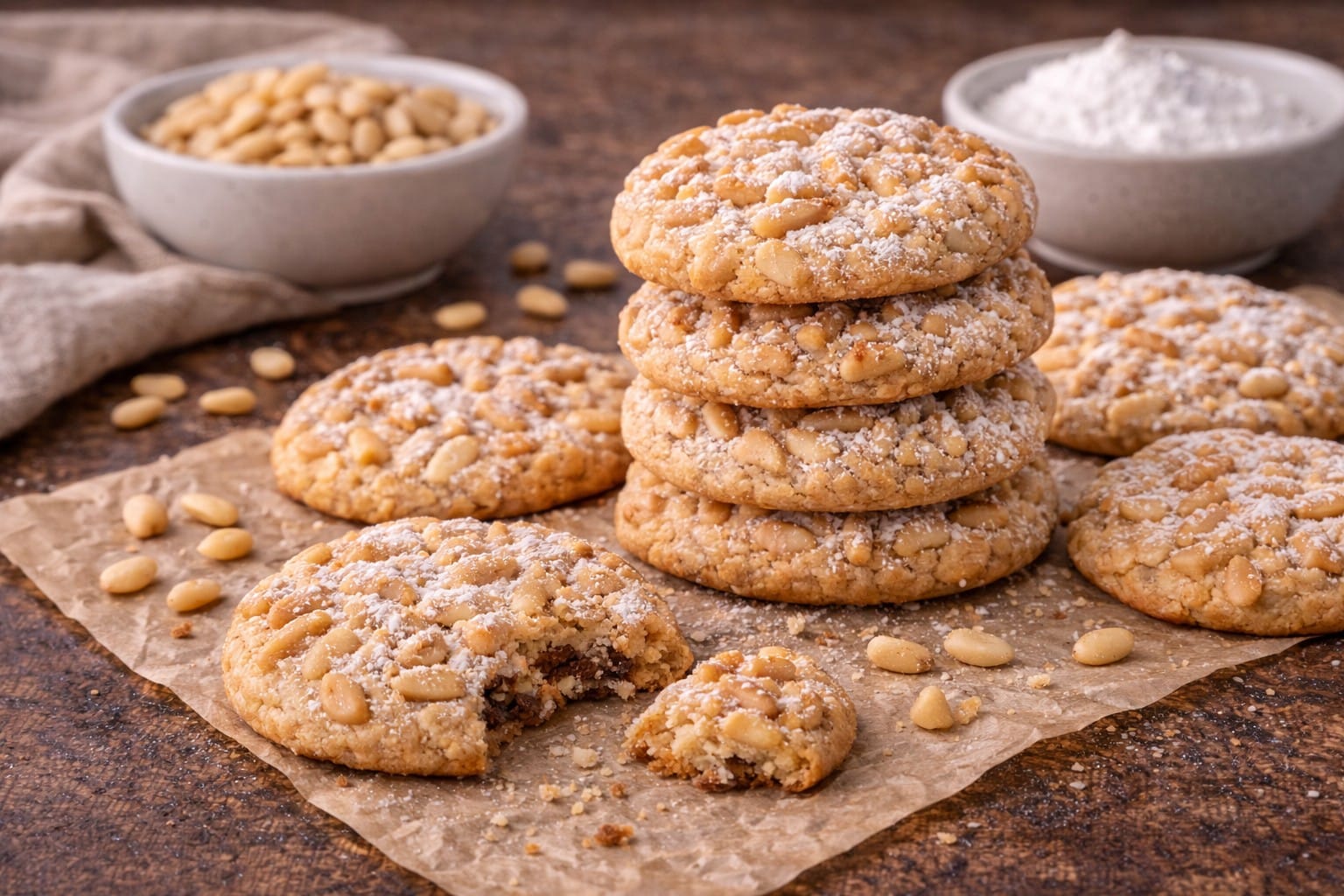
Pignoli cookies are one of those treats that feel special the moment you see them. Small, round, and covered in pine nuts, these Italian cookies look elegant but come from very simple roots. They are naturally gluten-free, deeply nutty, lightly crisp on the outside, and soft and chewy in the center. If you love almond desserts, this cookie is hard to beat.
This guide walks you through everything you need to know about pignoli cookies, from what they are and where they come from to how to make them successfully at home. You will also find tips, common mistakes, variations, storage advice, and answers to the most common questions bakers ask.
What Are Pignoli Cookies
Pignoli cookies are traditional Italian almond cookies made with almond paste and coated in pine nuts. The name comes from “pignoli,” the Italian word for pine nuts. These cookies are especially popular in Italian bakeries and are often associated with holidays and celebrations.
Unlike many cookies, pignoli cookies do not use flour. The structure comes from almond paste and egg whites, which gives them their signature chewy texture. The pine nuts toast lightly during baking, adding crunch and a rich, buttery flavor.
Why Pignoli Cookies Are So Popular
Part of the appeal is contrast. The outside is crisp and nutty, while the inside stays moist and tender. That balance keeps people coming back for another bite.
Flavor plays a big role too. Almond paste brings a deep, natural almond taste that feels richer than almond extract. Pine nuts add an earthy note that makes these cookies taste grown-up and refined.
Another reason people love them is simplicity. There are very few ingredients, yet the result feels bakery-quality.
Ingredients You Need for Pignoli Cookies
Pignoli cookies rely on quality ingredients. Because there are so few components, each one matters.
The basic ingredients include:
- Almond paste, not marzipan
- Granulated sugar
- Egg whites
- Pine nuts
- A pinch of salt
Some recipes also include a small amount of almond extract or vanilla, but this is optional. Almond paste already provides plenty of flavor.
Almond Paste vs Marzipan
This detail matters more than most people realize.
Almond paste is less sweet and has a higher percentage of almonds. It creates the right texture and flavor for pignoli cookies.
Marzipan is sweeter and smoother. Using it will result in cookies that spread too much and taste overly sweet.
Always check the label before buying.
Step-by-Step: How to Make Pignoli Cookies
Start by breaking the almond paste into small pieces. This makes mixing much easier later.
Place the almond paste and sugar in a bowl and mix until crumbly. A stand mixer helps, but clean hands or a sturdy spoon also work.
Add the egg whites gradually. The mixture should become thick, sticky, and slightly glossy. It should hold its shape but still be soft.
Scoop small portions and roll them gently into balls. Avoid compacting them too much.
Roll each ball in pine nuts, pressing lightly so they stick. Make sure the surface is well covered.
Place the cookies on a lined baking sheet, leaving space between them.
Bake until the tops are lightly golden and the pine nuts are toasted. The centers should remain pale and soft.
Let the cookies cool completely before moving them. They firm up as they cool.
What Texture to Expect
A good pignoli cookie should feel crisp on the outside and chewy inside. The bottom should be lightly golden, not dark.
If the cookie is crunchy all the way through, it was likely overbaked. If it spreads flat, the dough may have been too warm or too wet.
Tips for Perfect Pignoli Cookies
Use room-temperature egg whites for smoother mixing.
Keep your hands slightly damp when rolling the dough to prevent sticking.
Choose fresh pine nuts. Old ones can taste bitter.
Bake one test cookie first if you are unsure about oven temperature.
Let the cookies rest on the baking sheet after baking. They are fragile when hot.
Common Mistakes to Avoid
Using marzipan instead of almond paste is the most common issue.
Overmixing the dough can make the cookies dense.
Adding too much egg white causes excessive spreading.
Skipping parchment paper leads to sticking.
Baking too long dries out the cookies.
Small adjustments make a big difference with this recipe.
Why Pine Nuts Are Essential
Pine nuts are not just decoration. They define the cookie.
Their mild, buttery flavor complements almond perfectly. Toasting during baking enhances their richness and aroma.
Substituting another nut changes the identity of the cookie, even if the texture still works.
Variations on Classic Pignoli Cookies
While the classic version is beloved, small variations can be fun.
Lemon zest adds brightness without overpowering the almond flavor.
Orange zest creates a more aromatic cookie.
A touch of honey deepens sweetness and moisture.
Dipping the bottoms in dark chocolate adds contrast and elegance.
These variations should be subtle. The almond and pine nut flavor should always lead.
Can You Make Pignoli Cookies Without Pine Nuts
Technically yes, but they will no longer be traditional pignoli cookies.
Some bakers use sliced almonds or chopped pistachios due to cost or allergies. The texture works, but the flavor profile changes.
If pine nuts are unavailable, consider calling them almond cookies instead.
Are Pignoli Cookies Gluten-Free
Yes, naturally.
Because they contain no flour, pignoli cookies are gluten-free as long as all ingredients are certified gluten-free. This makes them a great option for gluten-free dessert trays.
Storage and Shelf Life
Pignoli cookies store well.
At room temperature, keep them in an airtight container for up to five days.
In the refrigerator, they last about a week.
Freezing works well too. Freeze baked cookies in a single layer, then transfer to a container. Thaw at room temperature before serving.
Avoid moisture, as it softens the pine nuts.
Make-Ahead Tips
The dough can be made a day ahead and refrigerated. Let it come back to room temperature before shaping.
Baked cookies actually improve in texture after resting for several hours.
This makes them ideal for holidays and gatherings.
Serving Ideas
Pignoli cookies pair beautifully with coffee or espresso.
They also work well on cookie platters alongside biscotti and amaretti.
Because they are rich, small portions feel satisfying.
A light dusting of powdered sugar is optional but pretty.
Frequently Asked Questions
Why are my pignoli cookies flat
Too much egg white or warm dough is usually the cause.
Why do my pine nuts fall off
Press them gently but firmly into the dough before baking.
Can I use almond flour instead
No. Almond flour does not replace almond paste.
Are pignoli cookies very sweet
They are sweet but balanced by nutty flavors.
Are they hard to make
They look fancy but are beginner-friendly with careful measuring.
Expert Baking Insight
Pignoli cookies are all about balance. The dough should be soft but not loose, sweet but not cloying, and baked just enough to set without drying out. Once you understand that balance, the recipe becomes very forgiving. Many professional bakers rely on touch and feel rather than strict timing when making these cookies.
Final Thoughts
Pignoli cookies prove that simple ingredients can create something truly special. With almond paste, pine nuts, and a little care, you get a cookie that feels elegant, nostalgic, and deeply satisfying.
For home bakers, these cookies are a great way to explore traditional Italian baking without complicated steps. Once you make them successfully, they often become a repeat favorite. Few cookies deliver so much flavor and texture with so little effort.