
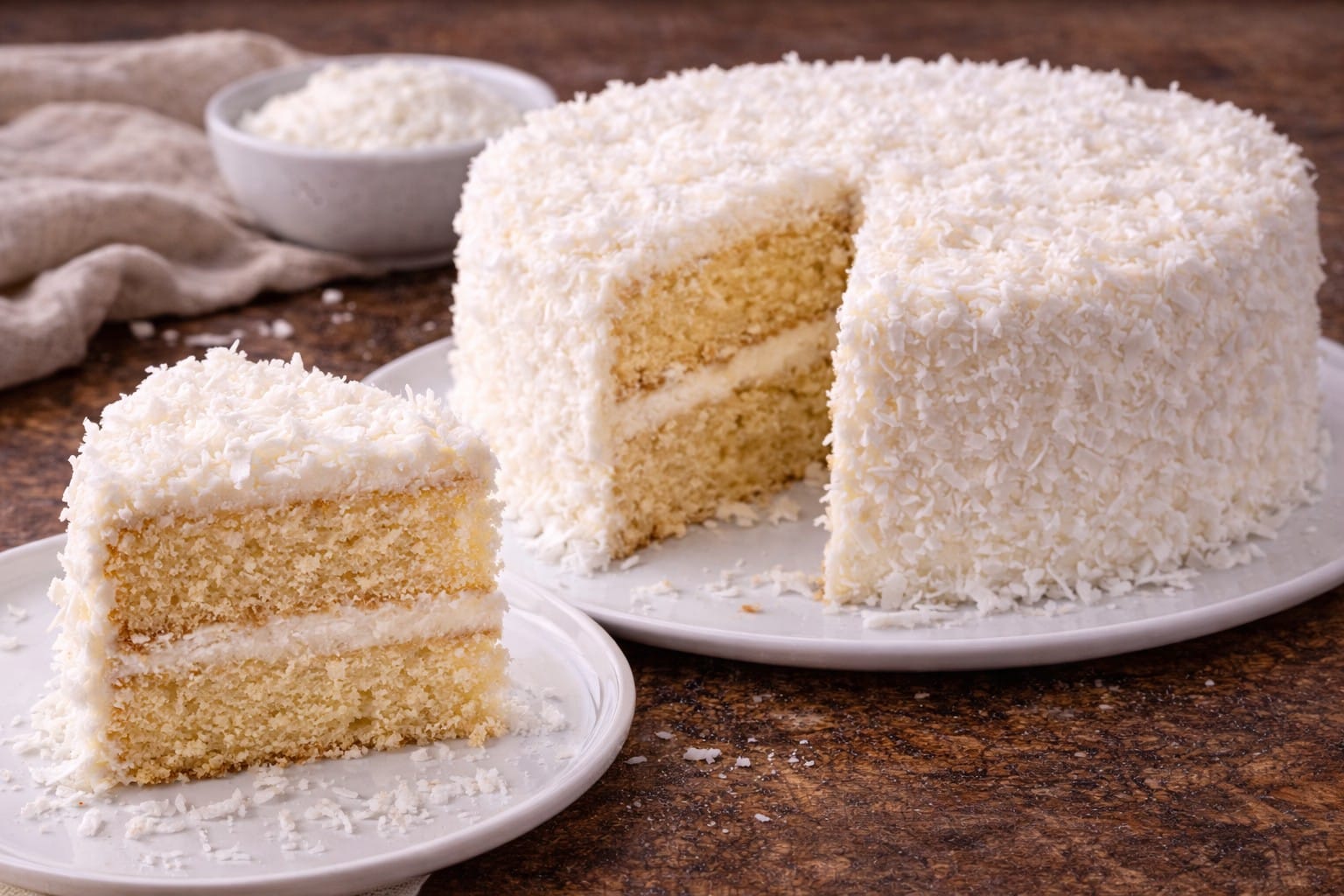
Coconut cake is a classic dessert that instantly evokes tropical warmth, special celebrations, and sweet indulgence. Its soft, tender layers, often paired with creamy frosting and a generous sprinkle of shredded coconut, make it a favorite for birthdays, holidays, and cozy family gatherings. Whether you are a beginner or an intermediate home baker, mastering coconut cake is easier than you might think—and it rewards you with layers of tropical flavor and nostalgic charm.
This guide will cover everything about coconut cake: the history behind it, essential ingredients, step-by-step instructions, expert tips, common mistakes, creative variations, storage methods, and frequently asked questions. By the end, you’ll know exactly how to create a bakery-quality coconut cake at home.
What Makes Coconut Cake Special
Coconut cake stands out because it combines tender, moist layers with a sweet, nutty flavor. Shredded coconut provides texture, while coconut milk or cream adds moisture and richness. Unlike simple vanilla cake, coconut cake has a distinct tropical taste that feels both indulgent and light.
Traditionally, coconut cake is paired with whipped cream or cream cheese frosting and topped with more shredded coconut, sometimes lightly toasted. This layering of soft cake, creamy frosting, and chewy coconut makes it a crowd favorite. The cake’s delicate balance of flavor and texture is what keeps people returning to it year after year.
A Brief History of Coconut Cake
Coconut cake has roots in Southern U.S. cuisine, particularly popular in the early 20th century. Coconut itself became widely available in the United States around the 1800s, and bakers began incorporating it into desserts for its exotic appeal. Southern-style coconut cakes often feature multiple layers with frosting between each one and shredded coconut covering the outside.
Over time, the dessert spread across the country and became synonymous with celebrations—birthdays, holidays, and weddings. Its appeal lies in its simplicity and adaptability. Today, coconut cake comes in many forms, from traditional layered cakes to cupcakes, bundts, and even dairy-free versions.
Ingredients You’ll Need
The key to a successful coconut cake is using quality ingredients. Because the flavor is simple, each component matters.
Cake Layers
- All-purpose flour – provides structure
- Baking powder – ensures a tender rise
- Salt – balances sweetness
- Unsalted butter – adds richness
- Granulated sugar – for sweetness
- Eggs – structure and moisture
- Coconut milk or cream of coconut – for moisture and coconut flavor
- Vanilla extract – enhances flavor
- Shredded sweetened coconut – texture and flavor
Frosting
- Cream cheese or butter – base for frosting
- Powdered sugar – sweetness and structure
- Vanilla extract – flavor enhancer
- Coconut extract (optional) – intensifies coconut flavor
- Shredded coconut – for garnish, toasted or plain
High-quality coconut milk and fresh shredded coconut make a noticeable difference.
Tools That Help
While coconut cake does not require specialized tools, the following make the process easier:
- Mixing bowls
- Electric mixer or hand whisk
- Measuring cups and spoons
- 8-inch round cake pans (two or three layers)
- Cooling racks
- Offset spatula for frosting
- Parchment paper for lining pans
Having the right tools ensures smooth layers, even baking, and polished frosting.
Step-by-Step Instructions
Step 1: Prepare Your Pans
Preheat your oven to 350°F (175°C). Grease the cake pans and line the bottoms with parchment paper to prevent sticking. This simple step prevents broken layers.
Step 2: Mix Dry Ingredients
In a bowl, whisk together flour, baking powder, and salt. This ensures even distribution of leavening agents and prevents clumps.
Step 3: Cream Butter and Sugar
Beat butter and sugar together until light and fluffy. Creaming incorporates air into the batter, which helps the cake rise and keeps it soft.
Step 4: Add Eggs and Extracts
Add eggs one at a time, mixing thoroughly after each addition. Stir in vanilla extract and optional coconut extract for enhanced flavor.
Step 5: Combine Wet and Dry Ingredients
Alternate adding dry ingredients and coconut milk to the butter mixture, starting and ending with dry ingredients. Mix until just combined. Overmixing develops gluten and can make the cake dense.
Step 6: Fold in Shredded Coconut
Gently fold in shredded coconut for added texture. This ensures even distribution without overworking the batter.
Step 7: Bake the Layers
Divide the batter evenly into prepared pans. Bake for 25–30 minutes, or until a toothpick inserted comes out clean. Allow the cakes to cool in the pans for 10 minutes before transferring to a cooling rack.
Step 8: Frosting and Assembly
For frosting, beat cream cheese or butter with powdered sugar and vanilla until smooth. Spread a layer of frosting between the cooled cake layers. Frost the top and sides, then press shredded coconut on the surface. Toasted coconut adds flavor and visual appeal.
Step 9: Optional Decoration
Consider adding toasted coconut, edible flowers, or fresh fruit for a visually stunning cake. Simple presentation works beautifully because the cake itself is flavorful.
Tips for Moist Coconut Cake
- Use coconut milk instead of regular milk for richer flavor.
- Avoid overmixing to maintain a tender texture.
- Apply simple syrup to layers for extra moisture.
- Wrap layers tightly if making ahead to retain softness.
- Use room-temperature ingredients for even mixing.
Common Mistakes to Avoid
- Overbaking – results in dry, crumbly layers
- Skipping parchment paper – layers may stick and break
- Using unsweetened shredded coconut – affects sweetness
- Frosting warm cake – causes frosting to melt
- Overmixing – leads to dense cake
Variations of Coconut Cake
- Pineapple Coconut Cake: Add crushed pineapple between layers for tropical sweetness
- Chocolate Coconut Cake: Add cocoa to the batter or frosting for a chocolate-coconut combo
- Mini Coconut Cupcakes: Bake in muffin tins for easy portioning
- Vegan Coconut Cake: Use plant-based butter, non-dairy milk, and flax eggs
- Coconut Cream Cake: Fill layers with coconut custard or pudding for added creaminess
Storage Tips
- Store at room temperature for 1–2 days if covered
- Refrigerate for up to 5 days; allow cake to come to room temperature before serving
- Freeze unfrosted layers for up to 2 months; thaw before assembling
- Avoid repeated thawing, which damages texture
Frequently Asked Questions
Can I use sweetened coconut milk?
Yes, but reduce sugar slightly in the batter.
Can I make this cake gluten-free?
Yes, substitute all-purpose flour with a gluten-free flour blend.
Do I need coconut extract?
Optional. Coconut milk and shredded coconut usually provide enough flavor.
Can I toast the coconut?
Yes, toasted coconut adds flavor and visual appeal.
Expert Baking Insight
The key to perfect coconut cake is balance. Moist layers, light frosting, and properly distributed shredded coconut make all the difference. Avoid rushing the process, especially cooling and frosting. Let the layers rest for flavor development, and always use high-quality coconut for the best results.
Final Thoughts
Coconut cake is a versatile, tropical-inspired dessert that works for any occasion. With tender, moist layers, creamy frosting, and a sprinkle of shredded coconut, it offers a satisfying combination of flavor and texture. Whether baked as a classic layer cake, cupcakes, or vegan version, coconut cake remains a favorite for home bakers who want a cake that’s elegant, flavorful, and unforgettable.
Once you master this recipe, it becomes a go-to dessert for birthdays, holidays, or even a simple weekend treat. Its tropical charm, light sweetness, and soft texture make coconut cake a timeless favorite that everyone will enjoy.