
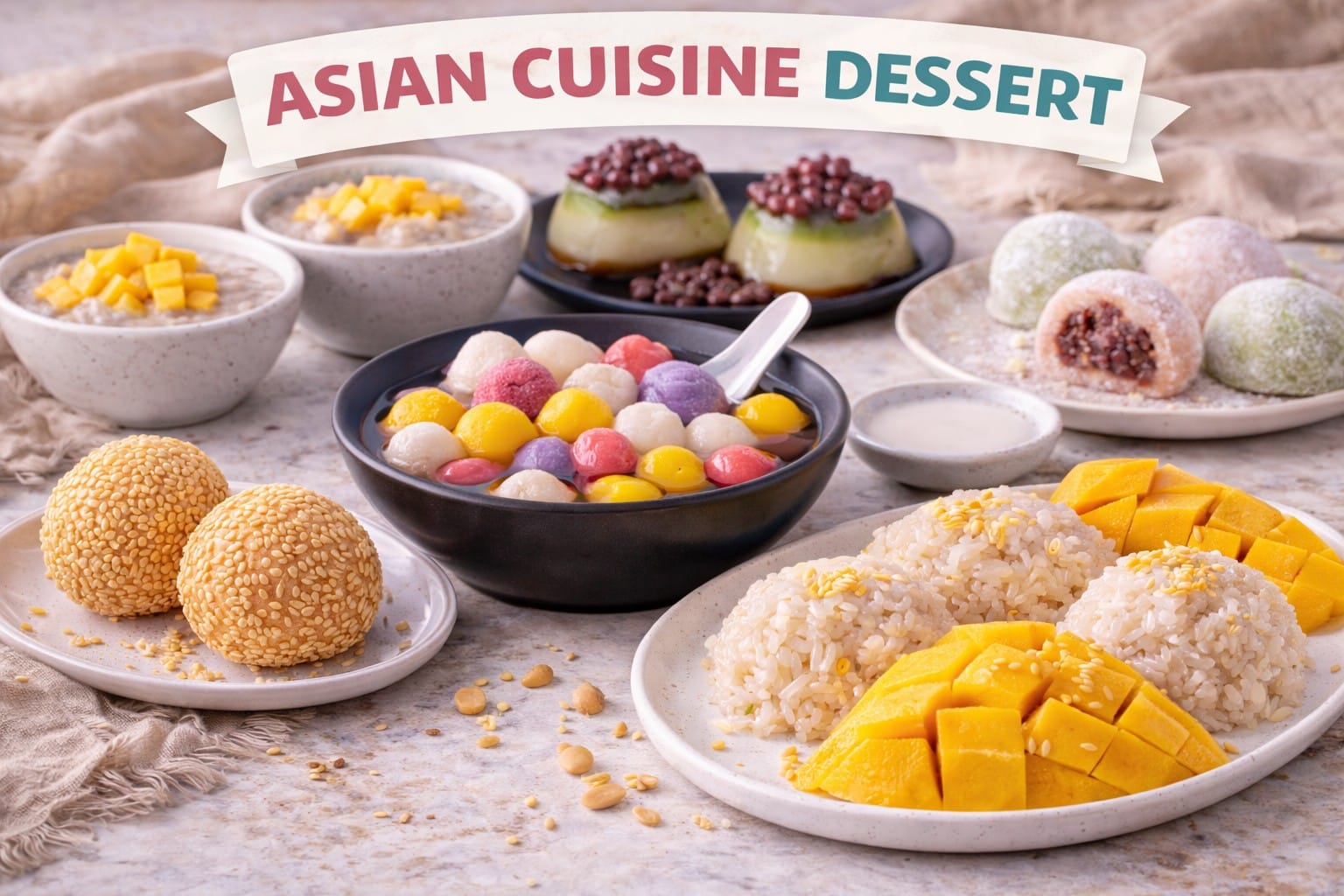
Asian cuisine desserts are diverse, flavorful, and often focus on balance rather than overly sweet indulgence. From chewy rice cakes in Korea to delicate egg tarts in China, these desserts highlight unique textures, natural sweetness, and traditional ingredients like rice, beans, coconut, and tropical fruits.
This guide explores the most popular Asian desserts, essential ingredients, preparation methods, tips for authenticity, storage, variations, and expert insights so you can enjoy these treats at home.
What Makes Asian Desserts Unique
Asian desserts often emphasize subtle sweetness and textural contrast. Unlike Western desserts, they may not rely heavily on butter, sugar, or flour. Many desserts feature natural sweeteners like palm sugar, honey, or sweetened beans. Ingredients such as rice flour, glutinous rice, coconut milk, and matcha are common.
Some key characteristics:
- Soft, chewy, or gelatinous textures
- Use of beans, nuts, and seeds
- Mild, natural sweetness
- Incorporation of floral or tea flavors
Popular Asian Desserts
1. Mochi (Japan)
Soft, chewy rice cakes made from glutinous rice flour, often filled with sweetened red bean paste, ice cream, or fruit.
2. Mango Sticky Rice (Thailand)
Sweet coconut milk-soaked glutinous rice served with fresh ripe mango slices and a drizzle of coconut sauce.
3. Mooncakes (China)
Round pastries filled with lotus seed paste, red bean paste, or salted egg yolk, traditionally eaten during the Mid-Autumn Festival.
4. Tangyuan (China)
Glutinous rice balls filled with sweet sesame or peanut paste, served in warm syrup.
5. Halo-Halo (Philippines)
Layered dessert of shaved ice, sweet beans, jellies, fruits, and milk, often topped with ice cream.
6. Bubur Cha-Cha (Malaysia/Singapore)
Coconut milk dessert with sweet potatoes, taro, and colorful tapioca cubes.
7. Red Bean Soup (China/Korea)
Sweet soup made from azuki beans, often served warm and sometimes combined with mochi or rice balls.
8. Matcha Desserts (Japan)
Green tea-flavored sweets, including cakes, puddings, and ice cream, highlighting the earthy, slightly bitter taste of matcha.
Essential Ingredients in Asian Desserts
- Rice and flours: Glutinous rice flour, rice flour, tapioca flour
- Sweeteners: Palm sugar, coconut sugar, honey, condensed milk
- Coconut products: Coconut milk, coconut cream, desiccated coconut
- Beans and seeds: Red beans (azuki), mung beans, black sesame, lotus seeds
- Fruits: Mango, jackfruit, lychee, durian, bananas
- Flavorings: Matcha, pandan, rose water, ginger, pandan leaves
Techniques and Preparation
- Steaming: Many desserts, like mochi and steamed buns, use steam for soft textures.
- Boiling: Soups, rice balls, and sweet porridges often require boiling.
- Chilling: Coconut milk-based desserts and puddings are chilled for firmness.
- Layering: Shaved ice desserts are built in layers with different textures and flavors.
Tips for Authentic Flavor
- Use authentic ingredients whenever possible, such as Japanese mochiko for mochi or Thai sticky rice for mango sticky rice.
- Balance sweetness carefully; Asian desserts are rarely as sweet as Western desserts.
- Pay attention to texture; chewy, soft, or gelatinous textures are key to authenticity.
- Experiment with garnishes like toasted sesame seeds, grated coconut, or edible flowers for a finished look.
Variations to Explore
- Mochi Ice Cream: Frozen mochi stuffed with ice cream in various flavors.
- Matcha Red Bean Cake: Combines matcha sponge or mousse with sweetened azuki beans.
- Coconut Jelly: Agar-based jelly flavored with coconut milk and pandan leaves.
- Durian Pancakes: Thin crepes filled with whipped cream and durian fruit.
Storing Asian Desserts
- Refrigeration: Coconut milk desserts, puddings, and layered treats should be stored in airtight containers for 2–3 days.
- Freezing: Mochi ice cream or frozen layered desserts can be frozen for up to a month.
- Room Temperature: Baked pastries like mooncakes or fried snacks last a few days if kept dry.
Serving Ideas
- Serve chilled desserts with fresh fruit or a drizzle of coconut milk.
- For warm soups or rice balls, serve immediately after cooking.
- Present layered shaved ice desserts in clear glasses for visual appeal.
- Garnish with sesame seeds, toasted coconut, or edible flowers for authenticity.
Frequently Asked Questions
Are Asian desserts very sweet?
They are typically milder than Western desserts, emphasizing natural flavors.
Can I make these at home easily?
Yes, with the right ingredients and simple techniques like steaming, boiling, or chilling.
Which desserts are best for beginners?
Mango sticky rice, coconut jelly, or no-bake mochi are simple starting points.
Do these desserts contain dairy?
Many Asian desserts are naturally dairy-free, often using coconut milk instead.
Expert Insight
Chefs recommend focusing on the balance of sweetness, texture, and aroma. In Asian desserts, a small ingredient like pandan or toasted sesame can elevate flavor significantly. Patience with chilling, steaming, and layering ensures the authentic texture and appearance that make these desserts special.
Final Thoughts
Asian cuisine desserts offer a world of flavors and textures beyond ordinary sweets. They are light, refreshing, and often highlight natural ingredients in creative ways. With ingredients like glutinous rice, coconut milk, tropical fruits, and beans, these desserts are satisfying yet not overly rich.
Whether you want a chewy mochi, a creamy coconut pudding, or a vibrant halo-halo, Asian desserts are versatile, elegant, and perfect for exploring new tastes at home. They show that dessert can be both indulgent and balanced, offering something for everyone’s palate.