
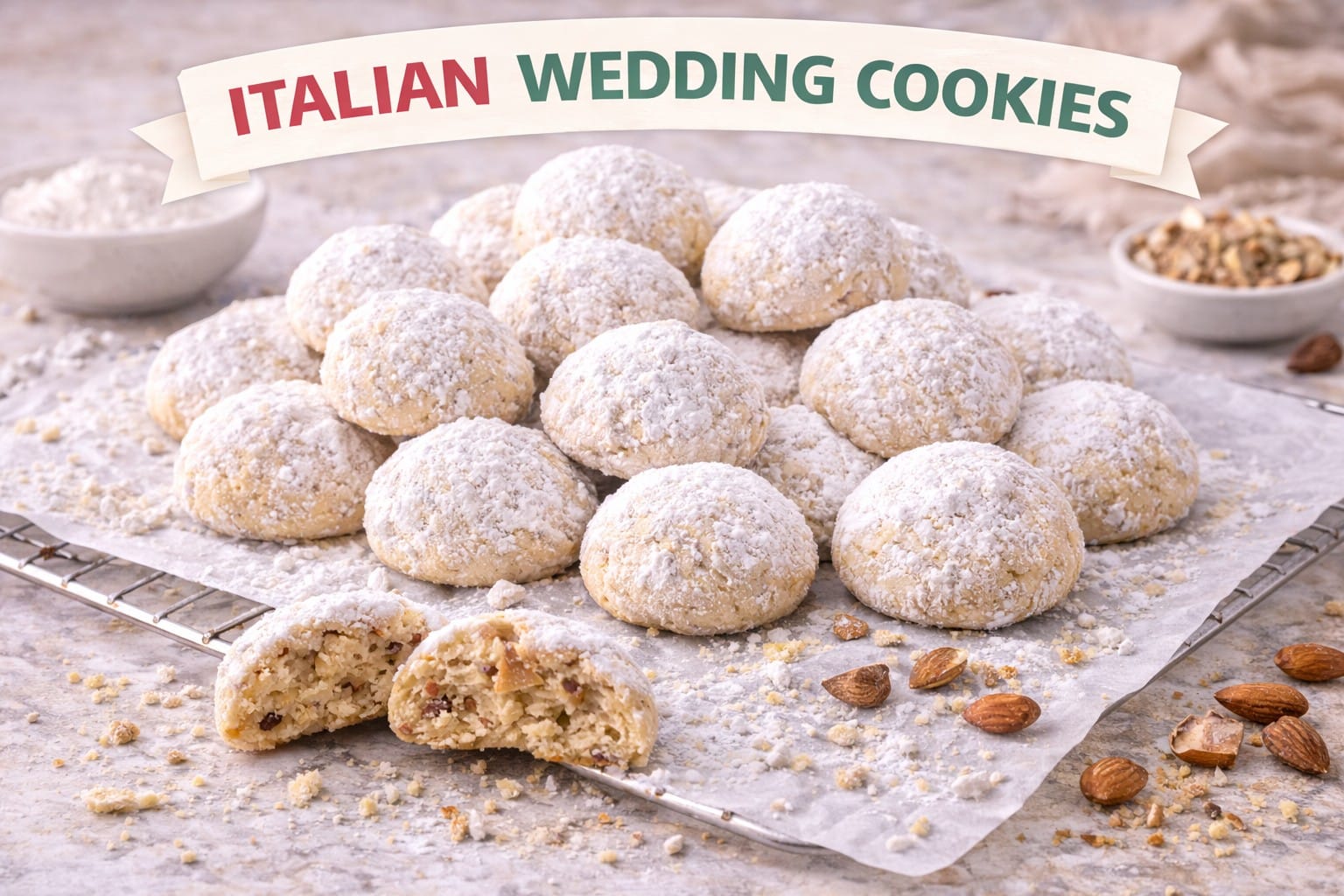
Italian wedding cookies are small, snowy-white cookies that melt in your mouth and somehow feel elegant and comforting at the same time. You may also hear them called Italian butter cookies, snowball cookies, or anginetti, depending on the region and recipe. No matter the name, these cookies are a staple at Italian weddings, holidays, and family gatherings, often piled high on dessert tables and shared with love.
This article walks you through everything you need to know about Italian wedding cookies. You’ll learn what they are, where they come from, how to make them step by step, common mistakes to avoid, variations, substitutions, storage tips, and expert tricks to get that classic soft, crumbly texture every time.
What Are Italian Wedding Cookies
Italian wedding cookies are traditionally small, round cookies coated generously in powdered sugar. They are tender, slightly crumbly, and rich without being heavy. Most versions are made with butter, flour, powdered sugar, and finely ground nuts, usually almonds.
Despite the name, these cookies are not only for weddings. Italian families bake them for Christmas, Easter, baptisms, and Sunday gatherings. The “wedding” part reflects celebration and abundance rather than a single event.
Key characteristics include:
- Bite-sized shape
- Pale, tender crumb
- Nutty flavor
- Powdered sugar coating
- Not overly sweet
A Short History of Italian Wedding Cookies
Italian wedding cookies trace their roots to southern Italy, where almonds were commonly used in desserts. Almonds symbolized good fortune, fertility, and happiness, which made them perfect for weddings and celebrations.
When Italian immigrants came to the United States, they brought these recipes with them. Over time, the cookies evolved slightly, using more butter and sometimes skipping eggs, but the heart of the recipe stayed the same.
Today, Italian wedding cookies are a classic Italian-American dessert, especially popular during the holidays.
Why These Cookies Are So Loved
Italian wedding cookies stand out because they are simple yet refined. They don’t rely on chocolate, frosting, or decorations. The texture does all the work.
People love them because:
- They melt in your mouth
- They’re not overly sweet
- They pair well with coffee or tea
- They store and freeze well
- They feel special without being fussy
They’re the kind of cookie you keep reaching for without realizing it.
Ingredients for Classic Italian Wedding Cookies
You only need a handful of basic ingredients, but quality matters here.
Main ingredients:
- Unsalted butter
- Powdered sugar
- All-purpose flour
- Finely ground almonds or almond flour
- Vanilla extract
- Salt
For coating:
- Powdered sugar
Optional flavor additions:
- Almond extract
- Lemon zest
- Orange zest
Finely ground nuts are essential. Large pieces will ruin the delicate texture.
Choosing the Right Almonds
Traditional recipes use blanched almonds ground very fine. You can do this at home with a food processor or use almond flour.
Tips for best results:
- Use finely ground almond flour, not coarse meal
- Avoid almond flour with added sugar
- If grinding at home, pulse gently to avoid turning it into paste
The finer the almonds, the more tender the cookie.
Step-by-Step Italian Wedding Cookies Recipe
Step 1: Prepare the oven
Preheat your oven to 325°F and line baking sheets with parchment paper.
Step 2: Cream butter and sugar
Beat softened butter and powdered sugar until smooth and creamy. Do not whip too much air into the mixture.
Step 3: Add flavoring
Mix in vanilla extract and a pinch of salt. If using citrus zest or almond extract, add it here.
Step 4: Add dry ingredients
Gradually add flour and ground almonds. Mix just until a soft dough forms. The dough should hold together when pressed but not feel sticky.
Step 5: Chill the dough
Chill the dough for 20 to 30 minutes. This makes shaping easier and prevents spreading.
Step 6: Shape the cookies
Roll dough into small balls, about 1 tablespoon each. Place them slightly apart on the baking sheet.
Step 7: Bake
Bake for 14 to 17 minutes. The cookies should stay pale with just a hint of color on the bottom.
Step 8: Cool slightly
Let cookies cool on the baking sheet for 5 minutes. They should still be warm but firm enough to handle.
Step 9: Coat in powdered sugar
Roll warm cookies in powdered sugar. Let them cool completely, then roll again for a thick, snowy coating.
Why Double-Coating Matters
The first coating melts slightly into the cookie, creating a base layer. The second coating gives that classic white, powdery look. Skipping the second roll makes the cookies look dull and uneven.
Texture: What You’re Aiming For
Perfect Italian wedding cookies should:
- Be tender and crumbly
- Hold their shape when picked up
- Melt quickly in your mouth
- Never feel dry or hard
If they crunch, they’re overbaked.
Common Mistakes to Avoid
Overbaking
These cookies should not brown. Color means dryness.
Using granulated sugar
Powdered sugar is essential for the right texture.
Overmixing
Too much mixing makes the cookies dense.
Skipping chilling
Warm dough spreads and loses shape.
Using coarse nuts
This ruins the smooth, melt-in-your-mouth feel.
Popular Variations You’ll See
Italian wedding cookies vary by family and region.
Almond crescents
Shape the dough into small crescent moons instead of balls.
Pecan wedding cookies
Replace almonds with finely ground pecans for a softer, nuttier flavor.
Hazelnut version
Use ground hazelnuts for a richer taste.
Chocolate-dipped wedding cookies
Dip half the cookie in melted chocolate after coating in sugar.
Sprinkle-topped cookies
Add nonpareils or sanding sugar for festive trays.
Flavor Substitutions That Work
Vanilla substitute
Use almond extract for a stronger nut flavor.
Nut-free version
Replace nuts with extra flour, though texture will be slightly less tender.
Dairy-free option
Use high-quality plant-based butter. Chill longer before baking.
Gluten-free option
Use a 1:1 gluten-free flour blend and almond flour. Chill thoroughly.
How to Store Italian Wedding Cookies
Room temperature
Store in an airtight container for up to 5 days.
Refrigerator
Not recommended, as moisture affects texture.
Freezer
Freeze baked cookies for up to 2 months. Thaw at room temperature and re-roll lightly in powdered sugar if needed.
You can also freeze unbaked dough balls and bake straight from frozen, adding one or two minutes.
Can You Make Them Ahead of Time
Yes. These cookies are ideal for make-ahead baking. In fact, the flavor improves after a day as the ingredients settle.
Bake them a day or two before serving for best results.
Why They’re Perfect for Weddings and Events
Italian wedding cookies are practical as well as symbolic.
They:
- Don’t melt
- Don’t need refrigeration
- Stack well on trays
- Travel easily
- Appeal to all ages
That’s why they remain a favorite for large gatherings.
Serving Ideas
Serve Italian wedding cookies:
- With espresso or cappuccino
- On holiday cookie platters
- In small paper cups at weddings
- As part of dessert tables
- Wrapped in clear bags as favors
They pair especially well with coffee and tea.
Expert Baking Tips
Weigh your flour for accuracy if possible.
Always bake a test cookie first.
Use parchment, not greased pans.
Handle gently when warm to prevent breaking.
Roll in sugar while still warm, not hot.
Final Thoughts
Italian wedding cookies are a reminder that simple baking can still feel special. With a short ingredient list and a gentle technique, these cookies deliver elegance, tradition, and comfort in every bite. Whether you’re baking for a celebration or just want a timeless cookie to keep on hand, this recipe gives you reliable, classic results.
Once you make them at home, it’s easy to understand why Italian wedding cookies have been passed down through generations and still hold a place of honor on dessert tables today.