
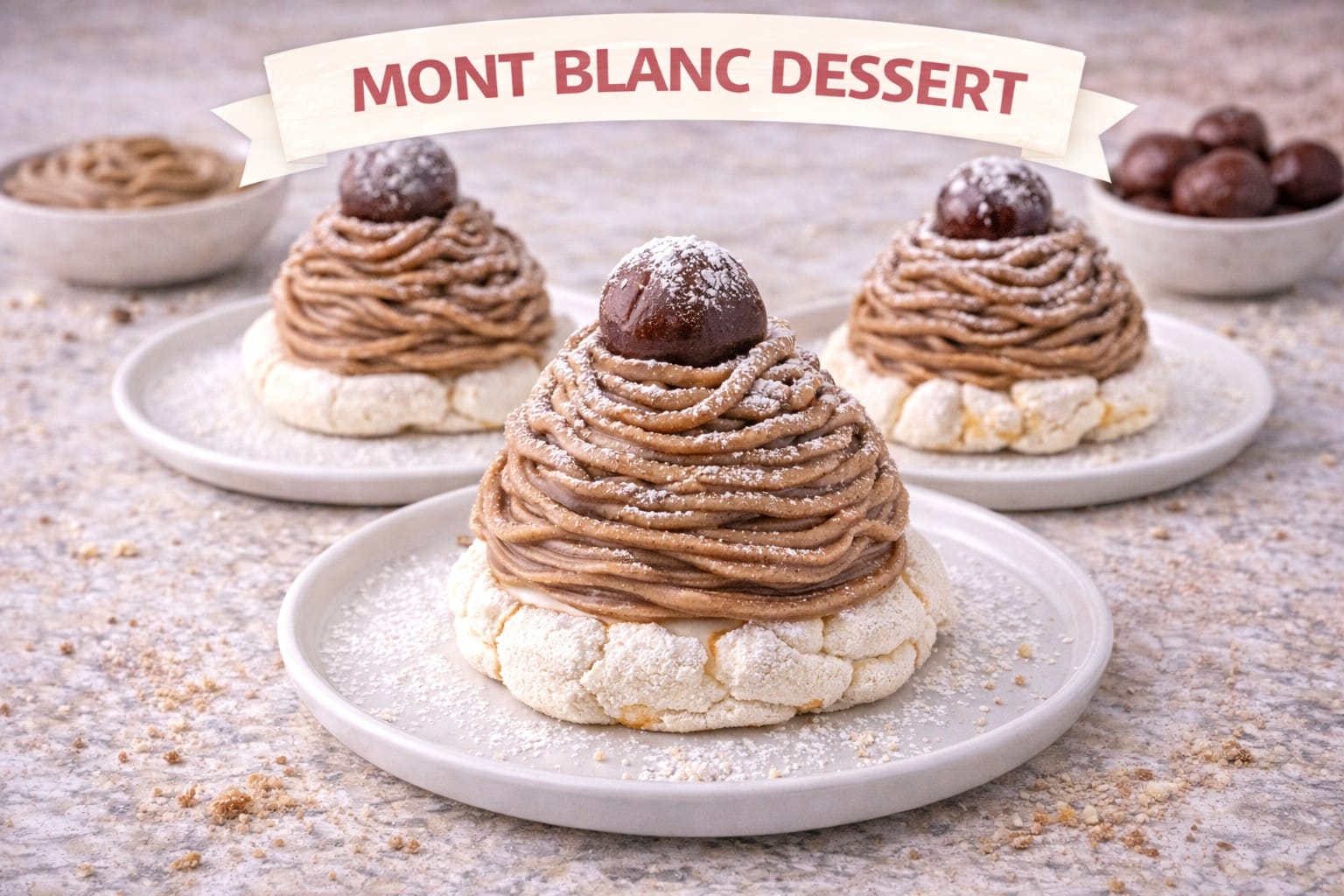
Mont Blanc dessert is a refined European classic known for its delicate appearance and rich chestnut flavor. Named after Mont Blanc, the highest mountain in the Alps, this dessert is designed to resemble snow-covered peaks with thin strands of chestnut cream piled high over a soft base and topped with whipped cream. It’s elegant, unique, and deeply comforting at the same time.
This article covers everything you need to know about the Mont Blanc dessert, including its origins, ingredients, step-by-step preparation, texture and flavor details, variations, common mistakes, storage tips, and expert baking advice. By the end, you’ll understand why this dessert remains a favorite in French, Italian, and Japanese pastry culture.
What Is Mont Blanc Dessert
Mont Blanc dessert is a chestnut-based pastry traditionally made with sweetened chestnut purée piped into thin strands, layered over a meringue or sponge base, and finished with lightly sweetened whipped cream. The final look mimics a snowy mountain peak.
Key components include:
- Chestnut cream or chestnut purée
- Whipped cream
- A base such as meringue, sponge cake, or tart shell
- Optional powdered sugar for a snow-like finish
The flavor is mildly sweet, nutty, creamy, and balanced, making it different from heavily chocolate-based desserts.
Origins of Mont Blanc Dessert
Mont Blanc dessert originated in Europe, with both France and Italy claiming its roots. In France, it is associated with Alpine regions, while in Italy it is linked to Piedmont, an area famous for chestnuts.
Over time, the dessert gained popularity in Japan, where Mont Blanc pastries are now extremely refined, often made fresh to order with ultra-fine chestnut strands and modern presentations.
Despite regional differences, the core idea remains the same: chestnuts as the star ingredient.
Why Chestnuts Are the Star
Chestnuts are naturally sweet, starchy, and smooth when cooked and puréed. Unlike other nuts, they don’t have strong oils, which gives Mont Blanc its clean, creamy mouthfeel.
Chestnuts provide:
- Earthy sweetness
- Smooth, silky texture
- A unique nut flavor without bitterness
They pair beautifully with whipped cream and light bases.
Ingredients You’ll Need
Chestnut Cream
- 1 ½ cups sweetened chestnut purée
- 2–3 tbsp unsalted butter, softened
- 2–4 tbsp powdered sugar (to taste)
- 1–2 tbsp heavy cream or milk
- 1 tsp vanilla extract or rum (optional)
Whipped Cream
- 1 cup heavy whipping cream
- 2 tbsp powdered sugar
- ½ tsp vanilla extract
Base Options
Choose one:
- Meringue disks
- Vanilla sponge cake
- Shortcrust tart shells
- Pound cake slices
Optional Garnish
- Powdered sugar
- Candied chestnuts
- Cocoa powder or chocolate shavings
Step-by-Step Mont Blanc Dessert Recipe
Step 1: Prepare the Chestnut Cream
In a bowl, combine chestnut purée, butter, powdered sugar, cream, and vanilla or rum. Mix until smooth and pipeable. Adjust sweetness and thickness as needed. Transfer to a piping bag fitted with a Mont Blanc tip or small round holes.
Step 2: Make the Whipped Cream
Beat cold heavy cream with powdered sugar and vanilla until soft to medium peaks form. Do not overwhip. Chill until ready to use.
Step 3: Prepare the Base
If using sponge cake or tart shells, ensure they are completely cool. If using meringue, bake and cool thoroughly so it stays crisp.
Step 4: Assemble
Place the base on a serving plate. Pipe a generous swirl of whipped cream in the center. Pipe chestnut cream over the whipped cream in thin strands, moving in circular motions to create a mountain shape.
Step 5: Finish
Lightly dust with powdered sugar to resemble snow. Garnish with a candied chestnut if desired.
Texture and Flavor Profile
Mont Blanc dessert is all about balance.
You’ll experience:
- Creamy, nutty chestnut strands
- Light, airy whipped cream
- A contrasting base that adds structure
It’s rich but not heavy, sweet but not overpowering.
Popular Mont Blanc Variations
French Mont Blanc
Uses meringue as the base with rum-scented chestnut cream.
Italian Mont Blanc
Often includes cocoa or chocolate accents and sponge cake.
Japanese Mont Blanc
Features ultra-fine chestnut strands, lighter sweetness, and modern plating.
Chocolate Mont Blanc
Adds cocoa powder or chocolate ganache beneath the chestnut layer.
Matcha Mont Blanc
Uses matcha-flavored sponge or cream for a Japanese twist.
Common Mistakes to Avoid
- Using unsweetened chestnut purée without adjusting sugar
- Making chestnut cream too thick to pipe
- Overwhipping whipped cream
- Assembling too early, causing moisture absorption
- Using a heavy cake base that overpowers chestnut flavor
Tips for Professional Results
- Use a Mont Blanc piping tip for authentic thin strands
- Chill components before assembly
- Taste and adjust sweetness gradually
- Use high-quality chestnut purée for best flavor
- Assemble shortly before serving
Storage Instructions
- Assembled Mont Blanc: refrigerate up to 24 hours
- Chestnut cream: refrigerate up to 3 days
- Whipped cream: best used within 24 hours
- Do not freeze assembled desserts
Serving Suggestions
- Serve chilled, not cold
- Pair with espresso or black tea
- Serve as individual portions for elegance
Why Mont Blanc Dessert Is So Popular
Mont Blanc stands out because it’s refined, nostalgic, and visually stunning. It highlights chestnuts in a way few desserts do, offering a unique alternative to chocolate-heavy pastries. Its balance of texture, subtle sweetness, and elegance makes it a favorite in pâtisseries around the world.
Final Thoughts
Mont Blanc dessert is a celebration of chestnuts, simplicity, and craftsmanship. With its signature piped strands, soft whipped cream center, and delicate base, it’s a dessert that feels luxurious without being overwhelming. Whether you make a traditional French version or a modern twist, Mont Blanc remains one of the most elegant and memorable desserts you can serve.