
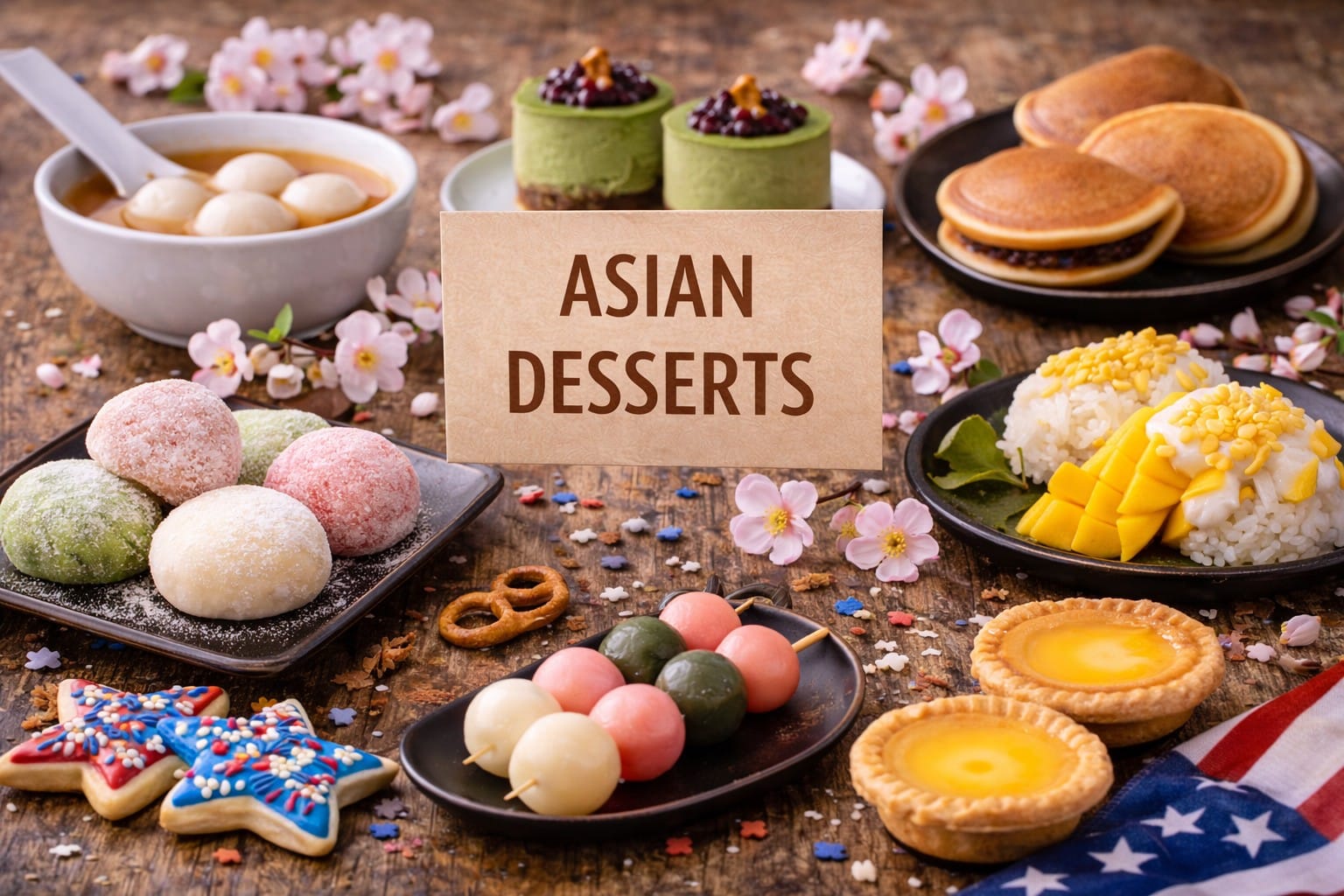
Asian desserts are wonderfully different from many Western sweets. They tend to be lighter, less sugary, and more focused on texture than intense sweetness. Instead of heavy frosting or rich buttercream, you’ll often find soft, chewy, creamy, or jelly-like treats that feel comforting and balanced. That’s exactly why many home bakers fall in love with them.
This article walks you through what Asian desserts are, common ingredients, popular types across regions, easy desserts to try at home, tips for beginners, common mistakes, variations, substitutions, storage advice, FAQs, and expert insights, all written clearly for home bakers who want approachable results.
What Are Asian Desserts?
Asian desserts cover a wide range of sweets from East Asia, Southeast Asia, and South Asia. While flavors and techniques vary by country, many desserts share a few common traits.
They are often mildly sweet, not overly rich, and designed to feel refreshing. Texture plays a huge role, sometimes even more than flavor. Ingredients like rice, coconut, beans, fruit, and milk appear frequently. Many desserts are steamed, chilled, or served at room temperature rather than baked.
Once you understand these basics, Asian desserts feel much less intimidating.
How Asian Desserts Differ from Western Desserts
The biggest difference is sweetness level. Asian desserts usually let natural flavors shine instead of relying on lots of sugar.
Another difference is texture. Chewy mochi, silky custards, jelly-like agar desserts, and soft sponge cakes are common. Visual simplicity is also valued. Many desserts look modest but taste deeply comforting.
Instead of butter-heavy recipes, you’ll see coconut milk, rice flour, and starch-based thickeners used more often.
Common Ingredients in Asian Desserts
Certain ingredients appear again and again across different countries.
Rice flour and glutinous rice flour are used for chewy textures. Coconut milk adds richness without heaviness. Red beans and mung beans provide gentle sweetness. Pandan gives a floral, vanilla-like aroma. Sesame seeds add nutty depth. Agar-agar and gelatin create clean, firm jellies. Fresh fruit like mango, banana, and lychee adds natural sweetness.
These ingredients are easier to find now than ever.
Popular Types of Asian Desserts by Region
Asian desserts vary widely depending on location.
East Asian Desserts
Japanese desserts include mochi, dorayaki, and matcha-flavored treats. Chinese desserts often feature custards, buns, and sweet soups. Korean desserts include rice cakes and shaved ice desserts.
Southeast Asian Desserts
Thai desserts use coconut milk, palm sugar, and tropical fruits. Filipino desserts are often colorful and playful. Vietnamese desserts include chilled puddings and bean-based sweets.
South Asian Desserts
Indian and Pakistani desserts are richer, often milk-based, and spiced with cardamom or saffron. Popular examples include gulab jamun, kheer, and barfi.
Each region offers a different kind of sweetness.
Easy Asian Desserts to Make at Home
Many Asian desserts are beginner-friendly and don’t require an oven.
Mango sticky rice combines coconut milk, rice, and fresh fruit. Coconut milk jelly sets quickly and slices cleanly. Sesame balls use a crisp exterior with a soft filling. Rice pudding-style desserts rely on gentle simmering. Matcha no-bake desserts come together quickly with minimal tools.
Starting with no-bake or steamed desserts builds confidence fast.
Texture: The Heart of Asian Desserts
Texture matters just as much as taste.
Chewy desserts like mochi should stretch without being tough. Custards should be smooth, not bubbly. Jellies should hold their shape but melt gently in the mouth. Steamed cakes should feel light and springy.
Paying attention to texture is the key to success.
Tips for Making Asian Desserts Successfully
Measure ingredients carefully, especially starches and flours. Cook gently and avoid high heat unless specified. Stir constantly when working with milk-based mixtures. Taste as you go, since sweetness levels vary by preference. Let desserts cool or chill fully, as texture often improves with time.
Patience usually leads to better results.
Common Mistakes to Avoid
Overcooking rice-based desserts makes them gummy. Adding too much sugar hides delicate flavors. Rushing chilling time leads to soft or uneven textures. Substituting ingredients without understanding their role causes texture issues. Expecting desserts to taste very sweet leads to disappointment.
Understanding the goal of each dessert helps avoid frustration.
Popular Variations to Try
Asian desserts are flexible and open to creativity.
Swap mango for strawberry or peach. Add matcha, cocoa, or coffee flavors. Use black sesame instead of white. Turn traditional desserts into cups or jars. Add nuts or seeds for crunch.
Small changes can create exciting results.
Ingredient Substitutions for Home Bakers
Some substitutions work well when ingredients are hard to find.
Coconut cream can replace coconut milk for richness. Cornstarch can substitute for some starches in jellies. Jasmine rice works for many rice desserts. Frozen fruit often works just as well as fresh. Vanilla can replace pandan when needed.
Always consider texture before swapping.
Storage and Make-Ahead Tips
Many Asian desserts store well when handled properly.
Chilled desserts keep best in airtight containers. Rice-based desserts should be eaten within two days. Jellies hold their shape longer when refrigerated. Steamed cakes dry out quickly and should be covered tightly. Freezing is usually not recommended unless specified.
Freshness makes a noticeable difference.
Serving Asian Desserts
Serve most desserts slightly chilled or at room temperature. Keep portions modest, since flavors are subtle. Pair desserts with tea for balance. Simple presentation often works better than heavy decoration.
Let the dessert speak for itself.
Frequently Asked Questions
Asian desserts are usually less sweet than Western desserts. Many are naturally gluten-free. Not all require special tools. Coconut milk is commonly used instead of cream. Texture is often more important than sweetness.
Knowing this helps set expectations.
Expert Insight
The beauty of Asian desserts lies in restraint. Instead of overwhelming the palate, they invite you to slow down and notice texture, aroma, and balance. When home bakers stop trying to make them sweeter and focus on technique, the results improve dramatically.
Respecting the original intent of the dessert makes all the difference.
Final Thoughts
Asian desserts offer a refreshing change from heavy, sugar-filled sweets. They’re comforting, interesting, and often easier to make than they look. With simple ingredients, gentle techniques, and an open mind about sweetness, home bakers can create beautiful desserts that feel both new and familiar.
Once you get comfortable with the textures and flavors, Asian desserts become a rewarding addition to any home baking routine.