
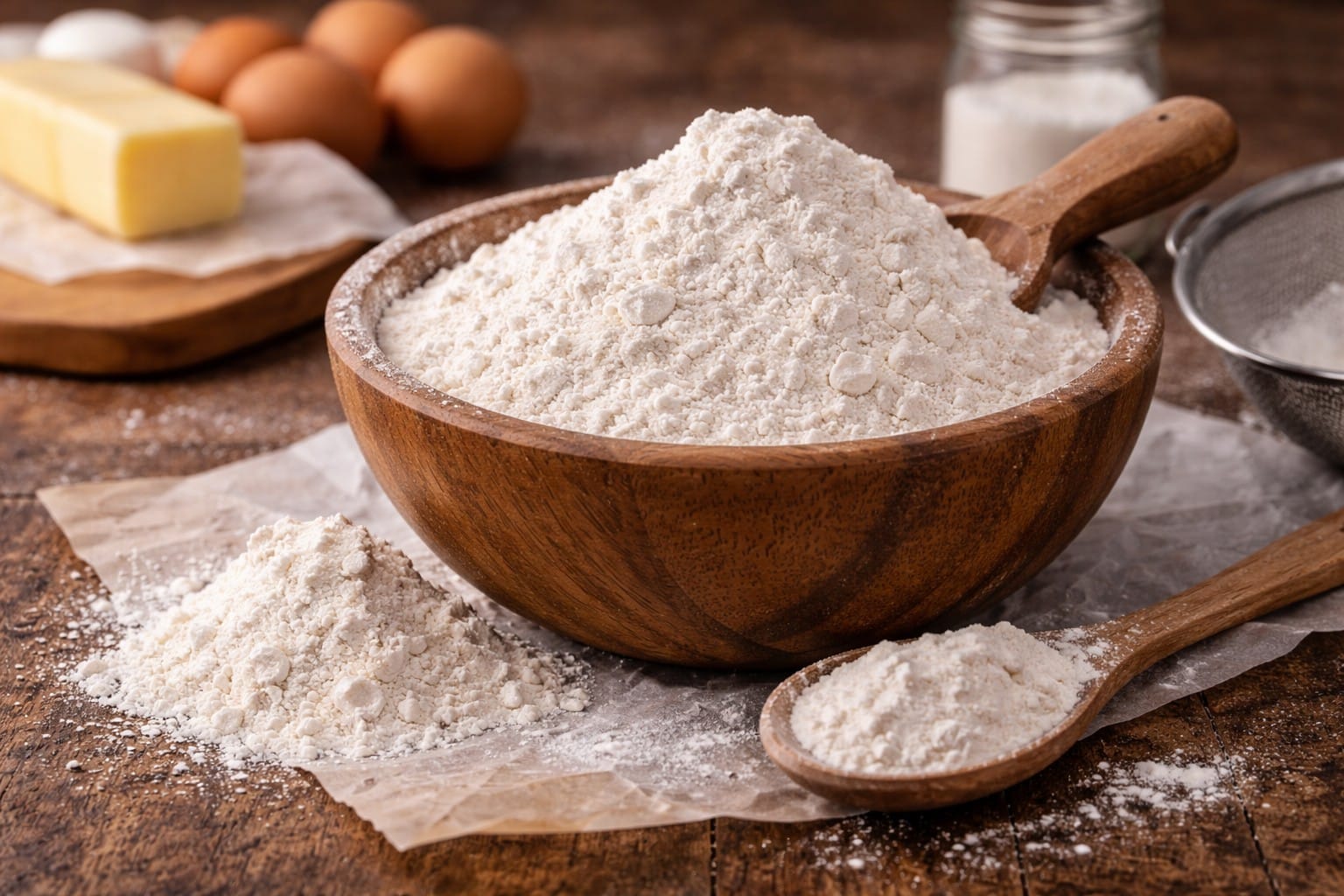
Cake flour is one of those baking ingredients that sounds fancy but is actually very practical. If you’ve ever baked a cake that turned out dense, dry, or slightly tough, flour choice may have been part of the problem. Cake flour exists for one main reason: to make baked goods softer, lighter, and more tender.
This guide explains cake flour in a clear, home-baker-friendly way. You’ll learn what cake flour is, how it’s different from other flours, when to use it, how to substitute it, common mistakes, storage tips, and expert insights so you can decide when it truly makes a difference.
What Is Cake Flour?
Cake flour is a finely milled wheat flour with a lower protein content than all-purpose flour. Most cake flour contains about 7 to 9 percent protein, while all-purpose flour usually sits around 10 to 12 percent.
That lower protein level means less gluten forms when the batter is mixed. Less gluten leads to a softer crumb, lighter texture, and more delicate structure, which is exactly what you want in many cakes.
Why Protein Content Matters in Baking
Protein is what turns into gluten when flour is mixed with liquid.
Gluten gives structure and chew. That’s great for bread, but not ideal for tender cakes. When too much gluten develops, cakes can become tough or rubbery.
Cake flour limits gluten formation, helping cakes rise evenly and feel soft instead of heavy.
How Cake Flour Is Different From All-Purpose Flour
The difference goes beyond protein.
Cake flour is more finely milled, which helps it absorb liquid evenly. Many brands are also bleached, which slightly changes how starches behave. This bleaching allows cakes to set faster and rise better.
All-purpose flour is designed to work “well enough” for many recipes. Cake flour is designed to work exceptionally well for cakes.
Does Cake Flour Make a Big Difference?
In some recipes, yes. In others, not as much.
Cake flour shines in light, delicate cakes like sponge cake, chiffon cake, angel food cake, and classic layer cakes. It also works beautifully in cupcakes and some tender cookies.
For denser cakes like pound cake, banana bread, or carrot cake, all-purpose flour often works just fine. Texture goals matter more than rules.
When You Should Use Cake Flour
Cake flour works best when softness is the priority.
Use it for layer cakes, cupcakes, sheet cakes, sponge cakes, and roll cakes. It’s also helpful for recipes with lots of sugar and fat, since those ingredients already weaken structure.
If a recipe specifically calls for cake flour, it’s usually worth using it.
When Cake Flour Isn’t Necessary
Not every baked good needs cake flour.
Cookies, brownies, muffins, quick breads, and dense cakes often benefit from the strength of all-purpose flour. Using cake flour in these recipes can make them crumbly or fragile.
Structure matters just as much as tenderness.
How Cake Flour Affects Cake Texture
Cake flour produces a finer crumb with smaller air pockets.
Cakes made with it tend to rise evenly and slice cleanly. The texture feels soft and light rather than chewy. Frosted cakes especially benefit because the layers stay tender under the weight of frosting.
It won’t fix every baking problem, but it supports good technique.
Common Types of Cake Flour
Most grocery stores carry one main type of cake flour.
Traditional cake flour is bleached and finely milled. Some brands offer unbleached cake flour, though it behaves slightly differently. Gluten-free cake flour blends also exist and are designed to mimic the softness of traditional cake flour using alternative grains.
Always check labels when baking for dietary needs.
How to Measure Cake Flour Correctly
Accurate measuring matters even more with cake flour.
Spoon the flour into the measuring cup, then level it off with a flat edge. Avoid scooping directly from the bag, as this packs the flour and leads to too much in the cup.
Because cake flour is light, small measurement errors can change texture.
Can You Substitute All-Purpose Flour for Cake Flour?
Yes, with a simple adjustment.
To make a cake flour substitute, measure 1 cup of all-purpose flour, remove 2 tablespoons, and replace them with 2 tablespoons of cornstarch. Sift the mixture together well.
This lowers the protein and mimics the softness of cake flour for most recipes.
How Accurate Is the Cake Flour Substitute?
The substitute works well in most home baking situations.
While it’s not identical to store-bought cake flour, the difference is usually small. For casual baking, cupcakes, and everyday cakes, the substitute performs reliably.
For professional-style sponge cakes, true cake flour still performs best.
Common Mistakes When Using Cake Flour
Several issues come up repeatedly.
Overmixing can still create toughness, even with cake flour. Using cake flour in recipes that need structure can cause collapsing. Measuring too much flour makes cakes dry. Skipping sifting can lead to uneven texture.
Cake flour helps, but technique still matters.
Does Cake Flour Affect Flavor?
Cake flour itself has a very mild flavor.
What it changes is how flavor is experienced. Softer textures allow sweetness, vanilla, citrus, and cocoa to come through more clearly. Dense or tough textures can mute flavor.
Texture and taste are closely connected.
Cake Flour and Gluten Development
Cake flour reduces gluten, but it doesn’t eliminate it.
Gentle mixing is still important. Folding instead of beating helps preserve air. Adding dry ingredients last prevents unnecessary gluten formation.
Think of cake flour as a helper, not a replacement for good technique.
Baking Cakes Without Cake Flour
Many excellent cakes are made with all-purpose flour.
If a recipe is written for all-purpose flour, don’t automatically swap in cake flour. Doing so can weaken the structure too much. Trust the recipe’s intent.
The best flour is the one the recipe was designed for.
Cake Flour in Cupcakes
Cupcakes benefit greatly from cake flour.
It helps them rise evenly, dome gently, and stay soft even after cooling. Frosted cupcakes feel lighter and less dense when cake flour is used correctly.
That’s why many bakery-style cupcake recipes rely on it.
Cake Flour in Sponge and Angel Food Cakes
These cakes almost always call for cake flour.
Sponge cakes depend on air and egg structure rather than fat. Cake flour supports that airy texture without weighing it down.
Using all-purpose flour here often leads to heaviness.
Can Cake Flour Be Used for Cookies?
Sometimes, but carefully.
Cake flour can be used for soft, tender cookies like sugar cookies or shortbread-style cookies. It’s not ideal for chewy cookies like chocolate chip cookies, which need stronger gluten structure.
Cookie texture goals should guide flour choice.
Storage Tips for Cake Flour
Proper storage keeps cake flour fresh.
Store it in an airtight container in a cool, dry place. Avoid humidity, which can cause clumping. If you don’t use it often, freezing extends shelf life without affecting performance.
Always check for freshness before baking.
How Long Does Cake Flour Last?
Unopened cake flour usually lasts about one year.
Once opened, it’s best used within six to eight months for best results. Stale flour can produce flat-tasting cakes.
Label containers with opening dates to keep track.
Cake Flour vs Pastry Flour
These flours are similar but not identical.
Pastry flour has slightly more protein than cake flour. It works well for pie crusts, biscuits, and some cookies. Cake flour is softer and better for delicate cakes.
They’re related, but not interchangeable in every recipe.
Cake Flour for Home Bakers
Cake flour isn’t mandatory, but it’s useful.
Keeping it on hand makes sense if you bake cakes often. If cakes are an occasional treat, the homemade substitute works just fine.
Flexibility is part of confident baking.
Frequently Asked Questions About Cake Flour
Is cake flour gluten-free?
No, it still contains wheat.
Can I use cake flour for bread?
No, bread needs higher protein.
Does cake flour make cakes rise more?
It helps with even rise, not height alone.
Can I make cake flour at home?
Yes, using all-purpose flour and cornstarch.
Expert Insight
Cake flour works best when it supports the goal of the recipe instead of fighting it. It doesn’t magically fix baking mistakes, but it smooths out texture and helps cakes feel polished and bakery-like. When paired with gentle mixing and proper measuring, it creates cakes that feel soft, intentional, and balanced rather than dense or heavy.
It’s a subtle tool, but a powerful one.
Final Thoughts
Cake flour is all about tenderness. It exists to make cakes softer, lighter, and more enjoyable to eat. While it’s not required for every recipe, it plays a key role in many classic cakes and cupcakes.
Understanding when and why to use cake flour gives you more control in the kitchen. Once you learn how it behaves, you can choose the right flour with confidence and bake cakes that feel just right every time.