
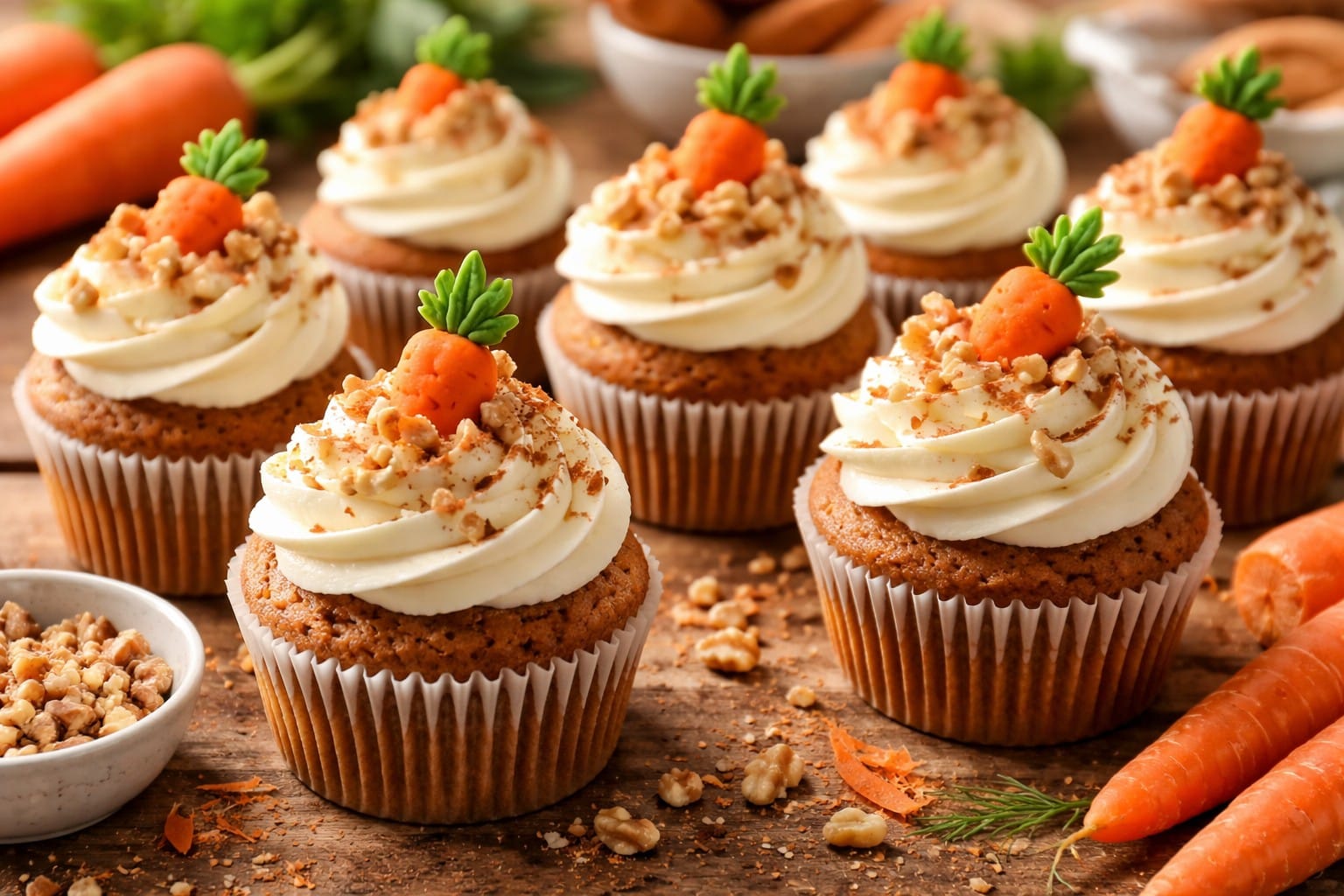
Carrot cake cupcakes are one of those desserts that feel comforting and special at the same time. They’re warmly spiced, incredibly moist, and packed with flavor, yet they don’t require complicated techniques or fancy ingredients. When done right, carrot cake cupcakes are soft, tender, and rich without feeling heavy, topped with tangy cream cheese frosting that ties everything together.
This guide covers everything you need to know about carrot cake cupcakes, including what makes them different from regular cupcakes, ingredient choices, step-by-step baking guidance, common mistakes, variations, storage tips, and expert advice to help you get consistent results at home.
What Makes Carrot Cake Cupcakes Unique?
Carrot cake cupcakes stand out because moisture comes from vegetables rather than just fat or liquid. Finely grated carrots release water as they bake, keeping the cupcakes soft and tender for days.
Spices like cinnamon and nutmeg add warmth, while brown sugar contributes depth and richness. Unlike plain cupcakes, carrot cake cupcakes feel hearty yet balanced.
They’re sweet, but not cloying. Rich, but not dense.
Ingredients You’ll Need
Carrot cake cupcakes rely on simple, familiar ingredients.
All-purpose flour provides structure. Brown sugar adds moisture and caramel-like flavor. Granulated sugar balances sweetness. Baking soda and baking powder help with lift. Cinnamon and nutmeg create warmth. Salt sharpens flavor. Vegetable oil keeps cupcakes moist. Eggs bind everything together. Grated carrots provide moisture and texture. Vanilla extract rounds out the flavor.
Optional add-ins like nuts or raisins are common but not required.
Why Oil Works Best for Carrot Cake Cupcakes
Oil is essential for carrot cake cupcakes.
Butter firms up as it cools, which can make cupcakes feel dry. Oil stays liquid, keeping the crumb soft even after refrigeration. Since carrot cake relies on spices and carrots for flavor, butter isn’t necessary.
Oil creates the signature moist texture people expect.
Choosing and Preparing Carrots
Fresh carrots matter more than you might think.
Whole carrots grated at home provide better moisture and flavor than pre-shredded carrots, which are often dry. Use the fine side of a grater so the carrots blend smoothly into the batter.
Large carrot pieces can weigh down cupcakes and create uneven texture.
Step-by-Step Carrot Cake Cupcake Method
Start by preheating your oven to 350°F and lining a muffin pan with paper liners.
In a bowl, whisk together flour, baking powder, baking soda, salt, cinnamon, and nutmeg.
In another bowl, whisk oil, brown sugar, granulated sugar, eggs, and vanilla until smooth.
Add the dry ingredients to the wet mixture and stir gently until just combined. Fold in the grated carrots last.
Fill cupcake liners about two-thirds full. Bake for 18 to 22 minutes, until the tops spring back lightly when touched.
Let cupcakes cool completely before frosting.
Why Gentle Mixing Matters
Overmixing develops gluten, which leads to dense cupcakes.
Once the flour is added, stir slowly and stop as soon as the batter comes together. Carrot cake cupcakes should feel tender, not chewy.
A light hand makes a big difference.
How to Tell When Carrot Cake Cupcakes Are Done
Carrot cake cupcakes don’t brown much on top, so visual cues can be subtle.
Look for set tops and slight spring-back when touched. A toothpick should come out clean or with a few moist crumbs.
Overbaking dries them out quickly.
Common Carrot Cake Cupcake Mistakes
Dry cupcakes usually come from overbaking or too much flour. Dense cupcakes often mean overmixing. Greasy liners can happen if the cupcakes are underbaked. Bland flavor usually means not enough spice or salt.
Most issues are easy to fix once you know what to watch for.
Cream Cheese Frosting: The Classic Pairing
Cream cheese frosting is the traditional topping for carrot cake cupcakes.
Its tangy flavor balances the sweetness and spice of the cake. The creamy texture contrasts beautifully with the tender crumb.
This pairing is classic for a reason.
Simple Cream Cheese Frosting Recipe
Cream cheese frosting is easy and forgiving.
Beat softened cream cheese and butter until smooth. Add powdered sugar gradually. Mix in vanilla and a pinch of salt.
The frosting should be creamy and spreadable, not runny. Chill briefly if needed.
Frosting Alternatives If You Want Variety
If you want something different, there are options.
Vanilla buttercream makes cupcakes sweeter. Whipped cream frosting feels lighter. Maple frosting pairs well with warm spices. Brown butter frosting adds depth.
Each option changes the personality of the cupcake.
Optional Add-Ins and Mix-Ins
Carrot cake cupcakes adapt easily.
Chopped walnuts or pecans add crunch. Raisins add sweetness. Crushed pineapple increases moisture. Coconut adds texture.
Add-ins should be folded in gently and used sparingly.
How to Keep Carrot Cake Cupcakes Extra Moist
Moisture comes from balance, not shortcuts.
Measure flour correctly by spooning and leveling. Use fresh carrots. Don’t overbake. Oil and brown sugar already provide plenty of moisture.
Extra liquid usually isn’t necessary.
Making Carrot Cake Cupcakes Ahead of Time
Unfrosted cupcakes can be baked one day in advance and stored covered at room temperature.
Cream cheese frosting can be made ahead and refrigerated. Bring it to room temperature and rewhip before using.
This makes party prep much easier.
How to Store Carrot Cake Cupcakes
Because of the cream cheese frosting, frosted cupcakes should be stored in the refrigerator.
Bring them to room temperature before serving so the flavor and texture shine.
Unfrosted cupcakes keep well at room temperature for up to two days.
Freezing Carrot Cake Cupcakes
Carrot cake cupcakes freeze well when unfrosted.
Wrap tightly and freeze for up to three months. Thaw at room temperature before frosting.
Freezing is helpful for baking ahead.
Making Them Gluten-Free
Use a one-to-one gluten-free baking flour blend.
Check that your baking powder and spices are gluten-free. Texture may be slightly softer, but flavor stays excellent.
Carrot cake adapts well to gluten-free baking.
Dairy-Free Options
Carrot cake cupcakes are easy to make dairy-free.
The cake itself uses oil instead of butter. For frosting, use dairy-free cream cheese and vegan butter alternatives.
The result is still rich and satisfying.
Frequently Asked Questions
Carrot cake cupcakes bake at 350°F. Finely grated carrots work best. Oil keeps cupcakes moist longer than butter. Cream cheese frosting is traditional. Overmixing causes dense cupcakes.
These answers solve most common concerns.
Expert Baking Tips
Use room-temperature eggs for smoother batter. Weigh flour if possible for accuracy. Rotate the pan if your oven has hot spots. Cool cupcakes completely before frosting to avoid melting.
Consistency comes from small habits.
Final Thoughts
Carrot cake cupcakes are a perfect example of how simple ingredients can create something deeply satisfying. They’re moist, warmly spiced, and balanced by tangy frosting, making them a favorite for holidays, gatherings, or everyday treats.
Once you master carrot cake cupcakes, you’ll understand why they’ve remained a classic for so long. They’re cozy, reliable, and always worth baking.