
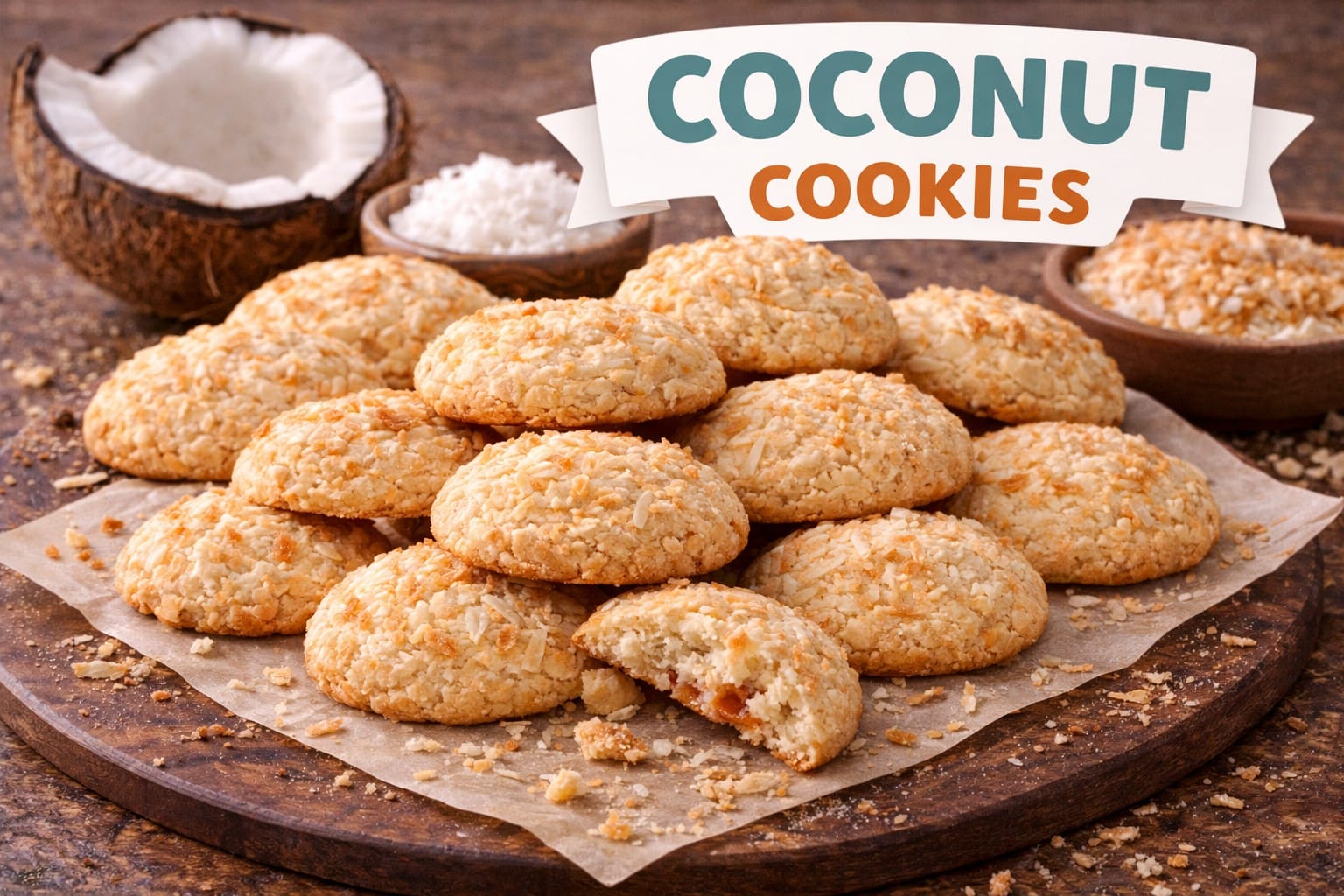
Coconut cookies are the kind of treat that quietly wins people over. They’re sweet but not heavy, crisp on the edges yet soft in the middle, and packed with that warm, tropical coconut flavor that feels comforting and special at the same time. Whether you love chewy cookies, lightly crisp ones, or bakery-style coconut-packed treats, coconut cookies can be adjusted to fit your taste perfectly.
This guide covers everything you need to know about coconut cookies. You’ll learn what makes them unique, the best ingredients to use, how to make them step by step, common mistakes to avoid, flavor variations, substitutions, storage tips, and expert baking advice so your cookies turn out great every single time.
What Are Coconut Cookies
Coconut cookies are cookies that use coconut as a main flavor or texture component. Coconut can appear in different forms, most commonly shredded coconut, desiccated coconut, or coconut flakes. Some recipes also include coconut milk, coconut oil, or coconut extract to deepen the flavor.
The result is a cookie that’s lightly sweet, aromatic, and often more textured than classic sugar cookies or chocolate chip cookies. Coconut adds chewiness, richness, and a slightly nutty note that pairs well with many other ingredients.
Why Coconut Cookies Are So Popular
Coconut cookies work because coconut brings both flavor and texture. Unlike chocolate chips or nuts, coconut blends into the dough while still standing out. It adds chew without making cookies dense and creates golden edges that feel bakery-quality.
Another reason people love coconut cookies is flexibility. They can be made soft, crisp, gluten-free, dairy-free, or even lightly toasted for extra depth. Coconut also pairs beautifully with chocolate, lime, lemon, vanilla, almond, and caramel.
Types of Coconut Used in Cookies
Choosing the right coconut makes a big difference.
Sweetened shredded coconut is the most common. It adds moisture and sweetness and creates chewy cookies.
Unsweetened shredded coconut gives more control over sweetness and a cleaner coconut flavor.
Desiccated coconut is very fine and dry. It blends smoothly into dough and creates a more uniform texture.
Coconut flakes are larger and add visual appeal and extra chew but can make cookies more rustic.
For beginners, sweetened shredded coconut is the easiest to work with.
Basic Ingredients for Coconut Cookies
Most coconut cookie recipes use simple pantry staples.
Common ingredients include:
- All-purpose flour
- Shredded coconut
- Butter or coconut oil
- Brown sugar or granulated sugar
- Eggs
- Vanilla extract
- Baking soda or baking powder
- Salt
Optional ingredients might include chocolate chips, nuts, citrus zest, or coconut milk.
How Coconut Cookies Are Made
Coconut cookies follow a familiar cookie-making process.
First, butter and sugar are creamed together until light and fluffy. This step creates structure and helps cookies bake evenly. Eggs and vanilla are added next, followed by dry ingredients. Shredded coconut is folded in at the end to keep its texture intact.
The dough is then scooped or shaped and baked until the edges are set and lightly golden.
Step-by-Step Coconut Cookie Method
Start by creaming softened butter with sugar until smooth and pale. This usually takes two to three minutes.
Add the egg and vanilla extract, mixing until fully combined. Scrape the bowl to avoid uneven dough.
In a separate bowl, whisk together flour, baking soda, and salt. Gradually add the dry ingredients to the wet mixture, mixing just until combined.
Fold in shredded coconut gently. Overmixing can make cookies tough.
Scoop dough onto a lined baking sheet and bake until the edges are lightly golden but the centers still look soft.
Baking Temperature and Timing
Most coconut cookies bake well at 350°F (175°C).
Baking time usually ranges from 10 to 14 minutes depending on size and texture preference. For softer cookies, remove them earlier. For crisper cookies, bake slightly longer.
Cookies will continue to firm up as they cool.
Texture Choices: Soft, Chewy, or Crisp
Coconut cookies are easy to customize.
For soft cookies:
- Use more brown sugar than white sugar
- Slightly underbake
- Chill dough before baking
For chewy cookies:
- Add an extra egg yolk
- Use sweetened shredded coconut
- Avoid overbaking
For crisp cookies:
- Use more white sugar
- Bake longer at a slightly lower temperature
- Flatten dough slightly before baking
Common Mistakes to Avoid
Small errors can affect coconut cookies more than expected.
Avoid these mistakes:
- Using too much coconut, which dries out cookies
- Overbaking, which makes them hard
- Skipping salt, which balances sweetness
- Using melted butter instead of softened butter
- Packing flour too tightly
Balance is the key to great coconut cookies.
Toasted Coconut for Extra Flavor
Toasting coconut before adding it to the dough adds depth and a nutty aroma.
Spread coconut on a baking sheet and toast at 325°F, stirring often, until lightly golden. Let it cool completely before mixing into the dough.
Use toasted coconut sparingly so it doesn’t overpower the cookie.
Coconut Cookies with Chocolate
Chocolate and coconut are a classic pairing.
Popular combinations include:
- Coconut chocolate chip cookies
- Dark chocolate chunk coconut cookies
- White chocolate coconut cookies
- Chocolate-dipped coconut cookies
Dark chocolate balances sweetness best, while white chocolate adds richness.
Coconut Macaroon vs Coconut Cookie
These two are often confused.
Coconut macaroons are dense, chewy, and mostly coconut-based, often made with egg whites. Coconut cookies use flour and butter, making them lighter and more traditional in texture.
Both are good, but they offer very different eating experiences.
Gluten-Free Coconut Cookies
Coconut cookies adapt well to gluten-free baking.
Use a 1:1 gluten-free flour blend with xanthan gum. Coconut flour alone is not recommended unless the recipe is designed for it, as it absorbs too much moisture.
Chilling the dough helps prevent spreading.
Dairy-Free Coconut Cookies
Dairy-free coconut cookies are easy to make.
Swap butter for coconut oil or plant-based butter. Coconut oil adds flavor but can make cookies spread more, so chilling is important.
Use dairy-free chocolate if adding mix-ins.
Egg-Free Coconut Cookies
Egg-free versions work using substitutes like:
- Flax eggs
- Applesauce
- Mashed banana
Flax eggs are best for maintaining structure without changing flavor.
Flavor Variations to Try
Coconut cookies are a great base for creativity.
Popular variations include:
- Coconut lime cookies
- Coconut lemon cookies
- Almond coconut cookies
- Coconut caramel cookies
- Coconut oatmeal cookies
A small amount of citrus zest or extract can transform the flavor.
How to Store Coconut Cookies
Proper storage keeps coconut cookies fresh.
At room temperature:
- Store in an airtight container
- Layer with parchment
- Keep up to 5 days
In the refrigerator:
- Not necessary unless using cream fillings
In the freezer:
- Freeze baked cookies up to 2 months
- Freeze dough balls for fresh baking later
Let cookies cool completely before storing.
Can You Freeze Coconut Cookie Dough
Yes, coconut cookie dough freezes very well.
Scoop dough into balls, freeze solid, then store in freezer bags. Bake from frozen, adding one to two minutes to the baking time.
This is perfect for quick desserts.
Serving Ideas
Coconut cookies are versatile.
Serve them:
- With coffee or tea
- Alongside fruit desserts
- With vanilla or coconut ice cream
- On dessert platters
- As edible gifts
They also work well in lunchboxes.
Frequently Asked Questions
Are coconut cookies very sweet
They can be adjusted easily by changing sugar levels.
Do coconut cookies spread a lot
They spread moderately. Chilling helps control shape.
Can I use coconut flour
Only in recipes designed for it.
Are coconut cookies kid-friendly
Yes, especially with chocolate chips.
Can I make them vegan
Yes, with plant-based butter and egg substitutes.
Expert Baking Insight
Experienced bakers treat coconut as both a flavor and a texture ingredient. Too much dries cookies out, while too little makes the flavor disappear. The best coconut cookies balance moisture, sweetness, and coconut content so each bite feels soft, fragrant, and satisfying.
Final Thoughts
Coconut cookies are proof that simple ingredients can create something special. They’re comforting without being boring, flexible without being fussy, and flavorful without being overwhelming.
Whether you like them soft, chewy, crisp, plain, or loaded with chocolate, coconut cookies deserve a spot in your regular baking rotation. Once you find your preferred texture and coconut level, they quickly become one of those recipes you reach for whenever you want a reliable, crowd-pleasing treat.