
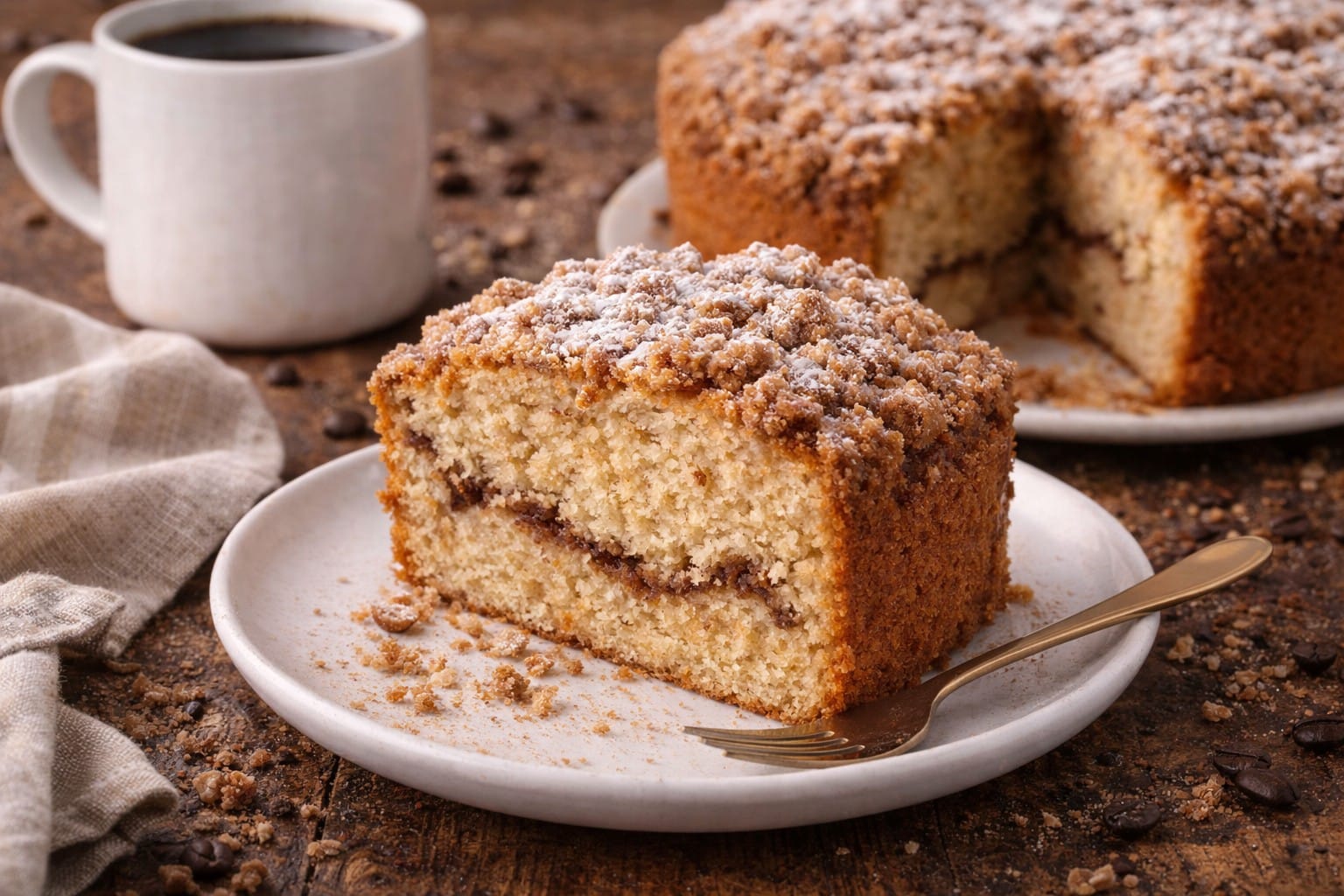
Coffee cake is one of those desserts that feels familiar in the best way. It’s not overly sweet, it doesn’t need frosting, and it fits just as well on a breakfast table as it does next to an afternoon cup of coffee. Despite the name, coffee cake usually doesn’t contain coffee at all. Instead, it’s designed to be eaten with coffee, and that’s exactly where it shines.
This guide walks you through everything you need to know about coffee cake, from what defines it to ingredients, step-by-step basics, tips for success, common mistakes, variations, storage, and expert insights to help you bake a reliable, bakery-style coffee cake at home.
What Is Coffee Cake?
Coffee cake is a tender, moist cake topped with a crumbly streusel layer, often flavored with cinnamon and sugar. It’s usually baked in a square pan, loaf pan, or tube pan and served in thick slices.
Unlike layer cakes or frosted desserts, coffee cake focuses on texture and balance. The cake itself is soft and lightly sweet, while the topping adds crunch and warmth. Some versions include a cinnamon swirl inside, others add fruit, nuts, or glaze.
Why Coffee Cake Is So Popular
Coffee cake works because it doesn’t try too hard.
The flavors are simple and comforting. The texture feels soft without being delicate. It keeps well and tastes just as good the next day. Most importantly, it feels appropriate at almost any time of day.
That flexibility makes coffee cake a go-to for home bakers.
Key Ingredients in Coffee Cake
Coffee cake relies on pantry staples used thoughtfully.
Flour provides structure. Sugar sweetens without overpowering. Butter adds richness and flavor. Eggs bind everything together. Sour cream or yogurt creates moisture and tenderness. Baking powder or baking soda gives lift. Cinnamon adds warmth. Brown sugar brings depth to the crumb topping.
Each ingredient plays a clear role, which is why substitutions should be made carefully.
The Streusel Topping Explained
The crumb topping is what defines classic coffee cake.
Streusel is usually made from flour, butter, brown sugar, and cinnamon. When mixed just enough, it forms clumps that bake into crisp, buttery crumbs. Some versions include chopped nuts for extra texture.
A good streusel should stay crumbly, not melt into the cake.
Does Coffee Cake Contain Coffee?
Most traditional coffee cake recipes do not include coffee.
The name comes from how it’s served, not how it’s flavored. That said, some modern versions add espresso powder or brewed coffee to enhance flavor, especially in chocolate or cinnamon-heavy recipes.
Both approaches are correct, depending on preference.
Basic Coffee Cake Structure
A classic coffee cake has three main parts.
The base cake batter is soft and thick. The cinnamon filling, if included, adds a sweet ribbon through the center. The streusel topping finishes it with texture and flavor.
Some recipes skip the middle layer and focus entirely on the topping, which is perfectly acceptable.
Step-by-Step Coffee Cake Overview
Making coffee cake is straightforward.
First, prepare the streusel topping and set it aside. Mixing it first allows the crumbs to form properly. Next, make the cake batter by creaming butter and sugar, then adding eggs and sour cream. Dry ingredients are mixed separately and added gently.
Half the batter goes into the pan, followed by cinnamon sugar or filling if used. The remaining batter is spread on top, then finished with streusel. The cake bakes until golden and set in the center.
Why Sour Cream Matters
Sour cream is a key ingredient in many coffee cake recipes.
It adds moisture without thinning the batter. It also contributes a subtle tang that balances sweetness. The fat content helps create a tender crumb that stays soft for days.
Greek yogurt works well as a substitute with similar results.
Common Coffee Cake Variations
Coffee cake is easy to customize.
Cinnamon swirl coffee cake includes a thick ribbon of cinnamon sugar inside. Apple coffee cake adds chopped apples for moisture and flavor. Blueberry coffee cake brings brightness and contrast. Nut-filled versions add crunch throughout. Glazed coffee cake finishes with a light drizzle for added sweetness.
These variations keep the base recipe interesting.
Tips for a Moist Coffee Cake
Moisture is what separates great coffee cake from dry cake.
Measure flour correctly by spooning and leveling. Avoid overmixing once flour is added. Use full-fat sour cream or yogurt. Bake just until done, not until deeply browned.
A toothpick with a few moist crumbs is the goal.
Common Mistakes to Avoid
Several issues show up often with coffee cake.
Overmixing leads to a tough texture. Too much streusel can weigh down the cake. Cutting the cake while hot causes crumbling. Baking at too high a temperature dries the edges before the center sets.
Patience makes a big difference.
Coffee Cake Without Streusel
Not all coffee cakes need a crumb topping.
Some versions rely on a cinnamon swirl alone. Others use a simple sugar topping or light glaze. These styles feel slightly lighter and work well for breakfast.
The essence of coffee cake is balance, not crumbs alone.
Making Coffee Cake Ahead of Time
Coffee cake is an excellent make-ahead dessert.
It can be baked the day before serving and tastes even better after resting. The flavors settle and the crumb softens overnight.
Wrap tightly once cooled to preserve moisture.
Storage Tips for Coffee Cake
Proper storage keeps coffee cake fresh.
At room temperature, cover tightly and store for up to three days. In the refrigerator, it lasts up to five days but should be brought to room temperature before serving. Freeze slices individually for longer storage.
Coffee cake reheats well with gentle warming.
Can Coffee Cake Be Frozen?
Yes, coffee cake freezes very well.
Wrap whole cakes or slices tightly in plastic wrap and foil. Freeze for up to three months. Thaw at room temperature or warm briefly in the oven.
Freezing is ideal for planning ahead.
Coffee Cake for Breakfast vs Dessert
Coffee cake blurs the line between the two.
For breakfast, serve smaller slices with fruit or yogurt. For dessert, add whipped cream or glaze and serve warm.
The same cake works both ways with small adjustments.
Healthier Coffee Cake Options
Coffee cake can be made a bit lighter.
Use Greek yogurt instead of sour cream. Reduce sugar slightly without affecting structure. Add fruit for moisture and natural sweetness. Use whole wheat pastry flour for added fiber.
Balance is more important than perfection.
Coffee Cake for Special Occasions
Coffee cake is perfect for gatherings.
It works well for brunches, holidays, and casual get-togethers. It slices cleanly, serves many people, and doesn’t require last-minute decorating.
Reliability makes it a host favorite.
Frequently Asked Questions About Coffee Cake
Why is my coffee cake dry?
Too much flour or overbaking are common causes.
Can I skip the streusel?
Yes, the cake will still be delicious.
Is coffee cake supposed to be dense?
It should be tender, not heavy.
Can I add coffee flavor?
Espresso powder works well in small amounts.
Expert Insight
Great coffee cake feels intentional but relaxed. It doesn’t need dramatic height or elaborate decoration. What matters is tenderness, warmth, and balance between cake and topping. When baked correctly, coffee cake feels comforting without being boring and familiar without being plain.
That quiet confidence is what makes it timeless.
Final Thoughts
Coffee cake is a true classic for a reason. It’s simple, adaptable, and deeply comforting. With basic ingredients and careful technique, home bakers can create a cake that feels bakery-worthy without stress.
Whether served at breakfast, brunch, or alongside an afternoon coffee, coffee cake fits the moment. Once you master a good base recipe, it becomes one of those dependable bakes you return to again and again.