
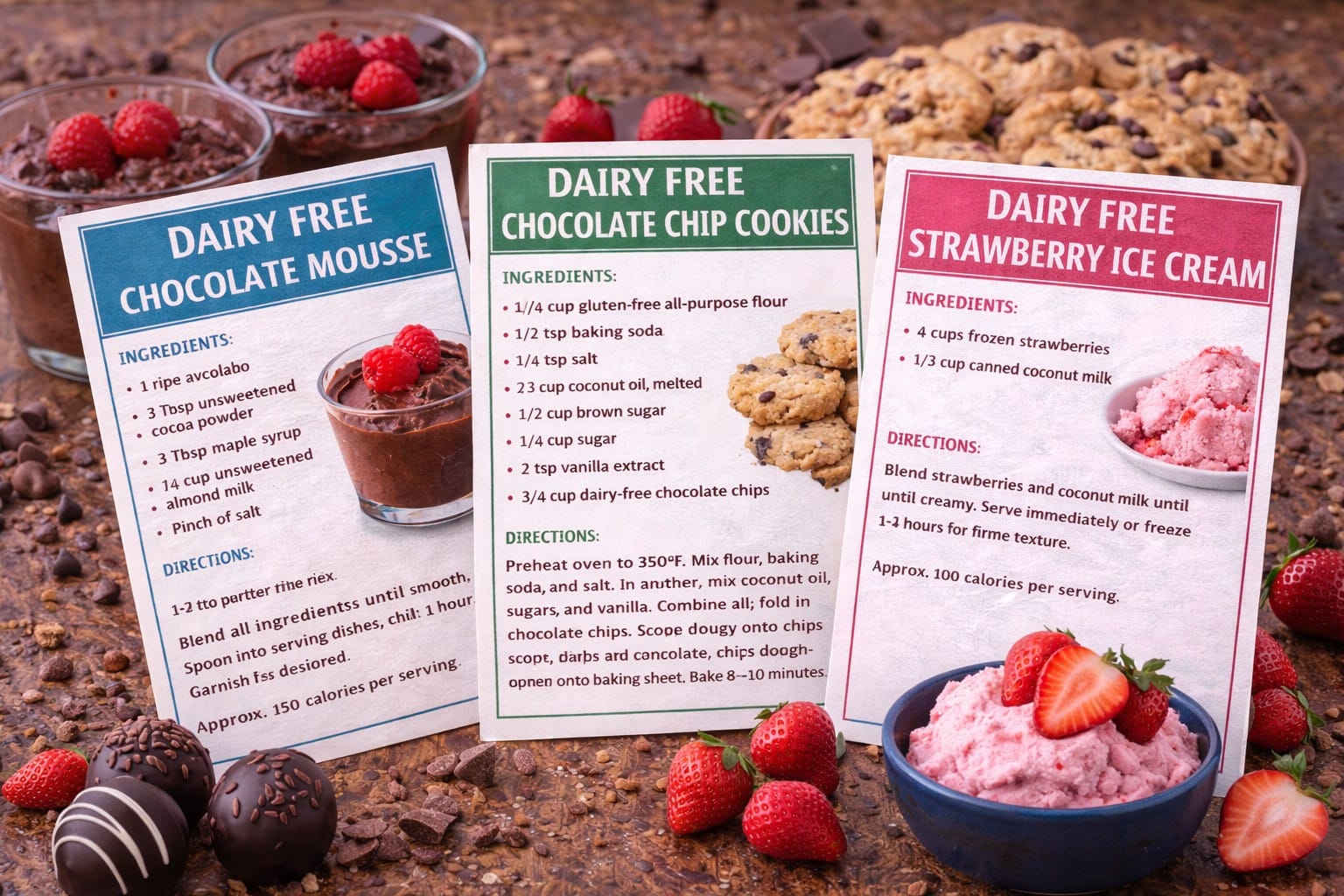
Dairy free desserts have come a long way. What once felt like a compromise now feels like a creative opportunity. With the right ingredients and techniques, you can make desserts that are just as rich, creamy, and satisfying as traditional ones, without using milk, butter, or cream. Many people are surprised to learn that some dairy free desserts don’t just “pass,” they actually shine.
This guide covers everything you need to know about dairy free desserts, including what they are, the best dairy free ingredients, beginner-friendly recipes, baking tips, common mistakes, substitutions, storage advice, and expert insights to help you get confident, reliable results at home.
What Are Dairy Free Desserts?
Dairy free desserts are sweets made without milk, butter, cream, yogurt, or other dairy-based ingredients. They’re often enjoyed by people with lactose intolerance, dairy allergies, or those following plant-based or vegan lifestyles.
That said, dairy free desserts aren’t only for people avoiding dairy. Many home bakers choose them because they’re lighter, easier to digest, or simply delicious in their own way.
Why Dairy Free Desserts Work So Well
Dairy isn’t the only way to create richness or moisture in desserts. Oils, plant-based milks, nut butters, coconut products, fruit purees, and eggs can all provide structure, flavor, and tenderness.
Once you stop trying to copy butter exactly and start working with dairy free ingredients on their own terms, the results improve dramatically. Think of it as changing tools, not lowering standards.
Common Dairy Free Ingredients Used in Desserts
Successful dairy free baking relies on a handful of dependable ingredients.
Plant-based milks like almond milk, oat milk, soy milk, and coconut milk replace regular milk easily. Dairy free butter alternatives or neutral oils provide fat and moisture. Coconut cream adds richness to frostings and fillings. Applesauce and mashed bananas bring moisture and natural sweetness. Dark chocolate labeled dairy free adds depth and indulgence. Nut butters like peanut or almond butter create creaminess and structure.
Knowing what each ingredient does helps you choose wisely.
Dairy Free Butter Substitutes Explained
Butter replacements matter more than many people realize.
Dairy free butter sticks are best for cookies and frostings because they behave most like real butter. Coconut oil works well in brownies and bars but can firm up when cold. Neutral oils like canola or vegetable oil keep cakes moist for days. Olive oil can work in chocolate or citrus desserts when used lightly.
Choosing the right fat makes a big difference in texture.
Plant-Based Milk Options and When to Use Them
Not all dairy free milks behave the same way.
Almond milk is light and neutral, making it great for cakes and muffins. Oat milk adds body and mild sweetness, ideal for cookies and custard-style desserts. Coconut milk is rich and creamy, perfect for puddings, frostings, and no-bake desserts. Soy milk has higher protein and works well in baked goods that need structure.
Unsweetened versions offer better control over sweetness.
Easy Dairy Free Desserts for Beginners
Some desserts naturally lend themselves to dairy free baking.
Dairy Free Chocolate Cake
Chocolate cake made with oil and plant-based milk stays moist and rich without butter. Cocoa powder provides flavor while oil keeps the crumb tender.
Dairy Free Brownies
Brownies adapt beautifully to dairy free baking. Use oil or dairy free butter, dairy free chocolate, and cocoa powder for a fudgy result.
No-Bake Chocolate Truffles
Coconut cream and dairy free chocolate create smooth, indulgent truffles with minimal effort and no oven required.
Fruit-Based Desserts
Baked apples, fruit crisps with dairy free toppings, and fruit compotes rely on natural sweetness rather than dairy.
Dairy Free Cookies
Many cookie recipes work well with dairy free butter or oil, especially chocolate chip, peanut butter, and oatmeal cookies.
Baking Tips for Dairy Free Desserts
Small adjustments lead to better outcomes.
Measure ingredients carefully, especially fats. Let batters rest briefly so dry ingredients hydrate fully. Use room-temperature ingredients for smoother mixing. Taste batter when safe to adjust sweetness. Avoid overbaking, as dairy free desserts can dry out faster.
Attention replaces dairy.
Common Mistakes to Avoid
Several issues come up often with dairy free desserts.
Using sweetened plant milk can make desserts overly sweet. Replacing butter with oil one-to-one without adjusting texture can cause greasiness. Skipping fat entirely leads to dryness. Expecting dairy free desserts to taste exactly like butter-based versions sets unrealistic expectations.
Balance matters more than imitation.
Dairy Free Frostings That Actually Taste Good
Frosting is often where people struggle, but great dairy free options exist.
Coconut cream whipped with powdered sugar makes a light, fluffy topping. Dairy free buttercream made with plant-based butter works well for cakes and cupcakes. Chocolate ganache made with coconut milk or oat milk delivers richness and shine.
Flavor and texture come from technique, not dairy.
No-Bake Dairy Free Desserts
No-bake desserts are especially friendly to dairy free cooking.
Chia pudding made with almond or coconut milk sets beautifully. Dairy free cheesecakes use blended cashews or coconut cream for structure. Refrigerator cakes with dairy free cookies and cream feel indulgent without baking.
These desserts are low stress and high reward.
Naturally Dairy Free Desserts You Don’t Need to Modify
Some desserts are already dairy free by nature.
Sorbet, fruit gelatin desserts, many traditional puddings, and certain cakes made with oil instead of butter require no adjustments. Dark chocolate desserts labeled dairy free also fall into this category.
Sometimes the easiest path is choosing the right recipe from the start.
Making Desserts Both Dairy Free and Gluten Free
Many desserts can be adapted to meet both needs.
Use gluten free flour blends alongside dairy free fats. Almond flour works especially well with dairy free recipes because it adds richness. No-bake desserts simplify things further by avoiding flour entirely.
Test one change at a time to keep results predictable.
How to Make Dairy Free Desserts Taste Rich
Richness doesn’t come from dairy alone.
Use enough fat from oils, coconut cream, or nut butters. Add salt to balance sweetness. Layer flavors with vanilla, cocoa, citrus zest, or spices. Avoid overbaking, which dulls flavor and dries texture.
Depth comes from balance, not heaviness.
Storage Tips for Dairy Free Desserts
Proper storage preserves quality and texture.
Cakes and cookies keep best when tightly wrapped at room temperature for one to two days. Refrigerate cream-based dairy free desserts like coconut cream frostings. Freeze bars, brownies, and unfrosted cakes for longer storage.
Dairy free desserts often freeze very well.
Can Dairy Free Desserts Be Frozen?
Yes, many freeze beautifully.
Brownies, cookies, cakes, and no-bake bars hold up well for up to three months. Thaw at room temperature for best texture. Avoid freezing whipped coconut toppings unless necessary, as texture may change slightly.
Freezing helps with planning and portion control.
Baking for Mixed Diets and Guests
Dairy free desserts are often enjoyed by everyone, not just those avoiding dairy.
Label ingredients clearly to avoid confusion. Use clean tools to prevent cross-contact. Choose familiar flavors so guests focus on taste rather than restrictions.
Most people won’t even notice the difference.
Frequently Asked Questions About Dairy Free Desserts
Do dairy free desserts taste different?
When made well, most people can’t tell.
Are dairy free desserts healthier?
Not automatically. They can be just as indulgent as traditional desserts.
Can I replace butter with oil in any recipe?
Sometimes, but texture may change depending on the dessert.
Is coconut flavor always noticeable?
Not when used thoughtfully or balanced with other flavors.
Expert Insight
Great dairy free desserts succeed because they embrace what dairy free ingredients do best. Coconut cream offers silkiness, oils create lasting moisture, and plant-based milks bring subtle flavor. Instead of forcing substitutions, the best recipes build around these strengths. Once you shift that mindset, dairy free baking becomes more intuitive and enjoyable.
Think of dairy free desserts as a different style of baking, not a restricted one.
Final Thoughts
Dairy free desserts don’t require sacrifice. With smart ingredient choices, balanced techniques, and realistic expectations, you can create desserts that feel comforting, indulgent, and dependable. From rich chocolate cakes to no-bake treats and fruit-forward sweets, dairy free options cover every craving.
Once you gain confidence, you’ll stop thinking of these desserts as alternatives and start seeing them as favorites in their own right.