
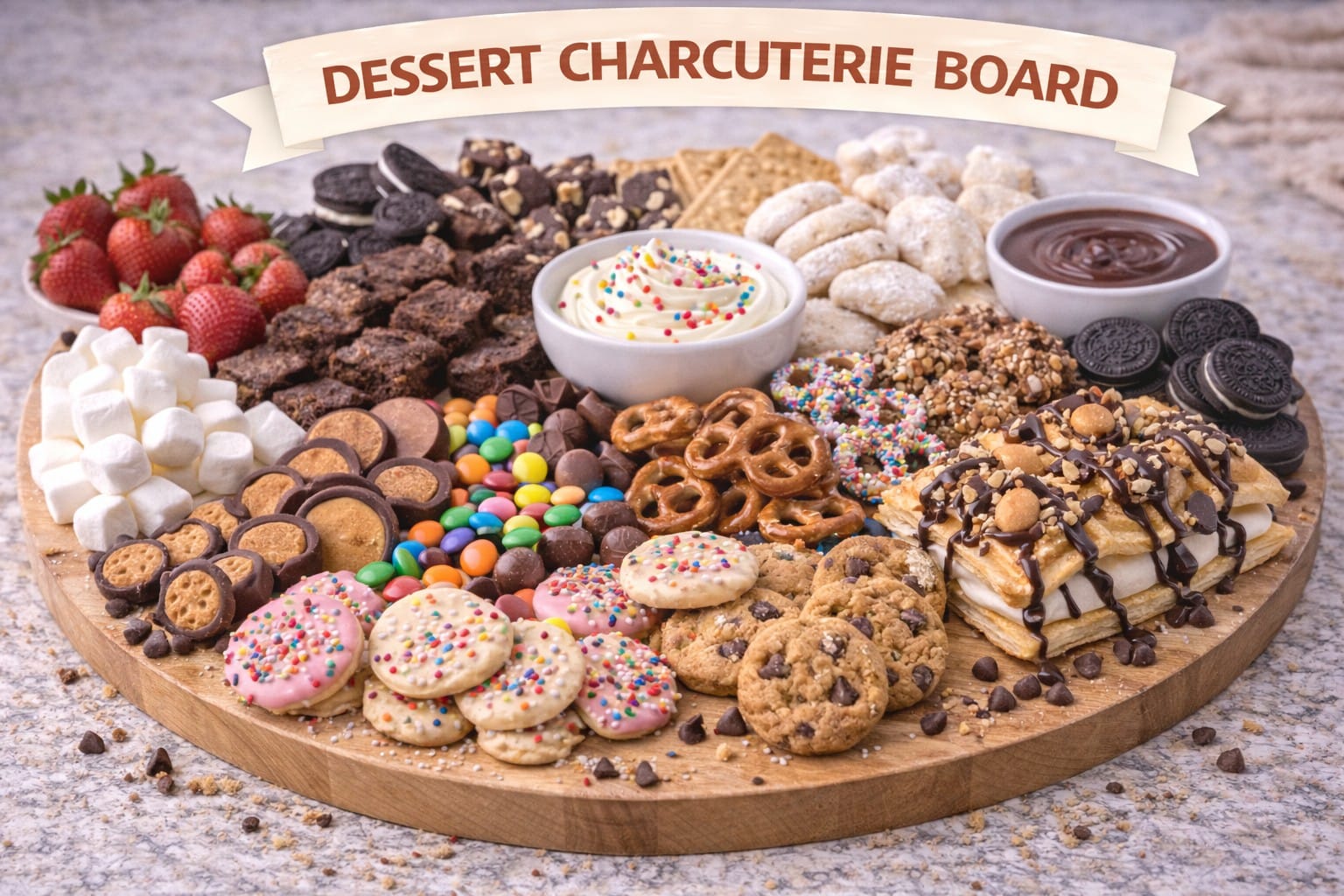
A dessert charcuterie board is the ultimate crowd-pleasing centerpiece for parties, holidays, and casual gatherings. It takes the idea of a traditional charcuterie board and turns it sweet—filled with cookies, chocolates, fruits, candies, pastries, and dips arranged beautifully on a large board or platter. It’s fun, flexible, visually stunning, and surprisingly easy to put together.
This guide covers everything you need to know about creating a dessert charcuterie board, including what it is, how to build one step by step, the best desserts to include, flavor balance tips, theme ideas, common mistakes, storage advice, and expert presentation tips. By the end, you’ll be able to create a dessert board that looks bakery-level but feels effortless.
What Is a Dessert Charcuterie Board
A dessert charcuterie board is a shared platter featuring a variety of sweet treats instead of meats and cheeses. The goal is variety, balance, and visual appeal.
Most boards include:
- Cookies and baked goods
- Chocolates and candies
- Fresh and dried fruits
- Dips and spreads
- Crunchy and creamy textures
There’s no single right way to make one, which is what makes dessert charcuterie boards so popular.
Why Dessert Charcuterie Boards Are So Popular
Dessert boards have exploded in popularity because they are:
- Easy to customize
- Perfect for sharing
- Visually impressive
- Great for all ages
- No baking required (if you don’t want to)
They work for birthdays, holidays, baby showers, weddings, movie nights, and even casual get-togethers.
Choosing the Right Board
You can use almost anything as your base:
- Wooden cutting board
- Marble slab
- Large serving tray
- Baking sheet
- Tiered platter
Bigger boards give you more freedom, but even a small board can look amazing if arranged thoughtfully.
What to Put on a Dessert Charcuterie Board
Cookies and Baked Goods
These add structure and familiarity to the board.
- Chocolate chip cookies
- Sugar cookies
- Brownie bites
- Blondies
- Shortbread
- Mini cupcakes
Cut larger items into smaller pieces so guests can sample more.
Chocolate and Candy
Chocolate adds richness and indulgence.
- Milk, dark, and white chocolate pieces
- Chocolate truffles
- Chocolate-covered pretzels
- Mini candy bars
- M&M’s or seasonal candies
Use a mix of shapes and colors for visual interest.
Fruits
Fruit balances sweetness and adds freshness.
- Strawberries
- Grapes
- Blueberries
- Apple slices
- Orange segments
- Dried fruits like apricots or figs
Fresh fruit also brightens the board visually.
Dips and Spreads
Dips bring everything together.
- Chocolate sauce
- Caramel sauce
- Nutella
- Marshmallow fluff
- Cream cheese dip
- Peanut butter
Serve dips in small bowls placed throughout the board.
Crunchy Extras
Crunch adds texture contrast.
- Pretzels
- Waffle cones (broken into pieces)
- Biscotti
- Graham crackers
- Wafer cookies
These are great for dipping and snacking.
How to Build a Dessert Charcuterie Board
Step 1: Start with Bowls
Place small bowls for dips, candies, or nuts first. This anchors the board.
Step 2: Add Large Items
Place cookies, brownies, or pastries next. Space them evenly around the board.
Step 3: Fill in with Fruit
Tuck fruit into empty spaces to add color and freshness.
Step 4: Add Small Treats
Scatter chocolates, candies, and bite-size items to fill gaps.
Step 5: Finish with Details
Add final touches like powdered sugar dusting, mint leaves, or chocolate drizzle.
Flavor Balance Matters
A great dessert board has balance.
- Sweet + slightly salty
- Soft + crunchy
- Rich + light
For example, pair brownies with strawberries, or chocolate with pretzels.
Themed Dessert Charcuterie Board Ideas
Holiday Dessert Board
- Christmas cookies
- Peppermint bark
- Candy canes
- Gingerbread
- Hot cocoa dip
Birthday Dessert Board
- Funfetti cookies
- Cupcakes
- Colorful candies
- Marshmallows
- Frosting dip
Chocolate Lovers Board
- Brownies
- Chocolate truffles
- Chocolate-covered fruit
- Cocoa-dusted nuts
- Chocolate sauce
Kids’ Dessert Board
- Mini donuts
- Gummies
- Cookies
- Marshmallows
- Chocolate milk dip
Elegant Dessert Board
- Macarons
- Dark chocolate
- Fresh berries
- Shortbread
- Whipped cream
How Much Food Do You Need
As a dessert after a meal:
- 2–3 small items per person
As the main dessert feature:
- 4–6 items per person
It’s better to offer variety than large portions.
Common Mistakes to Avoid
- Overcrowding the board
- Using only one type of dessert
- Forgetting fresh elements
- Not cutting large items
- Making it too sugary without balance
Leaving space helps each item stand out.
Storage and Make-Ahead Tips
- Assemble the board close to serving time
- Store baked goods in airtight containers
- Add fruit and dips last
- Refrigerate cream-based items
- Cover loosely with plastic wrap if needed
Most boards are best enjoyed fresh.
Presentation Tips for a Stunning Board
- Use odd numbers of items for visual appeal
- Vary heights and shapes
- Group similar colors together
- Fill gaps with small treats
- Don’t aim for perfection—natural looks better
Messy-but-intentional is the goal.
Why Dessert Charcuterie Boards Always Impress
Dessert charcuterie boards feel generous, fun, and inviting. Guests love choosing their own combinations, and hosts love how easy they are to prepare. They’re flexible, customizable, and instantly elevate any gathering without requiring advanced baking skills.
Final Thoughts
A dessert charcuterie board is one of the easiest and most impressive ways to serve sweets for any occasion. With a mix of cookies, chocolates, fruit, dips, and crunchy extras, you can create a beautiful spread that feels special but stress-free. Whether you keep it simple or go all out with a theme, dessert charcuterie boards are guaranteed to delight guests of all ages and make any event feel more memorable.