
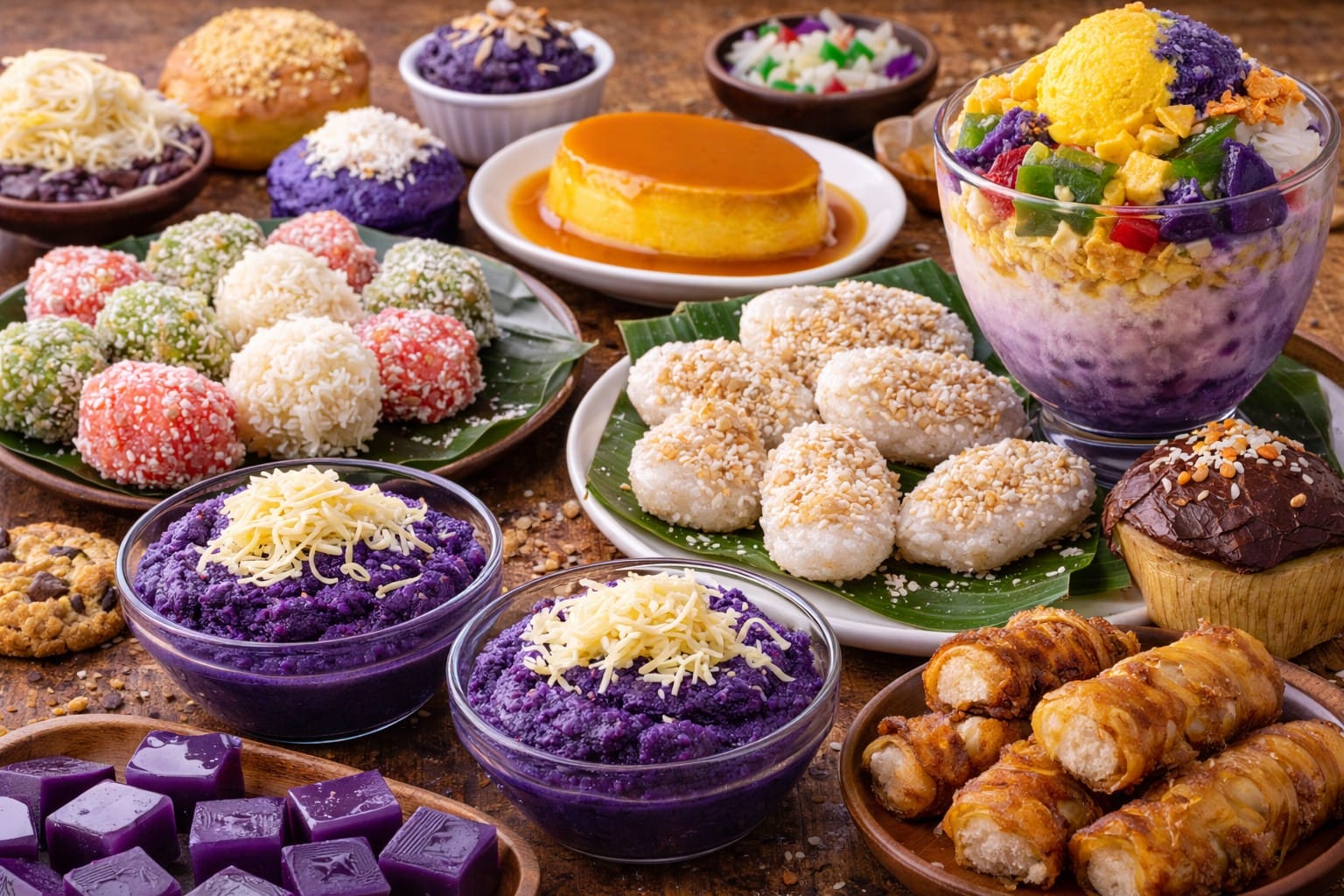
Filipino desserts are joyful, bold, and deeply comforting. They reflect the country’s history, tropical climate, and love for sharing food with family and friends. From creamy coconut-based sweets to chewy rice cakes and icy shaved desserts, these treats are all about texture, contrast, and flavor rather than fancy techniques.
This guide walks you through the most popular Filipino desserts, the key ingredients behind them, how they’re traditionally made, common variations, beginner-friendly tips, storage advice, and answers to common questions. If you enjoy homemade desserts that feel warm, nostalgic, and satisfying, Filipino sweets are well worth exploring.
What Makes Filipino Desserts Unique
Filipino desserts stand out because they focus on texture and balance more than refined sweetness. Many treats mix creamy with chewy, soft with crunchy, or warm with cold. Instead of butter and cream, coconut milk, rice flour, and native fruits play leading roles.
Another defining feature is color. Filipino desserts often look vibrant and playful, making them perfect for celebrations and gatherings. They’re meant to be shared, enjoyed slowly, and remembered.
Common Ingredients in Filipino Desserts
A small group of ingredients appears again and again in Filipino sweets. Once you know them, many recipes start to feel familiar.
Coconut milk and coconut cream add richness and aroma. Glutinous rice flour gives chewiness to cakes and pastries. White rice and sticky rice form the base of many kakanin, or rice-based desserts. Brown sugar and palm sugar provide a deeper sweetness than white sugar. Ube, a purple yam, adds color and a mild vanilla-like flavor. Condensed milk brings creaminess and sweetness, especially to chilled desserts.
These ingredients are simple, affordable, and easy to find in many grocery stores today.
Popular Traditional Filipino Desserts
Filipino desserts range from everyday snacks to special-occasion treats. Here are some of the most loved classics.
Leche Flan
Leche flan is one of the most well-known Filipino desserts. It’s a rich, dense custard made with egg yolks, condensed milk, evaporated milk, and caramelized sugar. Compared to Western crème caramel, Filipino leche flan is firmer and creamier.
This dessert is commonly served at holidays and celebrations. It’s smooth, indulgent, and best enjoyed chilled.
Halo-Halo
Halo-halo is a famous shaved ice dessert layered with sweetened beans, fruits, jellies, leche flan, and ube, then topped with ice cream and evaporated milk. The name means “mix-mix,” which is exactly how it’s eaten.
Each spoonful tastes different, making it fun and refreshing, especially in warm weather.
Bibingka
Bibingka is a soft rice cake traditionally cooked in banana leaves. It’s lightly sweet, slightly smoky, and often topped with salted egg and cheese. The contrast between sweet and salty makes it unique.
This dessert is popular during the Christmas season and pairs beautifully with coffee or hot chocolate.
Puto
Puto are steamed rice cakes that are fluffy, light, and mildly sweet. They’re often topped with cheese or served as a snack alongside savory dishes.
Because they’re steamed, puto are soft and moist rather than baked and crumbly.
Cassava Cake
Cassava cake is dense, chewy, and rich, made from grated cassava, coconut milk, eggs, and sugar. A creamy coconut topping is usually baked on top.
Texture is the highlight here. It’s soft but chewy, with a caramelized surface that adds depth.
Kutsinta
Kutsinta are sticky, brown rice cakes made with lye water and topped with grated coconut. They’re chewy and slightly sweet, often sold as street food or served at gatherings.
The texture may surprise first-time eaters, but it quickly becomes addictive.
Ube Halaya
Ube halaya is a smooth purple yam jam made with mashed ube, coconut milk, butter, and sugar. It’s rich, earthy, and naturally vibrant in color.
This dessert is often eaten on its own or used as a filling for cakes and pastries.
Modern Filipino Desserts and Fusion Treats
Modern Filipino desserts often combine traditional flavors with Western baking styles.
Ube cakes, ube cheesecakes, and ube cupcakes have become very popular. Leche flan is sometimes layered into cakes or brownies. Mango float, made with graham crackers, cream, and ripe mangoes, is a no-bake favorite that feels familiar yet distinctly Filipino.
These desserts are great entry points for beginners because they use simple methods with familiar formats.
Easy Filipino Desserts for Beginners
Some Filipino desserts are especially approachable for home bakers.
Mango float requires no baking and only a few ingredients. Leche flan uses basic custard techniques. Ube halaya can be made on the stovetop with steady stirring. Puto can be made with a simple steamer and store-bought rice flour.
Starting with these builds confidence quickly.
Tips for Making Filipino Desserts at Home
Success with Filipino desserts comes down to a few practical tips.
Measure carefully, especially with rice flour and liquids. Stir constantly when cooking coconut-based mixtures to avoid burning. Use low to medium heat for custards and jams. Don’t rush cooling time, as many desserts set fully only after chilling.
Patience pays off more than speed.
Common Mistakes to Avoid
Overcooking custards leads to a rubbery texture. Using the wrong type of rice flour changes consistency. Skipping banana leaves removes aroma, though parchment can be used as a substitute. Over-sweetening hides natural flavors.
Taste as you go and trust the process.
Ingredient Substitutions
If you can’t find certain ingredients, there are workable alternatives.
Frozen ube can replace fresh. Ube extract works when real ube isn’t available, though use it lightly. Coconut cream can substitute for coconut milk for a richer result. Brown sugar can replace palm sugar in most recipes.
Flexibility is common in home cooking.
How to Store Filipino Desserts
Most Filipino desserts store well when handled properly.
Custard-based desserts like leche flan should be refrigerated and eaten within three to four days. Rice cakes are best eaten fresh but can be refrigerated for one to two days. Chilled desserts like mango float keep well in the fridge for up to three days.
Always cover desserts tightly to prevent drying or absorbing fridge odors.
Can Filipino Desserts Be Frozen?
Some can, some shouldn’t.
Ube halaya freezes well and reheats nicely. Mango float can be frozen for an ice-cream-like texture. Steamed rice cakes are better fresh and may change texture when frozen.
When in doubt, refrigerate instead of freezing.
Frequently Asked Questions
Are Filipino desserts very sweet?
They’re sweet, but often balanced with coconut, salt, or chewy textures.
Are they gluten-free?
Many are naturally gluten-free since they use rice flour instead of wheat.
Do I need special equipment?
Most recipes use basic pots, pans, and steamers.
Are they hard to make?
Techniques are simple, but attention to texture is important.
Expert Insight
Filipino desserts aren’t about perfection. They’re about comfort, memory, and sharing. Small variations from one household to another are normal and even expected. That flexibility is part of their charm.
Think of these desserts like family stories. Each version is slightly different, but the feeling stays the same.
Final Thoughts
Filipino desserts offer a refreshing break from overly polished sweets. They’re colorful, textured, and deeply satisfying, using humble ingredients in thoughtful ways. Whether you try a creamy leche flan, a chewy rice cake, or a chilled mango float, you’ll discover desserts that feel both new and familiar.
Once you start exploring Filipino desserts, you’ll likely find yourself returning to them often. They’re warm, generous, and made to be shared, just like the culture behind them.