
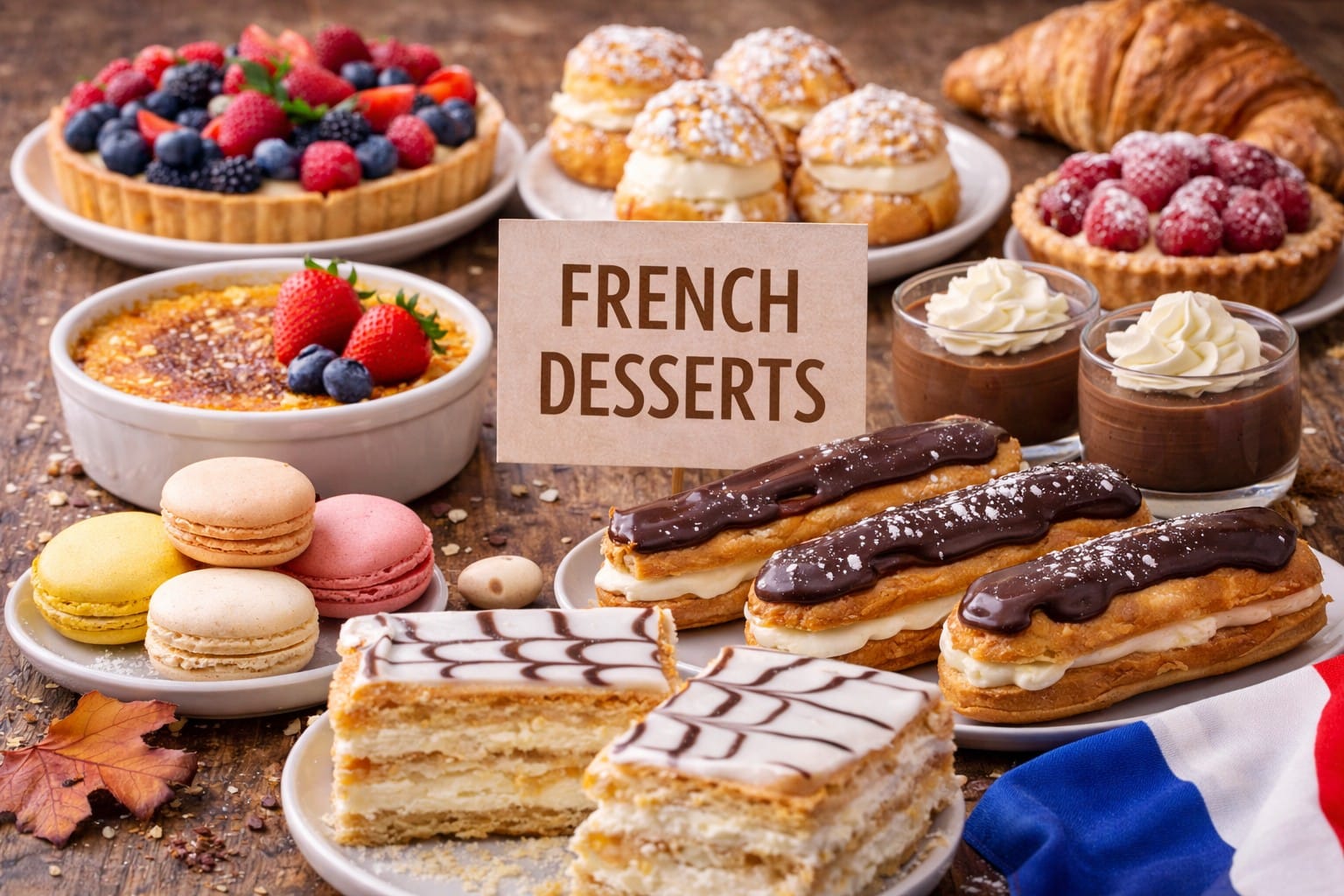
French desserts have a reputation for being fancy, delicate, and difficult. In reality, many classic French sweets are built on simple ingredients, careful technique, and balance rather than complexity. Once you understand the basics, French desserts become approachable, rewarding, and surprisingly comforting to make at home.
This guide covers what defines French desserts, popular classics, key ingredients, beginner-friendly options, tips, common mistakes, variations, substitutions, storage, FAQs, and expert insight, all written with home bakers in mind.
What Makes French Desserts Special?
French desserts focus on texture, balance, and restraint. Sweetness is controlled. Flavors are clean and clear. Instead of heavy frosting or decorations, French baking relies on proper technique to create contrast between crisp, creamy, airy, and rich elements.
Another defining trait is respect for ingredients. Butter tastes like butter. Chocolate tastes deep and real. Eggs provide structure and richness without shortcuts. When everything is done gently and thoughtfully, the result feels elegant without feeling heavy.
French desserts don’t rush. They reward patience.
Classic French Desserts Everyone Knows
Some French desserts are famous worldwide for good reason.
Crème brûlée is a silky vanilla custard with a crisp caramelized sugar top. The contrast between creamy and crunchy is the whole point. Chocolate mousse is light, airy, and deeply chocolatey without flour. Éclairs are filled pastries made from choux dough, crisp outside and soft inside. Tarte Tatin is an upside-down caramelized apple tart with bold flavor. Madeleines are small, shell-shaped cakes with a soft crumb and buttery taste.
Each dessert highlights technique over decoration.
French Cakes and Pastries Worth Trying
French baking offers plenty of baked desserts that work well at home.
Gâteau au yaourt is a simple yogurt cake mixed by hand. Financier cakes often use almond flour for moisture and tenderness. Clafoutis is a baked custard with fruit that feels rustic and forgiving. Brioche is rich, bread-like, and perfect for sweet applications. Opera cake is more advanced but shows how layers and balance define French pastry.
You don’t need to start with the hardest option.
Ingredients Commonly Used in French Desserts
A few ingredients appear again and again.
Butter is central and often used generously. Eggs provide structure, richness, and lift. Sugar is used carefully, not excessively. Cream adds smoothness and depth. Chocolate is usually dark and intense. Almond flour brings moisture and subtle flavor. Vanilla is real, not artificial.
Good ingredients matter more than fancy tools.
Easy French Desserts for Home Bakers
Many French desserts are beginner-friendly.
Yogurt cake requires no mixer. Chocolate mousse uses just a few ingredients. Clafoutis comes together in one bowl. Crêpes are quick and versatile. Rice pudding, or riz au lait, is slow-cooked comfort food with a French touch.
Starting simple builds confidence fast.
Tips for Better French Dessert Results
Measure carefully, especially with baking. Use room-temperature ingredients when possible. Don’t rush mixing or baking times. Taste as you go when making creams and custards. Trust texture cues more than strict timing.
French baking rewards calm attention.
Common Mistakes to Avoid
Overmixing leads to tough textures. Too much sugar masks delicate flavors. Baking at high heat can ruin custards. Skipping resting or chilling time affects structure. Trying to decorate too much takes away from simplicity.
Less is usually more.
French Dessert Variations
Many classics welcome subtle twists.
Crème brûlée can be flavored with coffee or citrus. Madeleines pair well with lemon zest or chocolate dip. Clafoutis works with berries or pears. Mousse can include espresso or orange. Yogurt cake adapts easily to fruit or glaze.
Variations should support, not overpower.
Ingredient Substitutions
Greek yogurt can replace crème fraîche in many recipes. Heavy cream substitutes for double cream easily. Almond flour can replace part of regular flour for tenderness. Butter alternatives change flavor but still work in simple cakes. Vanilla extract replaces vanilla bean when needed.
Texture should guide substitution choices.
How to Store French Desserts
Custards and cream-based desserts must be refrigerated. Cakes stay fresh when wrapped tightly. Pastries are best eaten the day they’re made. Freezing works for unfrosted cakes and some mousses. Bring chilled desserts slightly toward room temperature before serving.
Freshness matters more here than shelf life.
Serving French Desserts
French desserts are often served in smaller portions. Presentation is clean and simple. Powdered sugar, fresh fruit, or a light sauce is usually enough. Pair desserts with coffee, espresso, or dessert wine.
The goal is enjoyment, not excess.
Frequently Asked Questions
French desserts are not always very sweet. Many are simpler than they look. You don’t need professional tools to start. Technique matters more than decoration. Practicing basics improves results quickly.
Understanding this removes intimidation.
Expert Insight
French desserts succeed because they respect balance. Texture, sweetness, and flavor work together without competition. When home bakers focus on getting the base right instead of adding extras, results improve immediately.
Elegance comes from restraint.
Final Thoughts
French desserts don’t have to feel unreachable. With simple ingredients, steady technique, and realistic expectations, they fit beautifully into home baking.
Once you stop thinking of French desserts as complicated and start seeing them as thoughtful, they become some of the most satisfying sweets you can make at home.