
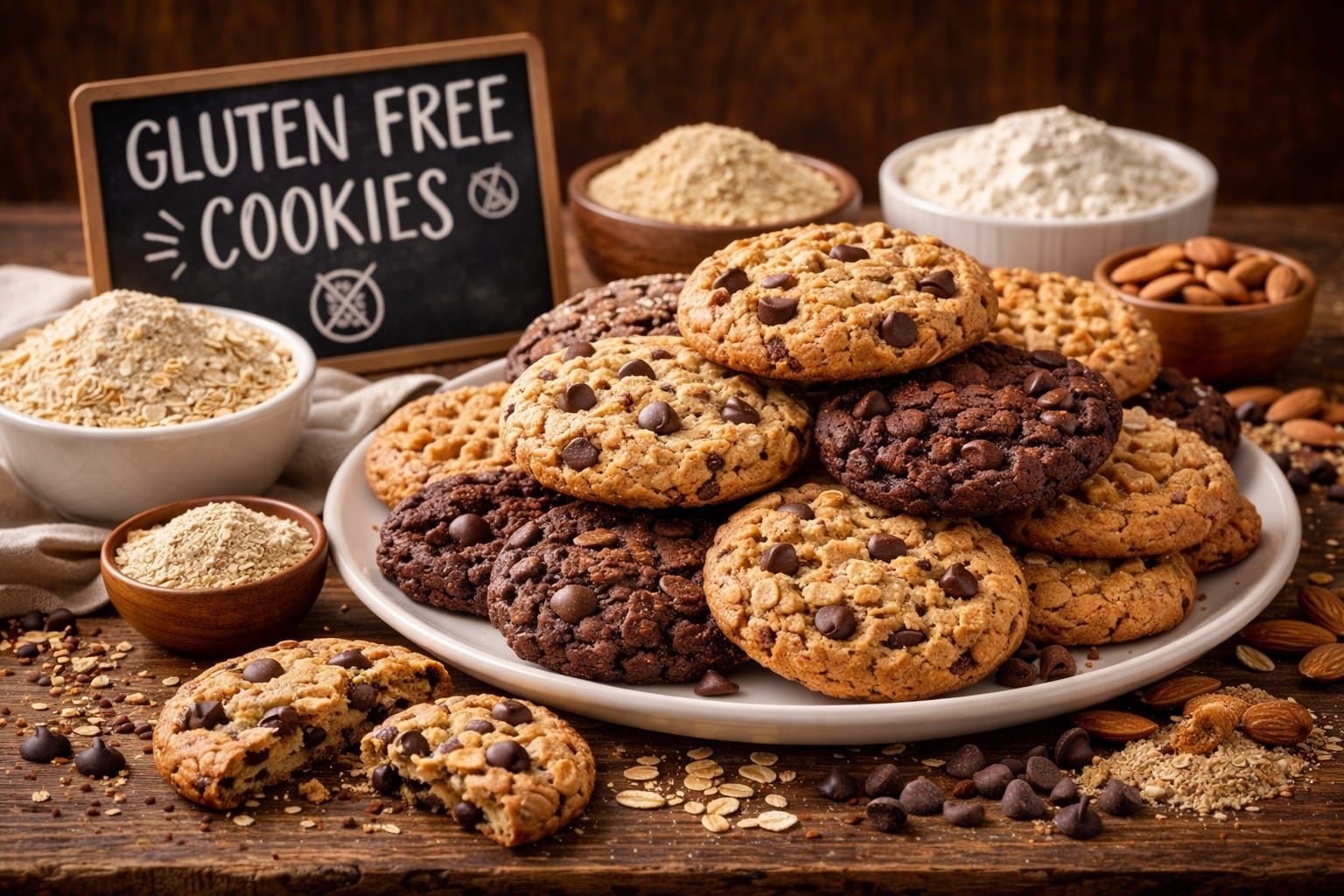
Gluten free cookies have come a long way. What used to be dry, crumbly, or bland can now be soft, chewy, crisp, and deeply satisfying. With the right ingredients and a few smart techniques, gluten free cookies can taste just as good as traditional cookies, sometimes even better. Home bakers no longer need special training or hard-to-find tools to get great results.
This guide covers what gluten free cookies are, the best flours to use, essential ingredients, step-by-step guidance, baking tips, common mistakes, variations, substitutions, storage, FAQs, and expert insight, all written for bakers who want reliable, everyday success.
What Are Gluten Free Cookies
Gluten free cookies are cookies made without wheat, barley, or rye, which are the grains that contain gluten. Instead of regular all-purpose flour, these cookies use alternative flours or flour blends designed to mimic the structure gluten normally provides.
The goal is not to copy wheat flour exactly but to create a cookie with good texture, balanced flavor, and satisfying bite. When done well, most people cannot tell the difference.
Why Gluten Free Cookies Can Be Tricky
Gluten gives structure and elasticity to baked goods. Without it, cookies can spread too much, fall apart, or turn gritty.
That does not mean gluten free cookies are difficult. It simply means the recipe needs balance. Fat, moisture, and the right flour blend do most of the work that gluten would normally handle.
Once you understand that, gluten free baking becomes predictable.
Best Flours for Gluten Free Cookies
Flour choice matters more in cookies than many bakers realize.
Almond flour creates soft, rich cookies with slightly crisp edges. Oat flour adds chew and mild sweetness. Rice flour brings lightness but can feel gritty if used alone. Sorghum flour has a neutral taste and good structure. Coconut flour absorbs a lot of moisture and must be used sparingly.
Most reliable recipes use a gluten free all-purpose flour blend that already balances several flours and starches.
Do You Need Xanthan Gum
Xanthan gum helps bind ingredients and prevent crumbling. Some gluten free flour blends already include it.
For cookies, xanthan gum is helpful but not always required. Soft cookies like chocolate chip or peanut butter cookies often hold together without it. Crisp cookies benefit more from a small amount.
Always check whether your flour blend already contains it before adding more.
Essential Ingredients for Gluten Free Cookies
Beyond flour, a few ingredients make a big difference.
Butter adds flavor and tenderness. Sugar affects spread and texture. Eggs provide structure and moisture. Vanilla enhances flavor. Salt balances sweetness. Baking soda or baking powder helps with lift and browning.
In gluten free baking, these ingredients work together more closely than usual.
Step-by-Step Overview
Start by creaming butter and sugar until smooth and slightly fluffy. This step affects texture and spread.
Add eggs and vanilla, mixing just until combined. Whisk dry ingredients separately to evenly distribute leavening and salt. Add dry ingredients to wet ingredients gently.
Scoop dough evenly and chill if the dough feels soft. Bake until edges are set and centers look slightly underdone. Cooling finishes the structure.
Chilling the Dough Matters
Chilling gluten free cookie dough is often more important than chilling regular dough.
Resting allows flour to hydrate fully. It also controls spread and improves flavor. Even thirty minutes can improve results.
Skipping this step often leads to flat or fragile cookies.
Tips for Better Gluten Free Cookies
Use a kitchen scale if possible for consistent measurements. Let dough rest before baking. Avoid overmixing. Bake one test cookie first. Cool cookies completely before moving them.
Small adjustments make gluten free cookies far more reliable.
Common Mistakes to Avoid
Using only one flour often causes texture problems. Overbaking dries cookies quickly. Adding too much flour creates dense results. Skipping fat leads to crumbly cookies. Expecting the dough to look identical to wheat dough causes confusion.
Understanding differences prevents frustration.
Popular Gluten Free Cookie Types
Many classic cookies adapt well to gluten free baking.
Chocolate chip cookies stay soft and chewy. Peanut butter cookies are naturally gluten free. Sugar cookies roll and cut well with the right blend. Oatmeal cookies work beautifully with certified gluten free oats. Shortbread cookies benefit from almond flour.
Starting with familiar recipes builds confidence.
Easy Gluten Free Cookies for Beginners
Some cookies are especially forgiving.
Flourless chocolate cookies rely on eggs and cocoa. Almond flour cookies require few ingredients. Peanut butter cookies use minimal flour. Drop cookies hide small imperfections. Bar cookies are easier than individual cookies.
Beginner-friendly recipes lead to faster success.
Flavor Matters More Than Ever
Gluten free cookies should never rely on texture alone.
Vanilla, cinnamon, citrus zest, espresso powder, or chocolate add depth. Brown sugar improves moisture and chew. A pinch of salt sharpens flavor. Butter quality makes a noticeable difference.
Flavor balance helps cookies feel complete.
Ingredient Substitutions
Dairy-free butter substitutes work in most recipes. Coconut sugar adds depth but changes color. Maple syrup can replace part of the sugar with adjustments. Egg substitutes work best in soft cookies. Nut-free flour blends help with allergies.
Texture should guide substitutions, not convenience alone.
Making Gluten Free Cookies Ahead of Time
Gluten free dough often benefits from resting.
Dough can be refrigerated for up to three days. Dough balls freeze well and bake directly from frozen. Baked cookies freeze successfully when cooled fully.
Make-ahead options reduce stress.
Storage Tips
Store cookies in airtight containers at room temperature for two to three days. Refrigeration is not ideal for most cookies. Freezing extends shelf life without major texture loss.
Moisture control keeps cookies fresh longer.
Serving Gluten Free Cookies
Serve cookies at room temperature for best texture. Pair with coffee, tea, or milk. Dust with powdered sugar or drizzle with chocolate if desired. Keep gluten free cookies clearly labeled when serving groups.
Thoughtful presentation builds confidence.
Frequently Asked Questions
Gluten free cookies can taste like regular cookies. Not all flours behave the same. Xanthan gum is sometimes optional. Gluten free dough often looks softer. Cooling time matters more than expected.
Clear expectations lead to better results.
Expert Insight
Great gluten free cookies are about balance, not replacement. When bakers stop trying to force gluten free dough to behave exactly like wheat dough and instead work with its strengths, results improve dramatically.
Patience and testing matter more than perfection.
Final Thoughts
Gluten free cookies do not need to feel like a compromise. With the right flour, proper resting time, and attention to flavor, they can be soft, chewy, crisp, or rich, just like traditional cookies.
For home bakers, mastering gluten free cookies opens the door to desserts that everyone can enjoy together, without stress or disappointment.