
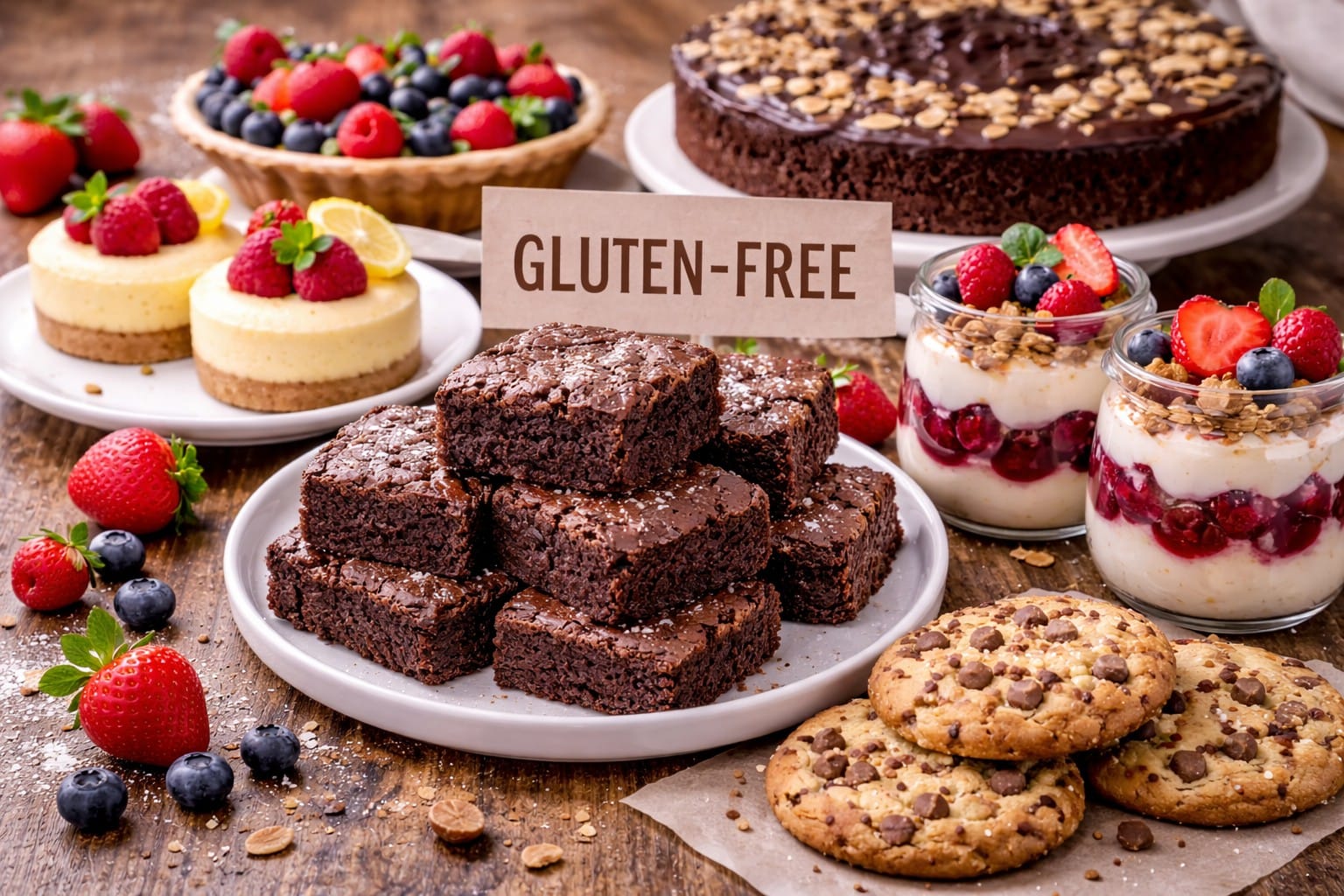
Gluten-free desserts have come a long way. What once had a reputation for being dry or bland can now be just as soft, rich, and satisfying as traditional baked goods. With the right ingredients and a few smart techniques, gluten-free baking becomes less intimidating and far more rewarding.
This guide covers what gluten-free desserts are, common ingredients, essential tips, easy dessert ideas, mistakes to avoid, substitutions, storage, FAQs, and expert insights, all written for home bakers who want dependable results without complicated methods.
What Are Gluten-Free Desserts?
Gluten-free desserts are sweets made without wheat, barley, or rye, which are the grains that contain gluten. Instead of regular flour, these desserts rely on alternative flours, starches, and natural ingredients to create structure and texture.
Some gluten-free desserts are naturally gluten-free, like flourless chocolate cake or rice pudding. Others are adaptations of classic recipes using gluten-free flour blends.
The goal isn’t to make desserts taste “gluten-free.” The goal is to make them taste good.
Why Gluten-Free Desserts Can Be Tricky
Gluten provides structure and elasticity in baked goods. When it’s removed, desserts can crumble, feel gritty, or turn out dense if not balanced properly.
That’s why gluten-free baking often relies on blends instead of a single flour. Each ingredient plays a role, working together to replace what gluten normally does.
Once you understand that balance, gluten-free baking becomes much easier.
Common Gluten-Free Baking Ingredients
Knowing your ingredients makes all the difference.
Gluten-Free Flour Blends
Store-bought gluten-free flour blends are the easiest option for beginners. They usually contain rice flour, starches, and binders like xanthan gum.
Almond Flour
Almond flour adds moisture and richness. It works well in cookies, brownies, and cakes but often needs eggs for structure.
Oat Flour
Made from ground gluten-free oats, oat flour adds softness and mild flavor. It’s great for muffins and cookies.
Rice Flour
Rice flour is light but can feel gritty on its own. It works best when paired with starches.
Starches
Cornstarch, tapioca starch, and potato starch help with tenderness and binding.
Binders
Xanthan gum or psyllium husk helps mimic gluten’s elasticity, especially in cakes and cookies.
Easy Gluten-Free Dessert Ideas
Gluten-free desserts don’t have to be complicated. Many simple options deliver great results.
Flourless chocolate cake is rich and naturally gluten-free. Almond flour brownies stay fudgy and moist. Peanut butter cookies with just a few ingredients work beautifully. Gluten-free chocolate chip cookies using a good flour blend taste almost identical to classic versions. Rice pudding, custards, and panna cotta skip flour altogether.
Starting with naturally gluten-free desserts builds confidence quickly.
Tips for Better Gluten-Free Baking
Measure ingredients carefully, especially flour. Let batters rest for a few minutes so flours hydrate fully. Don’t overbake, since gluten-free desserts dry out faster. Use room-temperature ingredients for smoother mixing. Expect softer doughs and batters than traditional recipes.
Gluten-free baking rewards patience more than speed.
Texture Expectations
Gluten-free desserts can be soft and tender, but they behave differently. Cakes may feel slightly more delicate. Cookies may spread less or more, depending on the flour. Brownies often turn out extra moist.
Instead of comparing directly to wheat-based versions, judge gluten-free desserts on their own strengths.
Common Mistakes to Avoid
Using one flour instead of a blend often leads to poor texture. Skipping binders can cause crumbling. Overmixing doesn’t improve structure and can make batters gummy. Overbaking is one of the fastest ways to ruin gluten-free desserts.
Following tested recipes is especially important when starting out.
Ingredient Substitutions
All-purpose gluten-free flour can replace regular flour in many recipes. Almond flour can replace part of the flour for moisture. Honey or maple syrup can replace sugar but may change texture. Dairy-free butter and plant milks usually work well in gluten-free baking.
Avoid swapping ingredients randomly until you understand how they behave.
Baking Without Gluten-Free Flour
Not every gluten-free dessert needs special flour.
Cheesecakes with gluten-free crusts work well. Meringues rely on eggs and sugar only. Chocolate mousse uses no flour at all. Coconut macaroons are naturally gluten-free. Custards and puddings thicken with eggs or starch instead of flour.
These desserts are reliable and beginner-friendly.
How to Store Gluten-Free Desserts
Gluten-free desserts often dry out faster than regular ones. Store them in airtight containers. Refrigeration helps cakes and cheesecakes last longer. Freezing works well for cookies, brownies, and unfrosted cakes.
Let frozen desserts thaw fully before serving for best texture.
Serving Gluten-Free Desserts
Serve gluten-free desserts at room temperature unless chilled is required. Garnish simply with fruit, powdered sugar, or chocolate drizzle. Pair with coffee, tea, or milk alternatives.
Presentation matters more when desserts are simple.
Frequently Asked Questions
Gluten-free desserts can be just as good as regular ones when made properly. Gluten-free flour blends are best for beginners. Almond flour is not a one-to-one replacement for regular flour. Gluten-free desserts often need less baking time. Yes, many gluten-free desserts freeze well.
The key is using the right recipe, not guessing.
Expert Baking Insight
Successful gluten-free baking is about balance, not replacement. Instead of trying to recreate gluten exactly, focus on building moisture, structure, and flavor through other ingredients. When you stop fighting the absence of gluten and work with it instead, your desserts improve dramatically.
That mindset shift changes everything.
Final Thoughts
Gluten-free desserts don’t have to feel like a compromise. With the right ingredients and expectations, they can be rich, tender, and deeply satisfying.
Once you understand the basics, gluten-free baking opens up a whole new range of desserts you can confidently make and enjoy at home.