
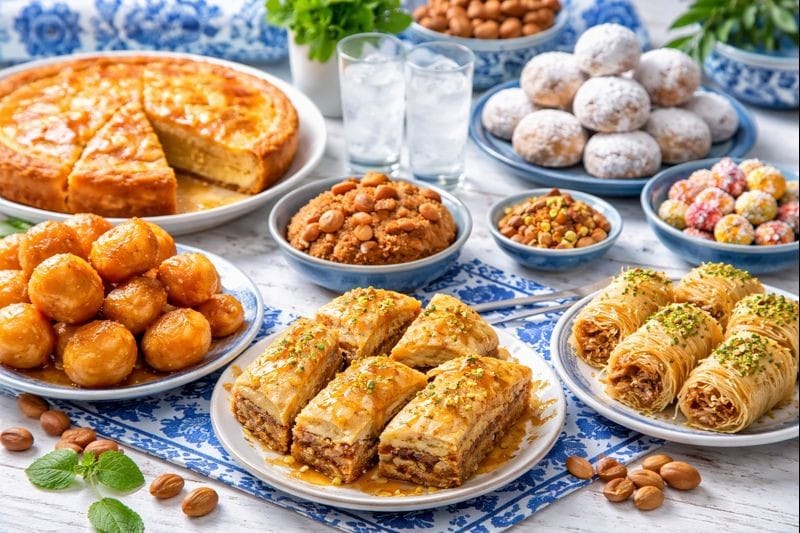
Greek desserts are rich, comforting, and deeply rooted in tradition. They don’t rely on fancy techniques or hard-to-find tools. Instead, they focus on simple ingredients, careful layering, and flavors that feel warm and familiar. Honey, nuts, citrus, and phyllo dough show up again and again, creating desserts that are sweet without being overwhelming.
This guide walks you through the world of Greek desserts in a practical, home-baker-friendly way. You’ll learn what defines them, the key ingredients used, popular classics, beginner-friendly options, baking tips, common mistakes, variations, storage advice, and expert insights to help you make them successfully at home.
What Defines Greek Desserts
Greek desserts are built on balance. Sweetness is usually softened with citrus, spice, or nuts. Textures matter just as much as flavor, with crisp phyllo layers paired with soft fillings or syrup-soaked cakes that stay moist for days.
Many recipes come from home kitchens and celebrations rather than professional pastry shops. That’s why they feel approachable, comforting, and meant to be shared.
Common Ingredients in Greek Desserts
A handful of ingredients appear across many Greek dessert recipes.
Honey is the star sweetener, offering floral depth instead of sharp sweetness. Phyllo dough creates crisp, flaky layers when brushed with butter or oil. Nuts like walnuts, almonds, and pistachios add richness and crunch. Citrus zest, especially orange and lemon, brightens heavy desserts. Cinnamon and cloves provide warmth. Semolina flour gives structure to custards and cakes. Yogurt appears in cakes and pastries, adding moisture and light tang.
Keeping these basics on hand opens the door to countless Greek desserts.
Phyllo Dough Explained
Phyllo dough can seem intimidating, but it’s easier than it looks.
The sheets are paper-thin and dry quickly, so covering them with a damp towel while working is key. Brushing each layer lightly with butter or oil creates crisp, flaky results. If a sheet tears, don’t worry. Layers hide imperfections easily.
Patience matters more than perfection when working with phyllo.
Most Popular Greek Desserts
Certain Greek desserts are loved worldwide for good reason.
Baklava
Baklava is layers of phyllo filled with chopped nuts and soaked in honey syrup. The contrast between crisp pastry and sticky filling makes it unforgettable. Walnuts are traditional, though pistachios and almonds are common variations.
Galaktoboureko
This dessert combines a creamy semolina custard with phyllo layers, finished with citrus-scented syrup. The texture is soft inside and crisp on top, making it one of the most comforting Greek desserts.
Kataifi
Kataifi uses shredded phyllo dough wrapped around nut filling and baked until golden. Syrup soaks into the strands, creating a chewy yet crisp texture.
Loukoumades
These are Greek honey doughnuts, fried until golden and drizzled with honey and cinnamon. They’re simple, festive, and best enjoyed warm.
Greek Desserts Without Phyllo
Not every Greek dessert relies on phyllo dough.
Semolina cakes soaked in syrup are very common. Yogurt cakes offer light texture and gentle sweetness. Spoon sweets, made from fruit preserved in syrup, highlight seasonal produce. Rice pudding flavored with cinnamon and citrus is another everyday favorite.
These desserts are often easier for beginners.
Easy Greek Desserts for Beginners
Some Greek desserts are especially forgiving.
Semolina halva comes together on the stovetop with simple stirring. Yogurt cake uses pantry ingredients and stays moist for days. Loukoumades rely more on timing than technique. Baked apples with honey and nuts deliver Greek flavor with minimal effort.
Starting with these builds confidence quickly.
Syrups and Why They Matter
Syrup plays a major role in many Greek desserts.
Typically made from sugar, water, honey, and citrus peel, syrup adds moisture and shine. The temperature contrast matters. Hot syrup over cool dessert or cool syrup over hot dessert helps absorption without sogginess.
Skipping syrup changes the dessert entirely, so timing is key.
Baking Tips for Greek Desserts
Small details make a big difference.
Use fresh citrus zest for brighter flavor. Toast nuts lightly to deepen taste. Brush phyllo evenly but don’t soak it. Let syrup-soaked desserts rest so flavors settle. Cut desserts before pouring syrup to help even absorption.
Taking your time improves results.
Common Mistakes to Avoid
Rushing is the most common issue.
Dry phyllo leads to cracking. Over-sweet syrup overwhelms delicate flavors. Too much butter makes desserts greasy. Cutting baklava after syruping causes messy layers.
Slow, steady steps prevent most problems.
Flavor Variations and Modern Twists
Greek desserts adapt well to small changes.
Add orange blossom water to syrup for floral notes. Swap walnuts for pistachios. Use dark chocolate drizzles sparingly for contrast. Incorporate yogurt into fillings for lighter texture.
Respect the base flavors while adding personal touches.
Healthier Approaches to Greek Desserts
Greek desserts are often richer, but balance is possible.
Use more nuts and less syrup. Sweeten with honey instead of refined sugar when possible. Choose yogurt-based cakes over heavy pastries. Serve smaller portions, as these desserts are filling.
Traditional recipes already value moderation.
How Greek Desserts Are Served
Presentation stays simple and inviting.
Desserts are often cut into small pieces and shared. Powdered nuts or cinnamon add gentle decoration. Greek coffee or tea commonly accompanies sweets.
The focus is comfort, not decoration.
Storage Tips for Greek Desserts
Many Greek desserts store well.
Baklava and syrup-soaked pastries keep at room temperature for several days when covered. Custard-based desserts should be refrigerated. Cakes wrapped tightly stay moist for days.
Flavors often improve with time.
Can Greek Desserts Be Frozen?
Freezing works for some recipes.
Baklava freezes well before syruping. Cakes freeze better than custards. Thaw slowly at room temperature and add syrup fresh if possible.
Freezing helps with planning for gatherings.
Greek Desserts for Celebrations
Greek desserts are tied closely to holidays and family events.
Baklava appears at weddings and holidays. Vasilopita, a New Year’s cake, includes a hidden coin. Loukoumades are made for festivals and gatherings.
Desserts are part of storytelling and tradition.
Frequently Asked Questions About Greek Desserts
Are Greek desserts very sweet?
They’re sweet but balanced with citrus, nuts, and spice.
Do I need special tools?
No, basic baking pans and a brush for phyllo are enough.
Is phyllo dough hard to work with?
It’s delicate but manageable with patience.
Can beginners make Greek desserts?
Absolutely, many recipes are very forgiving.
Expert Insight
Greek desserts succeed because they respect balance. Texture, sweetness, and aroma work together instead of competing. These recipes weren’t designed to impress visually. They were designed to comfort, celebrate, and bring people together. When baked with care rather than haste, even simple ingredients feel special.
Think of Greek desserts as slow food for sweet moments.
Final Thoughts
Greek desserts offer something truly timeless. They’re rich without being excessive, traditional without being complicated, and comforting without feeling boring. With a few key ingredients and a thoughtful approach, home bakers can recreate these classics with confidence.
Once you try making Greek desserts at home, they stop feeling exotic and start feeling familiar. That’s when they become part of your own baking tradition.