
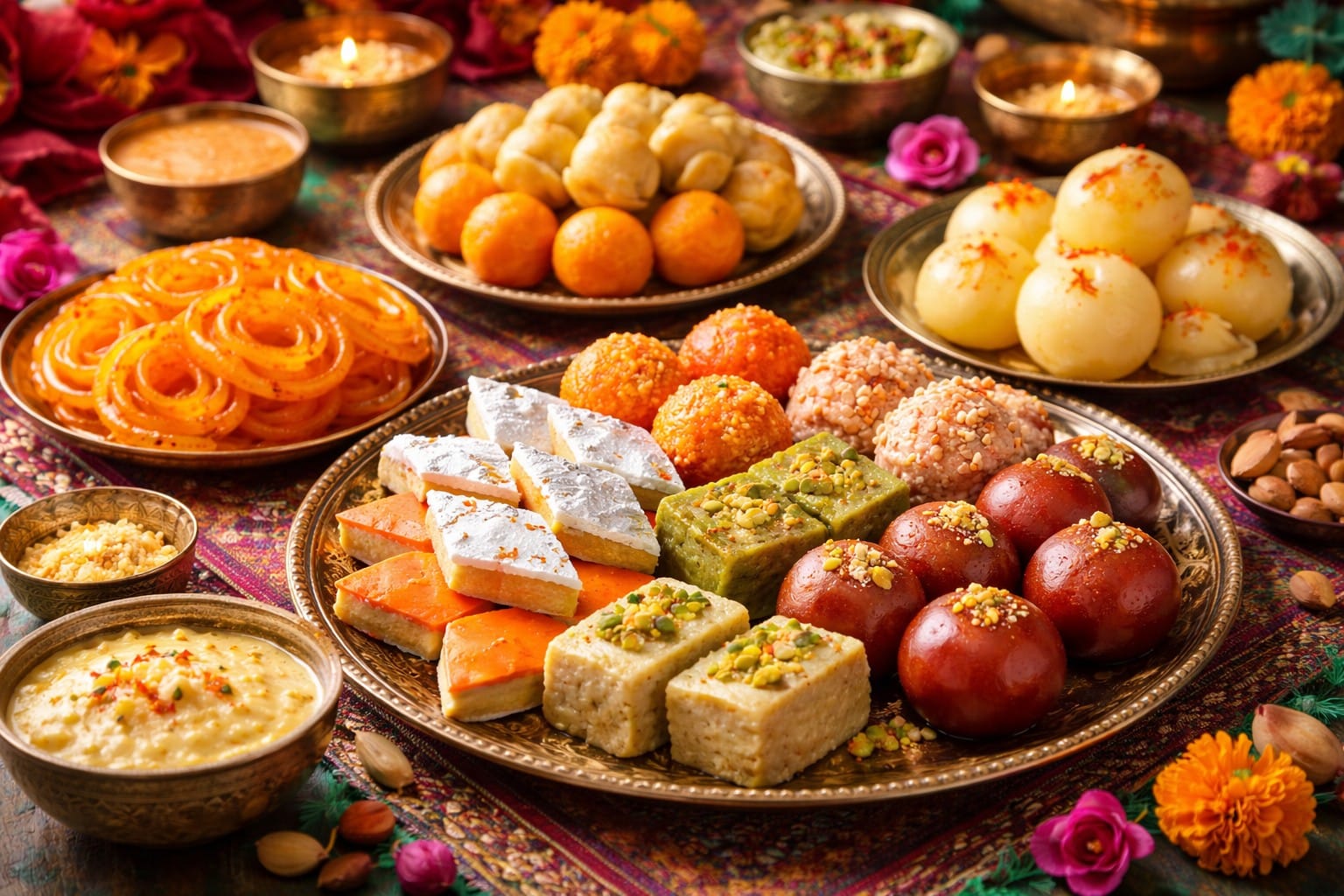
Indian desserts are known for their rich taste, deep aromas, and strong connection to culture and tradition. These sweets are not just food. They are a way to celebrate happiness, mark special moments, welcome guests, and express devotion. From creamy milk-based treats to crispy fried sweets soaked in syrup, Indian desserts offer an incredible range of flavors, textures, and cooking styles that few cuisines can match.
This detailed guide covers everything about Indian desserts, including what makes them unique, key ingredients, popular and regional sweets, how they are prepared, tips for making them better, common mistakes, healthier options, storage advice, and answers to common questions.
What Makes Indian Desserts Unique
Indian desserts, often called mithai, are very different from Western desserts. Baking is not the main method. Instead, Indian sweets rely on slow cooking, simmering milk for hours, deep frying, shaping by hand, and soaking in sugar syrup. The focus is on texture, richness, and aroma rather than decoration.
Indian desserts are usually served during festivals, weddings, religious rituals, family gatherings, and important life events. Offering sweets is seen as a sign of joy, respect, and good fortune.
Another unique feature is balance. Even though many desserts are sweet, spices like cardamom, saffron, nutmeg, and rose water prevent them from tasting flat or overly sugary.
Essential Ingredients Used in Indian Desserts
Most Indian desserts use simple ingredients, but the technique makes all the difference.
Milk and Milk Products
Milk is the backbone of Indian sweets. Many desserts start with full-fat milk that is slowly reduced to create depth of flavor.
Common milk-based ingredients include:
Milk
Khoya or mawa (thickened milk solids)
Paneer or chhena (fresh cheese)
Condensed milk
Rabri (thickened, sweetened milk)
Sweeteners
Traditional Indian desserts use different sweeteners depending on the region.
Common sweeteners include:
White sugar
Jaggery
Palm sugar
Date syrup
Honey (used lightly)
Jaggery is especially popular in traditional and festive sweets because it adds a deep, caramel-like flavor.
Fats
Fats give Indian desserts their richness and aroma.
Most commonly used fats are:
Ghee
Butter in small amounts
Oil for frying
Ghee is preferred because it enhances flavor and aroma.
Grains and Flours
Grains and flours provide structure and body.
Frequently used options include:
Rice
Rice flour
Wheat flour
Semolina
Chickpea flour
Lentils
Flavoring Agents
Flavor is what sets Indian desserts apart.
Popular flavorings include:
Cardamom
Saffron
Rose water
Kewra water
Nutmeg
Cinnamon
Nuts and Dry Fruits
Nuts add crunch, richness, and nutrition.
Commonly used nuts are:
Almonds
Cashews
Pistachios
Raisins
Dates
Major Types of Indian Desserts
Indian desserts can be grouped based on preparation methods.
Milk-Based Indian Desserts
These are among the most popular and widely loved sweets.
Gulab Jamun
Soft balls made from khoya or milk powder, fried and soaked in sugar syrup. They are rich, moist, and aromatic, often flavored with cardamom and rose water.
Rasgulla
Light, spongy balls made from fresh chhena and cooked in thin sugar syrup. They are soft, juicy, and refreshing, especially popular in eastern India.
Rasmalai
Flattened cheese patties soaked in thick, sweetened milk flavored with saffron and cardamom. This dessert is creamy, mild, and festive.
Kheer
A classic Indian rice pudding made by simmering rice with milk and sugar. Variations include vermicelli kheer, sago kheer, and lentil kheer.
Fried Indian Desserts
These sweets are crispy on the outside and soft inside.
Jalebi
Deep-fried spirals soaked in sugar syrup. Jalebi is crispy, juicy, and best enjoyed hot.
Imarti
Similar to jalebi but thicker and less sweet, often made from lentil batter.
Balushahi
A flaky, doughnut-shaped dessert soaked in syrup. It has a rich, crumbly texture.
Grain and Flour-Based Desserts
These sweets are filling and comforting.
Halwa
Halwa is a broad category with many variations such as carrot halwa, semolina halwa, and lentil halwa. Each type has a distinct texture and flavor.
Ladoo
Round-shaped sweets made from flour, nuts, or lentils. Popular types include besan ladoo, motichoor ladoo, and coconut ladoo.
Barfi
Dense sweets made from milk solids and sugar, cut into squares or diamonds. Kaju barfi and pistachio barfi are especially popular.
Regional Indian Desserts
Every region of India has its own dessert traditions.
North Indian Desserts
North Indian sweets are rich and milk-heavy.
Popular examples include:
Gulab jamun
Kaju katli
Rabri
Gajar ka halwa
These desserts are commonly served during weddings and winter festivals.
South Indian Desserts
South Indian desserts often use rice, coconut, and jaggery.
Well-known sweets include:
Payasam
Mysore pak
Coconut ladoo
Obbattu
They are aromatic and deeply rooted in temple traditions.
East Indian Desserts
Eastern India is famous for light, cheese-based sweets.
Popular desserts include:
Rasgulla
Sandesh
Chhena poda
These sweets focus on soft texture and mild sweetness.
West Indian Desserts
Western India offers a mix of creamy and festive sweets.
Common desserts include:
Shrikhand
Modak
Basundi
Malpua
Many of these are linked to religious festivals.
Indian Desserts and Festivals
Indian festivals are incomplete without sweets.
Examples include:
Ladoo during Diwali
Modak during Ganesh Chaturthi
Kheer during religious ceremonies
Jalebi during weddings
Sweets are often offered to deities before being shared with family and guests.
Tips for Making Better Indian Desserts
Use full-fat milk for richer flavor
Cook milk slowly and patiently
Always fry at the right temperature
Add sugar at the correct stage
Use fresh ghee and spices
Allow syrup-soaked sweets to rest
Patience is the secret ingredient in Indian desserts.
Common Mistakes to Avoid
Overcooking milk until it burns
Using too much sugar
Frying at very high heat
Skipping flavoring spices
Rushing the cooking process
Avoiding these mistakes greatly improves results.
Healthier Indian Dessert Options
Traditional desserts are rich, but lighter versions are possible.
Healthier ideas include:
Using jaggery instead of sugar
Reducing ghee quantity
Adding nuts and fruits
Steaming instead of frying
Eating smaller portions
These changes help balance taste and nutrition.
Storage and Shelf Life
Milk-based desserts should be refrigerated and eaten within two to three days. Dry sweets like ladoos and barfi last longer when stored in airtight containers. Syrup-based sweets should be kept cool and covered to prevent spoilage.
Indian Desserts in Modern Cooking
Modern Indian desserts combine tradition with creativity.
Popular trends include:
Fusion desserts
Vegan mithai
Sugar-free sweets
Mini dessert portions
Dessert jars
Despite modern changes, traditional flavors remain at the core.
Frequently Asked Questions
Indian desserts are called mithai. Most are milk-based or flour-based. Popular sweets include gulab jamun, rasgulla, jalebi, kheer, and ladoo. Indian desserts are usually richer and more aromatic than Western desserts. Many Indian sweets are connected to festivals and religious events.
Final Thoughts
Indian desserts are a celebration of flavor, patience, and tradition. Each sweet reflects regional culture, family history, and festive joy. From creamy milk-based treats to crispy fried delights and comforting grain desserts, Indian sweets offer unmatched variety and depth.
Whether enjoyed during festivals, shared with loved ones, or made at home, Indian desserts bring warmth, happiness, and a sense of togetherness that goes far beyond taste.