
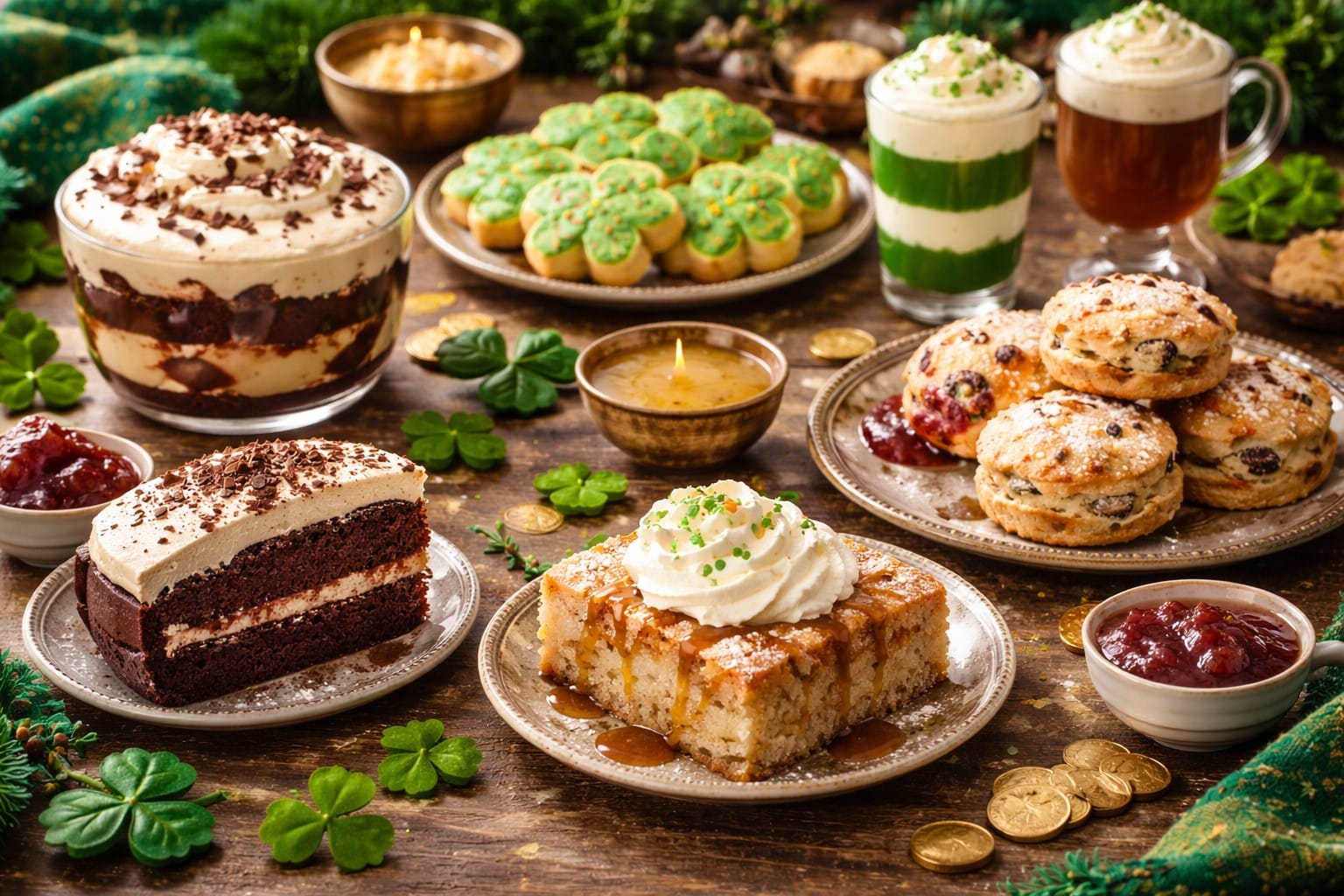
Irish desserts are simple, comforting, and deeply connected to the country’s history, landscape, and way of life. Unlike overly sweet or heavily decorated desserts, Irish sweets focus on wholesome ingredients, warm flavors, and home-style cooking. Butter, cream, oats, apples, and berries play a starring role, creating desserts that feel cozy, satisfying, and timeless.
This in-depth guide explores Irish desserts from every angle. You’ll learn what defines them, the key ingredients used, the most popular traditional sweets, regional favorites, how they are prepared, common mistakes, storage tips, lighter variations, and answers to common questions.
What Makes Irish Desserts Unique
Irish desserts are shaped by the country’s climate, farming traditions, and rural roots. For centuries, Irish families relied on what was locally available, which led to desserts made with dairy, grains, fruits, and natural sweeteners rather than elaborate techniques.
Instead of being overly sugary, Irish desserts are often mildly sweet, with flavors coming from butter, cream, spices, and fruit. Many recipes are baked rather than fried, and most are meant to be enjoyed with tea or after a hearty meal.
Irish desserts are commonly served at:
Family gatherings
Sunday dinners
Festivals and holidays
Afternoon tea
Celebrations and special occasions
They reflect warmth, hospitality, and simplicity.
Essential Ingredients in Irish Desserts
Irish sweets rely on a small set of high-quality ingredients used thoughtfully.
Dairy Products
Ireland is famous for its dairy, and it shows in its desserts.
Common dairy ingredients include:
Butter
Cream
Milk
Buttermilk
Custard
Irish butter, in particular, is known for its rich flavor and creamy texture.
Grains and Baking Staples
Grains form the backbone of many Irish desserts.
Frequently used ingredients include:
Flour
Oats
Bread crumbs
Baking soda
Baking powder
Oats are especially important and appear in many traditional recipes.
Sweeteners
Irish desserts are gently sweetened.
Common sweeteners include:
Sugar
Brown sugar
Golden syrup
Honey
Treacle
These add warmth and depth rather than sharp sweetness.
Fruits
Fruit plays a major role in Irish sweets.
Popular fruits include:
Apples
Raisins
Currants
Blackberries
Rhubarb
These fruits grow well in Ireland’s climate and are widely used.
Flavorings and Spices
Irish desserts use subtle flavoring.
Common additions include:
Vanilla
Cinnamon
Nutmeg
Cloves
Lemon zest
These spices enhance flavor without overpowering it.
Traditional Irish Desserts
Many Irish desserts have been passed down through generations.
Baked Irish Desserts
Baking is central to Irish dessert traditions.
Irish Apple Cake
A classic dessert made with fresh apples, flour, butter, and spices. It is lightly sweet, dense, and often served warm with custard or cream.
Key characteristics:
Soft crumb
Spiced apple flavor
Comforting and filling
Barmbrack
A traditional fruit bread often enjoyed with tea. It contains dried fruits and is lightly sweet.
Traditionally associated with Halloween, small items were baked inside as fortune symbols.
Soda Bread with Sweet Additions
While soda bread is often savory, sweet versions include raisins or currants and are enjoyed with butter and jam.
Custard and Cream-Based Desserts
Dairy-rich desserts are common in Irish homes.
Bread and Butter Pudding
Slices of bread layered with butter, raisins, and custard, then baked until golden. It is soft inside with a lightly crisp top.
Often served warm with custard or cream.
Irish Cream Desserts
Desserts flavored with Irish cream liqueur are popular in modern Irish cooking.
Used in:
Cheesecakes
Chocolate mousse
Trifles
These desserts are rich and indulgent.
Oat-Based Irish Desserts
Oats are a staple in Irish cuisine.
Flapjacks
Chewy oat bars made with butter, golden syrup, and oats. They are filling, slightly sweet, and perfect with tea.
Oat Crumbles
Oat-based toppings baked over fruit such as apples or berries. They create a crisp topping with a soft fruit base.
Puddings and Comfort Desserts
In Ireland, the word pudding often refers to baked or steamed desserts.
Steamed Puddings
Dense, moist desserts cooked by steaming rather than baking. Often served with warm sauce or custard.
Rice Pudding
Creamy rice pudding baked slowly until thick and comforting. Nutmeg or cinnamon is often added on top.
Regional Irish Desserts
Different regions of Ireland have their own specialties.
Rural and Farmhouse Desserts
In rural areas, desserts focus on practicality and comfort.
Common examples include:
Apple tart
Rhubarb crumble
Simple sponge cakes
These desserts use seasonal produce and basic pantry ingredients.
Coastal and Western Ireland Desserts
Coastal regions often use berries and cream.
Popular choices include:
Berry pavlovas
Cream-filled cakes
Fruit fools
Freshness is key in these desserts.
Irish Desserts and Tea Culture
Desserts play an important role in Irish tea time.
Common tea-time sweets include:
Scones
Fruit breads
Traybakes
Biscuits
They are usually served in small portions with butter, jam, and tea.
How Irish Desserts Are Traditionally Served
Irish desserts are meant to be shared.
Typical serving styles include:
Warm desserts with custard
Slices served family-style
Simple presentation without decoration
Paired with tea or coffee
The focus is on comfort rather than appearance.
Tips for Making Better Irish Desserts
Use high-quality butter
Do not over-sweeten
Choose fresh, local fruit
Bake at moderate temperatures
Allow desserts to cool slightly before serving
These tips help preserve traditional flavor and texture.
Common Mistakes to Avoid
Using low-quality butter
Overbaking dry desserts
Adding too much sugar
Skipping resting time
Ignoring ingredient temperatures
Small mistakes can affect texture and taste.
Healthier Variations of Irish Desserts
Irish desserts can be adjusted without losing their charm.
Healthier ideas include:
Using whole wheat flour
Reducing sugar slightly
Adding oats for fiber
Using fruit for natural sweetness
Serving smaller portions
These changes keep desserts balanced and enjoyable.
Storage and Shelf Life
Most baked Irish desserts store well.
General storage tips:
Cakes and breads last two to three days at room temperature
Custard-based desserts should be refrigerated
Oat bars keep well in airtight containers
Fruit desserts are best eaten fresh
Proper storage preserves flavor and texture.
Irish Desserts in Modern Cooking
Modern Irish desserts blend tradition with new ideas.
Popular trends include:
Irish cream cheesecakes
Chocolate-based desserts
Gluten-free oat desserts
Mini traybakes
Seasonal fruit tarts
Despite modern twists, simplicity remains central.
Frequently Asked Questions
Irish desserts are generally mild, comforting, and dairy-rich. Popular Irish desserts include apple cake, bread and butter pudding, barmbrack, rice pudding, and oat-based treats. Irish desserts are less sweet than many other European desserts and focus on natural flavors. Many traditional recipes are baked rather than fried.
Final Thoughts
Irish desserts celebrate comfort, tradition, and honest ingredients. They reflect a culture that values warmth, simplicity, and sharing food with loved ones. From apple-filled cakes and oat-based treats to creamy puddings and custards, Irish sweets offer a quiet richness that feels like home.
Whether enjoyed with tea, served after a family meal, or baked for special occasions, Irish desserts continue to bring comfort and joy through their timeless flavors and traditions.