
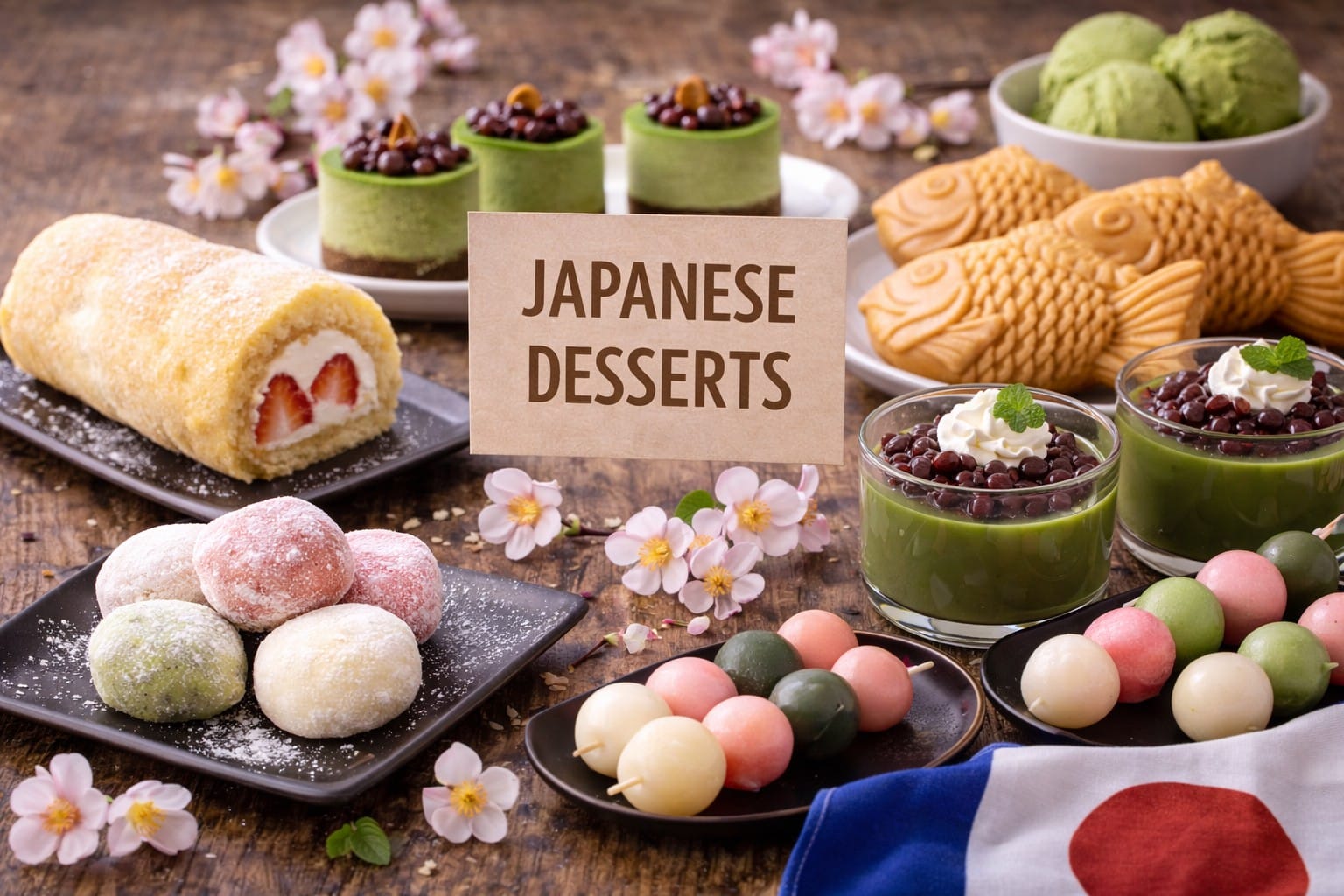
Japanese desserts are known for their subtle sweetness, soft textures, and thoughtful presentation. Instead of being rich or heavy, they focus on balance and comfort. Many Japanese sweets are made to pair with tea and are meant to be enjoyed slowly, one bite at a time.
This guide explores what defines Japanese desserts, popular traditional and modern sweets, key ingredients, beginner-friendly options, tips, common mistakes, variations, substitutions, storage, FAQs, and expert insight, written clearly for home dessert lovers.
What Makes Japanese Desserts Unique?
Japanese desserts emphasize restraint. Sugar is used lightly. Flavors are clean and gentle. Texture often matters more than sweetness, with chewy, creamy, and airy elements playing a central role.
Seasonality is another key feature. Many desserts change throughout the year to reflect what’s fresh and available. Presentation is also important, with desserts designed to look calm and inviting rather than dramatic.
Japanese sweets aim to comfort, not overwhelm.
Traditional Japanese Desserts to Know
Traditional Japanese sweets, known as wagashi, are deeply tied to tea culture and seasons.
Mochi is a soft, chewy rice cake made from glutinous rice flour. Daifuku is mochi filled with sweet red bean paste. Dorayaki consists of pancake-like cakes sandwiched with red bean filling. Dango are chewy rice dumplings served on skewers, often with sauce. Anmitsu combines jelly, fruit, sweet beans, and syrup in one bowl.
These desserts focus on texture and simplicity.
Modern Japanese Desserts
Japan also adapts Western desserts in unique ways.
Japanese cheesecake is light, airy, and less sweet than traditional cheesecake. Matcha desserts add earthy bitterness to cakes, cookies, and creams. Castella cake is soft and sponge-like with a delicate crumb. Purin is a Japanese-style custard similar to flan but lighter. Roll cakes feature fluffy sponge and light cream.
Modern Japanese desserts blend comfort with elegance.
Common Ingredients in Japanese Desserts
Certain ingredients appear frequently.
Sweet rice flour gives mochi its chewiness. Red bean paste adds mild sweetness and earthy flavor. Matcha provides bitterness and color. Agar powder is used for jellies instead of gelatin. Milk and cream are used sparingly. Sugar is kept minimal to preserve balance.
Understanding these ingredients helps manage expectations.
Easy Japanese Desserts for Beginners
Many Japanese desserts are surprisingly approachable.
Mochi made with sweet rice flour is simple and quick. Japanese cheesecake works with careful folding and baking. Matcha cookies use basic methods. Purin comes together with gentle cooking. Dorayaki batter is easy to mix and cook.
Starting with these builds confidence.
Tips for Making Japanese Desserts Successfully
Measure carefully, especially with rice flour. Don’t over-sweeten. Focus on texture over color. Cook gently to avoid tough or rubbery results. Let desserts cool fully before serving for best structure.
Patience plays a big role here.
Common Mistakes to Avoid
Using too much sugar ruins balance. Overcooking custards leads to grainy texture. Skipping resting time affects softness. Substituting ingredients without understanding texture can cause failure. Expecting bold sweetness often leads to disappointment.
Japanese desserts reward subtlety.
Variations and Flavor Twists
Japanese desserts allow gentle creativity.
Mochi can be filled with fruit or cream. Matcha pairs well with white chocolate. Red bean paste can be replaced with custard or chocolate. Roll cakes adapt to seasonal fruit. Agar jellies can be flavored with juice or tea.
Keep flavors clean and simple.
Ingredient Substitutions
Agar powder can replace gelatin for a firmer set. Cornstarch cannot replace sweet rice flour. Vanilla can be added sparingly to custards. Cocoa can replace matcha for different flavor. Plant-based milks work in many recipes.
Texture should guide substitutions.
How to Store Japanese Desserts
Most Japanese desserts are best eaten fresh. Mochi dries out quickly and should be wrapped tightly. Cream-based desserts need refrigeration. Jellies keep well when chilled. Freezing is not ideal for mochi or custards.
Freshness is part of the experience.
Serving Japanese Desserts
Serve in small portions. Pair with green tea or light coffee. Keep presentation simple and calm. Use neutral plates to highlight color and shape.
Less presentation feels more intentional.
Frequently Asked Questions
Japanese desserts are less sweet than Western ones. Texture is often more important than flavor. Many desserts pair with tea. Not all Japanese desserts contain beans. Simpler recipes are best for beginners.
Knowing this sets the right expectations.
Expert Insight
Japanese desserts are about harmony. Sweetness, texture, and presentation work together quietly. When home bakers approach these desserts with patience and restraint, the results feel authentic and satisfying.
Trying to make them louder usually makes them worse.
Final Thoughts
Japanese desserts offer a refreshing change from rich, heavy sweets. They invite you to slow down, notice texture, and enjoy subtle flavor.
With a thoughtful approach and simple techniques, these desserts become deeply comforting and surprisingly easy to bring into your own kitchen.