
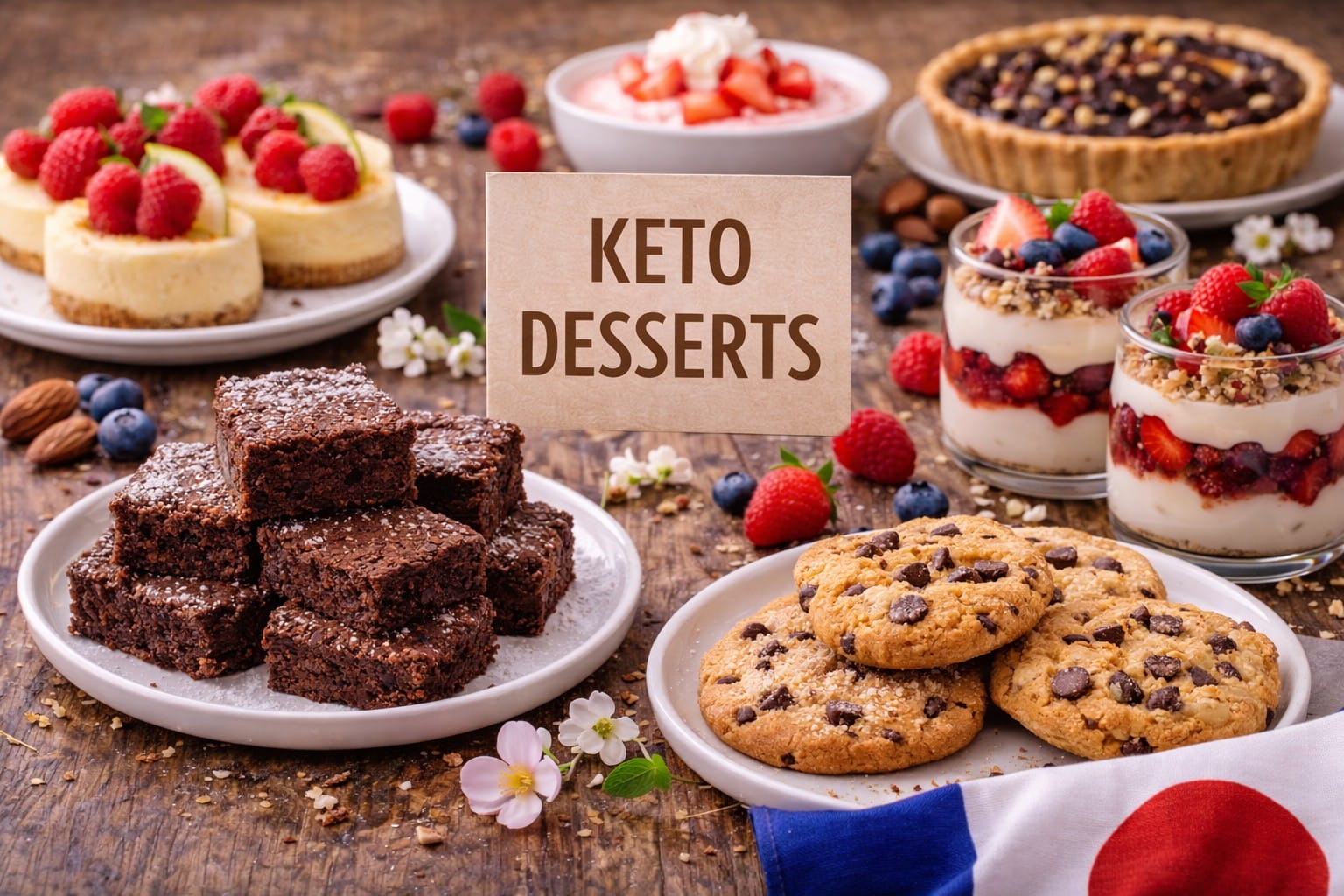
Keto desserts often get a bad reputation. People expect them to taste artificial, dry, or overly complicated. The truth is, when they’re done right, keto desserts can be rich, comforting, and genuinely enjoyable. With the right ingredients and expectations, you can make sweets that fit a low-carb lifestyle without feeling like you’re missing out.
This guide covers what keto desserts are, key ingredients, easy dessert ideas, baking tips, common mistakes, variations, substitutions, storage, FAQs, and expert insight, all written for home bakers who want reliable results.
What Are Keto Desserts?
Keto desserts are sweets made to fit a ketogenic diet, which is very low in carbohydrates and higher in fat. That means traditional ingredients like sugar, wheat flour, and regular chocolate are usually replaced with low-carb alternatives.
The goal isn’t to copy regular desserts perfectly. Instead, keto desserts focus on richness, sweetness balance, and texture while keeping carbs low enough to stay keto-friendly.
Once you understand that shift, keto baking becomes much less frustrating.
Why Keto Desserts Are Different
Sugar and flour do more than sweeten and thicken. They affect moisture, structure, and browning. When they’re removed, recipes must rely on other ingredients to fill those roles.
Keto desserts lean heavily on fats, eggs, and alternative sweeteners. As a result, they’re often more filling and richer than traditional desserts. Smaller portions usually feel satisfying.
Thinking of keto desserts as their own category helps set the right expectations.
Essential Ingredients for Keto Desserts
Having the right ingredients makes everything easier.
Almond flour is the most common keto flour. It adds moisture and a tender crumb. Coconut flour is very absorbent and used in small amounts. Erythritol, monk fruit, and allulose are popular keto sweeteners. Butter and cream provide richness and structure. Eggs help bind and lift. Cocoa powder and unsweetened chocolate add depth without sugar.
Once your pantry is stocked, options open up quickly.
Easy Keto Desserts to Make at Home
You don’t need advanced skills to start.
Keto cheesecake is creamy, rich, and forgiving. Flourless chocolate cake made with almond flour stays moist. Peanut butter cookies using keto sweetener are quick and satisfying. Keto brownies rely on eggs and fat for fudginess. No-bake fat bombs are perfect for beginners and require no oven.
Starting simple builds confidence fast.
Texture Expectations with Keto Desserts
Keto desserts don’t behave exactly like regular ones.
Cakes may be slightly denser. Cookies often spread less. Sweetness can feel cleaner or cooler, depending on the sweetener. Chocolate flavors tend to shine more because there’s less sugar masking them.
Instead of chasing perfection, aim for balance and enjoyment.
Tips for Better Keto Baking Results
Measure ingredients carefully, especially coconut flour. Let batters rest so flours hydrate fully. Use room-temperature eggs and butter for smooth mixing. Don’t overbake, since keto desserts dry out quickly. Taste sweeteners before baking, as they vary in intensity.
Small adjustments make a big difference.
Common Keto Dessert Mistakes
Using too much sweetener can create an unpleasant aftertaste. Swapping almond flour and coconut flour one-for-one ruins texture. Overbaking leads to dryness. Expecting keto desserts to taste exactly like sugar-based ones causes disappointment.
Following tested recipes helps avoid most issues.
Popular Keto Dessert Variations
Many keto desserts are flexible.
Cheesecake can be flavored with lemon, chocolate, or berries. Brownies can include nuts or sugar-free chocolate chips. Mug cakes offer quick single servings. Keto ice cream uses cream and low-carb sweeteners. Chia puddings make simple, no-bake options.
Variety keeps keto desserts interesting.
Ingredient Substitutions
Almond flour can sometimes be replaced with sunflower seed flour. Butter can be swapped for coconut oil, though flavor changes. Heavy cream substitutes with coconut cream in many recipes. Monk fruit blends replace erythritol easily. Unsweetened cocoa works in place of sugar-free chocolate in some cases.
Always consider texture before swapping.
Keto Desserts Without Baking
Not every keto dessert needs an oven.
No-bake cheesecakes set in the fridge. Chocolate fat bombs melt together quickly. Keto mousse relies on whipped cream. Coconut bars firm up when chilled. Gelatin desserts work well with keto sweeteners.
These options are fast and low-effort.
How to Store Keto Desserts
Most keto desserts store best in the refrigerator. Cakes and bars should be wrapped tightly to prevent drying. Cheesecake keeps well for several days when chilled. Freezing works for brownies, cookies, and unfrosted cakes.
Let desserts thaw fully before serving for best texture.
Serving Keto Desserts
Keto desserts are rich, so smaller portions work best. Serve slightly chilled or at cool room temperature. Pair with coffee or tea to balance sweetness. Simple garnishes like berries or whipped cream add freshness without carbs.
Less is more here.
Frequently Asked Questions
Keto desserts can taste very good when made properly. Not all sweeteners taste the same. Almond flour is the most beginner-friendly option. Keto desserts are often more filling. Many keto desserts are naturally gluten-free.
Knowing this helps set realistic expectations.
Expert Insight
The biggest shift with keto desserts is mindset. Instead of recreating sugary treats exactly, focus on richness and satisfaction. When fat, texture, and flavor are balanced, cravings fade naturally.
That’s when keto desserts truly work.
Final Thoughts
Keto desserts don’t have to feel like a compromise. With the right ingredients, clear expectations, and simple techniques, they can be comforting, indulgent, and enjoyable.
Once you stop fighting the limitations and start working with them, keto baking becomes one of the most rewarding ways to enjoy dessert while staying on track.