
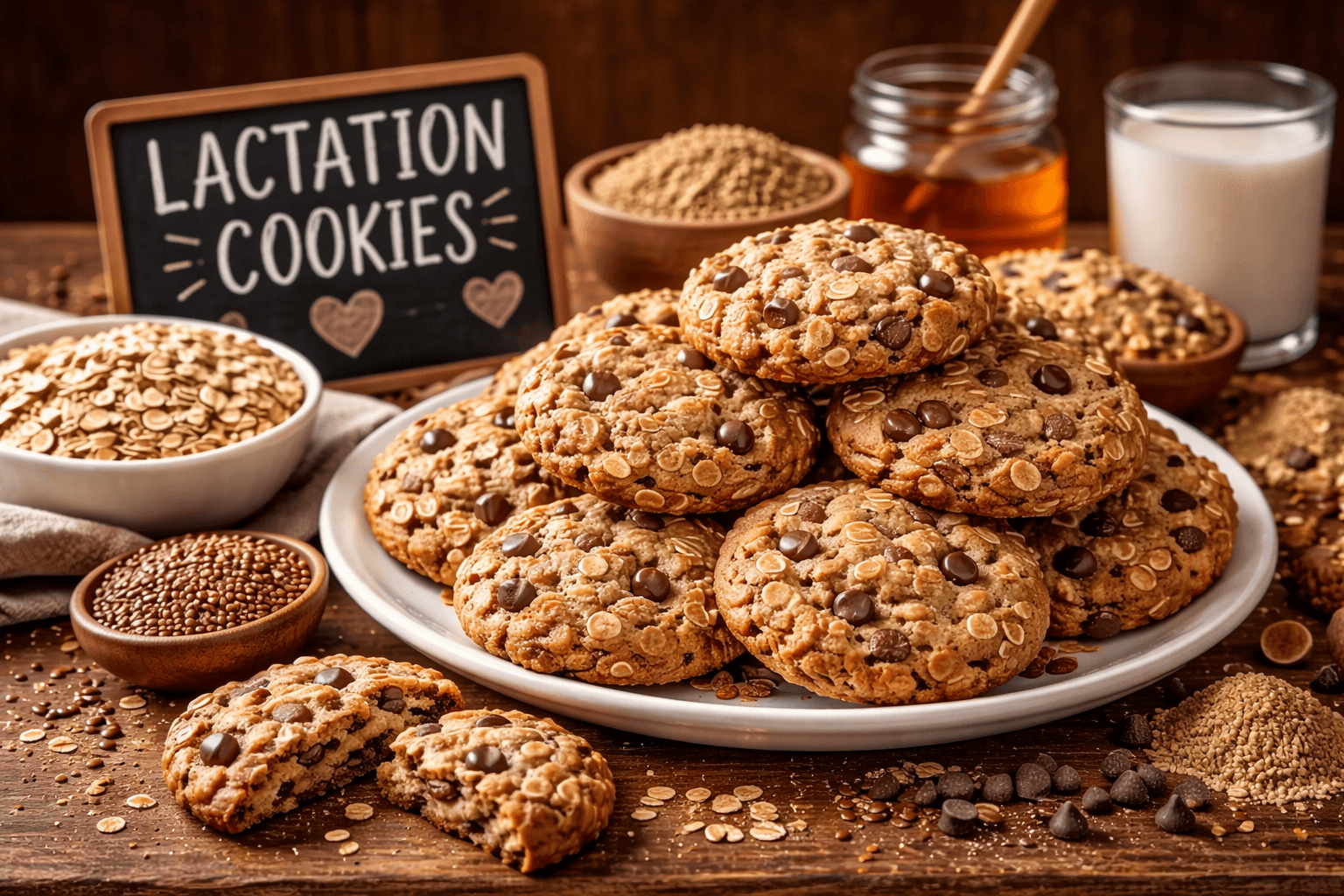
Lactation cookies are popular with new parents who want a simple, comforting snack during the postpartum period. These cookies are designed to be filling, nourishing, and easy to grab, while also including ingredients traditionally believed to support milk supply. Beyond their purpose, lactation cookies are simply good cookies. They’re soft, hearty, and satisfying, which is exactly what many people want during long, tiring days.
This article covers what lactation cookies are, how they work, key ingredients, step-by-step guidance, tips for success, common mistakes, variations, substitutions, storage advice, FAQs, and expert insight, written clearly for home bakers who want reliable, approachable results.
What Are Lactation Cookies?
Lactation cookies are cookies made with ingredients known as galactagogues, which are foods traditionally believed to help support breast milk production. The most common galactagogues used are oats, brewer’s yeast, and flaxseed.
These cookies are not medicine, and results vary from person to person. Many people enjoy them simply because they are nutritious, filling, and easy to eat with one hand. Even those who are not breastfeeding often enjoy them as hearty oatmeal-style cookies.
At their core, lactation cookies are comfort food with a purpose.
How Lactation Cookies Are Thought to Work
Lactation cookies don’t work overnight, and they don’t work the same for everyone. The ingredients are believed to support milk supply by providing steady energy, fiber, healthy fats, and certain nutrients.
Oats are linked to milk support because they help maintain energy and iron levels. Brewer’s yeast contains B vitamins and minerals. Flaxseed provides healthy fats that support overall nutrition.
Combined with enough calories, fluids, and rest, these cookies may help some people feel more supported during breastfeeding.
What Lactation Cookies Taste Like
Many people expect lactation cookies to taste strange or overly “healthy,” but that’s rarely the case. When made well, they taste like soft oatmeal cookies with a slightly nutty, rich flavor.
The sweetness is gentle, the texture is chewy, and the cookies feel satisfying rather than heavy. Chocolate chips, dried fruit, or nuts are often added to make them more enjoyable.
Taste matters, especially when snacks are eaten daily.
Key Ingredients in Lactation Cookies
Most lactation cookie recipes rely on a familiar base with a few special additions.
Rolled oats provide structure and chew. Flour helps bind the dough. Butter or oil adds richness. Brown sugar adds moisture and flavor. Eggs hold everything together. Vanilla improves taste. Baking soda helps with lift.
The lactation-support ingredients include oats, brewer’s yeast, and ground flaxseed. Optional add-ins like chocolate chips, coconut, or nuts improve flavor and texture.
Each ingredient plays a role in both structure and nourishment.
Choosing the Right Oats
Rolled oats are the best choice for lactation cookies. They provide chew and structure without becoming mushy.
Quick oats can be used but result in a softer, less textured cookie. Steel-cut oats are not recommended unless partially cooked, as they remain too hard.
Oats are the backbone of this cookie, so quality matters.
Understanding Brewer’s Yeast
Brewer’s yeast is often misunderstood. It’s not the same as baking yeast, and it does not make cookies rise.
It has a slightly savory, nutty flavor that can taste bitter if too much is used. Most recipes balance it with brown sugar, vanilla, and chocolate chips.
Starting with a small amount helps prevent overpowering flavor.
Step-by-Step Overview
First, cream butter and sugar until smooth. This step affects texture and should not be rushed.
Next, add eggs and vanilla, mixing until just combined. In a separate bowl, whisk dry ingredients so the yeast and flaxseed are evenly distributed.
Combine wet and dry ingredients gently, then fold in oats and any add-ins. Overmixing can make cookies dense.
Scoop dough onto a lined baking sheet and bake until the edges are set and the centers still look soft. Cooling finishes the texture.
Tips for the Best Lactation Cookies
Measure brewer’s yeast carefully to avoid bitterness. Use fresh oats for best texture. Don’t overbake, as these cookies dry out quickly. Let cookies cool fully before judging softness. Chill the dough briefly if it feels too sticky.
Small adjustments improve both flavor and texture.
Common Mistakes to Avoid
Using too much brewer’s yeast leads to unpleasant flavor. Overbaking creates dry cookies. Skipping fat results in crumbly texture. Expecting instant results causes frustration. Treating these cookies as a replacement for meals reduces their benefit.
They work best as part of a balanced routine.
Popular Lactation Cookie Variations
These cookies are easy to customize.
Chocolate chip lactation cookies are the most popular. Oatmeal coconut versions add chew. Peanut butter versions add protein and richness. Raisin or dried cranberry options add natural sweetness. Vegan versions work well with plant-based substitutes.
Variety makes daily snacking more enjoyable.
Ingredient Substitutions
Flaxseed can be replaced with chia seeds when ground. Coconut oil can replace butter. Maple syrup can replace part of the sugar. Gluten-free flour blends usually work well. Dairy-free chocolate chips suit allergy needs.
Texture should always guide substitutions.
Do Lactation Cookies Really Increase Milk Supply?
Results vary widely.
Some people notice an increase after eating them regularly. Others notice no change but still enjoy the convenience and nutrition. Hydration, frequent nursing or pumping, rest, and overall calorie intake matter just as much.
Lactation cookies should be seen as supportive, not magical.
When and How Often to Eat Lactation Cookies
Most people eat one to two cookies per day.
Spacing them throughout the day helps maintain steady energy. Pairing cookies with water or milk supports hydration. Eating too many at once can upset digestion due to fiber and yeast.
Moderation leads to better comfort.
Storage and Make-Ahead Tips
Lactation cookies store very well.
Baked cookies keep in an airtight container for up to five days. Freezing baked cookies extends shelf life to three months. Cookie dough balls can be frozen and baked as needed. Refrigerating dough improves flavor.
Convenience is one of their biggest strengths.
Serving Ideas
Serve cookies slightly warm for comfort. Pair with tea, milk, or coffee. Keep a container near feeding areas for easy access. Wrap individually for quick snacks. Include them in care packages for new parents.
Ease matters during busy days.
Frequently Asked Questions
Lactation cookies are safe for most people. Brewer’s yeast should be introduced slowly. Results differ from person to person. They are not a substitute for professional advice. Anyone can enjoy them as regular cookies.
Clear expectations prevent disappointment.
Expert Insight
The value of lactation cookies goes beyond milk supply. They provide steady energy, comfort, and a sense of care during a demanding time. When people enjoy eating them, they’re more likely to nourish themselves consistently, which matters just as much as any specific ingredient.
Support often comes from simple routines.
Final Thoughts
Lactation cookies are a practical, comforting snack that fits easily into daily life. They’re simple to make, easy to store, and pleasant to eat. While results vary, many people appreciate the nourishment and convenience they offer.
For home bakers looking to create something supportive, familiar, and genuinely enjoyable, lactation cookies are a thoughtful and rewarding choice.