
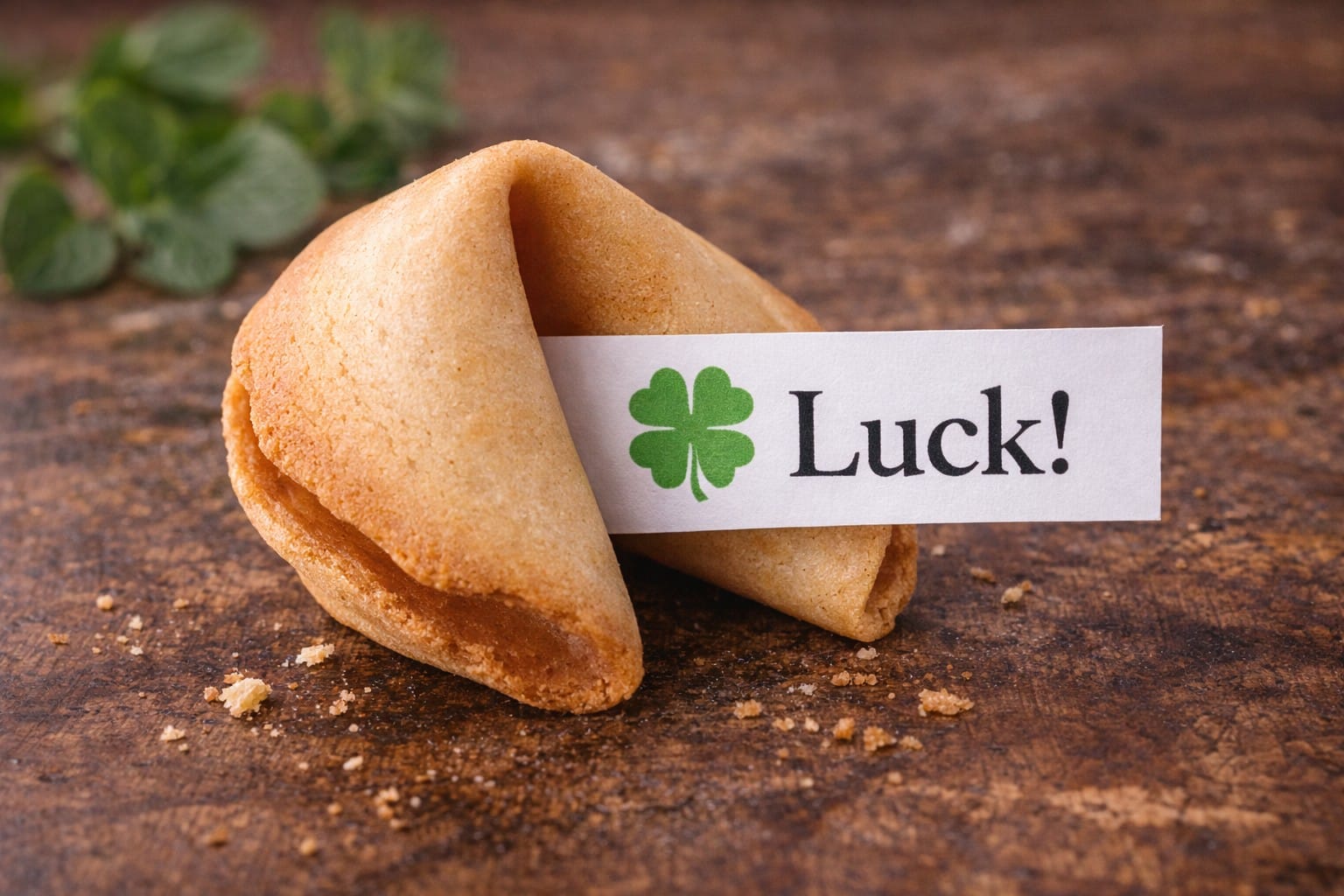
Lucky cookies, more commonly known as fortune cookies, are one of those treats that feel simple but carry a lot of meaning. They are crisp, lightly sweet cookies with a small paper message tucked inside. Some messages are funny, some are hopeful, and others feel strangely accurate. While they often appear at the end of a meal, lucky cookies are more about the experience than the flavor alone.
This article covers everything you need to know about lucky cookies. You’ll learn what they are, where they came from, how they’re made, what the messages mean, how to make them at home, and creative ways to use them for parties, gifts, and celebrations. Whether you enjoy baking or just love food traditions, this guide gives you the full picture.
What Is a Lucky Cookie
A lucky cookie is a thin, crisp cookie folded around a small strip of paper that contains a message. The message might be a fortune, a piece of advice, a lucky number, or a playful joke. The cookie itself is mildly sweet with a vanilla-like flavor and a delicate crunch.
Unlike most desserts, the cookie is not meant to be rich or filling. Its main purpose is to deliver the message inside. The cookie acts as a vessel, much like an envelope made of sugar and flour.
Lucky cookies are most often served in restaurants, especially after meals, but they are also used at parties, weddings, and special events.
Why Lucky Cookies Are So Popular
The popularity of lucky cookies comes from the ritual. Breaking the cookie open, unfolding the paper, and reading the message creates a moment of anticipation. People often read their fortunes out loud, compare messages, or save them for later.
Another reason for their appeal is accessibility. Lucky cookies are light, not overly sweet, and easy to enjoy after a meal. They don’t overwhelm the palate, which makes them a gentle ending rather than a heavy dessert.
They also tap into curiosity. Even people who do not believe in luck still enjoy seeing what message they get.
The History of Lucky Cookies
Despite their strong association with Chinese restaurants, lucky cookies did not originate in China. Their roots are actually found in Japan and later in the United States.
Early versions of fortune-style cookies appeared in Japan in the late nineteenth century. These cookies were slightly larger and darker, often made with sesame or miso, and contained messages of gratitude or wisdom.
The modern lucky cookie as we know it developed in California in the early twentieth century. Japanese-American bakers refined the recipe and began supplying them to restaurants. After World War II, when many Japanese businesses closed, Chinese restaurants adopted the cookie, and it became part of the dining tradition.
Over time, the cookie became a cultural symbol rather than a strictly ethnic one.
What Lucky Cookies Are Made Of
Lucky cookies use simple ingredients. The dough is more like a batter and spreads thin during baking.
Typical ingredients include:
- Egg whites
- Sugar
- All-purpose flour
- Vegetable oil or butter
- Vanilla extract
- Water
Egg whites help create the crisp texture. Sugar provides sweetness and structure. Flour gives shape, while oil keeps the cookie from becoming too brittle.
There is no leavening, which keeps the cookie flat and thin.
Texture and Flavor Explained
Lucky cookies are meant to be crisp and light. When fresh, they snap cleanly when broken. Over time, exposure to air softens them slightly, which is why freshness matters.
The flavor is subtle. Vanilla is the dominant note, supported by light sweetness. The cookie should never taste rich or buttery. Its job is to stay neutral so the message remains the star.
This balance is intentional. A strong-flavored cookie would distract from the experience.
How Lucky Cookies Are Shaped
The shape of a lucky cookie is part of its identity. It starts as a flat circle, then is folded quickly while still hot.
Once baked, the cookie is pliable for only a few seconds. During that window, the fortune paper is placed in the center. The cookie is folded in half, then bent over the edge of a cup or mold to form the classic curved shape.
As the cookie cools, it hardens and locks the shape in place.
How to Make Lucky Cookies at Home
Making lucky cookies at home is possible, but timing is key. The process moves fast, and practice helps.
Ingredients You’ll Need
To make homemade lucky cookies, gather:
- Egg whites
- Granulated sugar
- All-purpose flour
- Vegetable oil
- Vanilla extract
- Water
- Small paper strips for messages
Use simple, thin paper and write messages with food-safe ink.
Step-by-Step Method
Start by preheating the oven and lining baking sheets with parchment paper.
Whisk egg whites until frothy but not stiff. Add sugar, oil, water, and vanilla, mixing until smooth. Gently fold in flour until a thin batter forms.
Spoon small amounts of batter onto the baking sheet and spread into thin circles. Keep them evenly sized.
Bake until the edges just begin to turn golden. This usually takes only a few minutes.
Remove one cookie at a time. Place a fortune in the center, fold the cookie in half, then bend it over a cup edge to shape. Work quickly, as the cookie hardens fast.
Repeat with remaining cookies, reheating briefly if needed.
Tips for Success
Work in small batches. Baking too many cookies at once makes shaping stressful.
Keep extra fortunes ready before baking begins.
If cookies harden too fast, return them to the oven for a few seconds to soften.
Use thin batter. Thick cookies will not fold properly.
Practice improves speed and confidence.
Common Mistakes to Avoid
Waiting too long to fold causes cracking.
Spreading batter too thick makes cookies chewy instead of crisp.
Using wax paper instead of parchment leads to sticking.
Skipping precise timing results in uneven browning.
Trying to shape too many cookies at once causes frustration.
What Do Lucky Cookie Messages Mean
Messages inside lucky cookies vary widely. Some are vague, while others feel personal.
Common types include:
- General advice
- Encouraging phrases
- Playful predictions
- Lucky numbers
- Humorous statements
The meaning is subjective. Many people interpret messages based on their current mood or situation. That flexibility is part of the charm.
Writing Your Own Lucky Cookie Messages
Homemade lucky cookies shine when you customize the messages.
Short messages work best. Keep them positive, light, or playful.
Examples include words of encouragement, inside jokes, party themes, or future hopes.
Avoid overly long sentences, as space is limited.
Personal messages turn a simple cookie into a memorable gift.
Lucky Cookies for Parties and Events
Lucky cookies are popular at weddings, birthdays, baby showers, and corporate events.
For weddings, messages might include love notes or future wishes.
At birthdays, they can contain jokes or age-related humor.
For holidays, messages can match the theme or season.
Custom lucky cookies feel thoughtful without being expensive.
Are Lucky Cookies Really About Luck
Most people see lucky cookies as symbolic rather than predictive. They are more about reflection than fortune-telling.
Reading a message can prompt a smile, a thought, or a conversation. That moment of pause is the real value.
Luck, in this case, becomes a shared experience rather than a promise.
Storage and Freshness
Lucky cookies should be stored in airtight containers.
Humidity is the enemy. Moisture softens them quickly.
Homemade cookies are best eaten within a few days.
Commercial versions last longer due to packaging and preservatives.
If cookies soften, a brief oven reheat can restore crispness.
Dietary Considerations
Traditional lucky cookies contain eggs and wheat.
Gluten-free versions can be made with alternative flours, though texture may vary.
Vegan versions replace egg whites with aquafaba, which works surprisingly well.
Always test small batches when adjusting recipes.
Frequently Asked Questions
Are lucky cookies the same as fortune cookies
Yes, the terms are often used interchangeably.
Do they come from China
No, they originated in Japan and the United States.
Why are the messages vague
Vague messages feel more personal and relatable.
Can I make them ahead
Yes, but keep them sealed tightly.
Are they meant to be eaten
Yes, though many people focus more on the message.
Expert Insight
Lucky cookies show how food can be more than taste. Their value lies in emotion, tradition, and interaction. A simple cookie creates a shared moment, sparks conversation, and leaves people with something to think about. That kind of impact does not require complex ingredients, only thoughtful design.
Final Thoughts
Lucky cookies may look simple, but they carry history, meaning, and joy in every crisp bite. From their surprising origins to their playful messages, they blend food and experience in a way few desserts do. Whether you buy them, bake them, or personalize them for an event, lucky cookies remind us that sometimes the smallest treats leave the biggest impressions.