
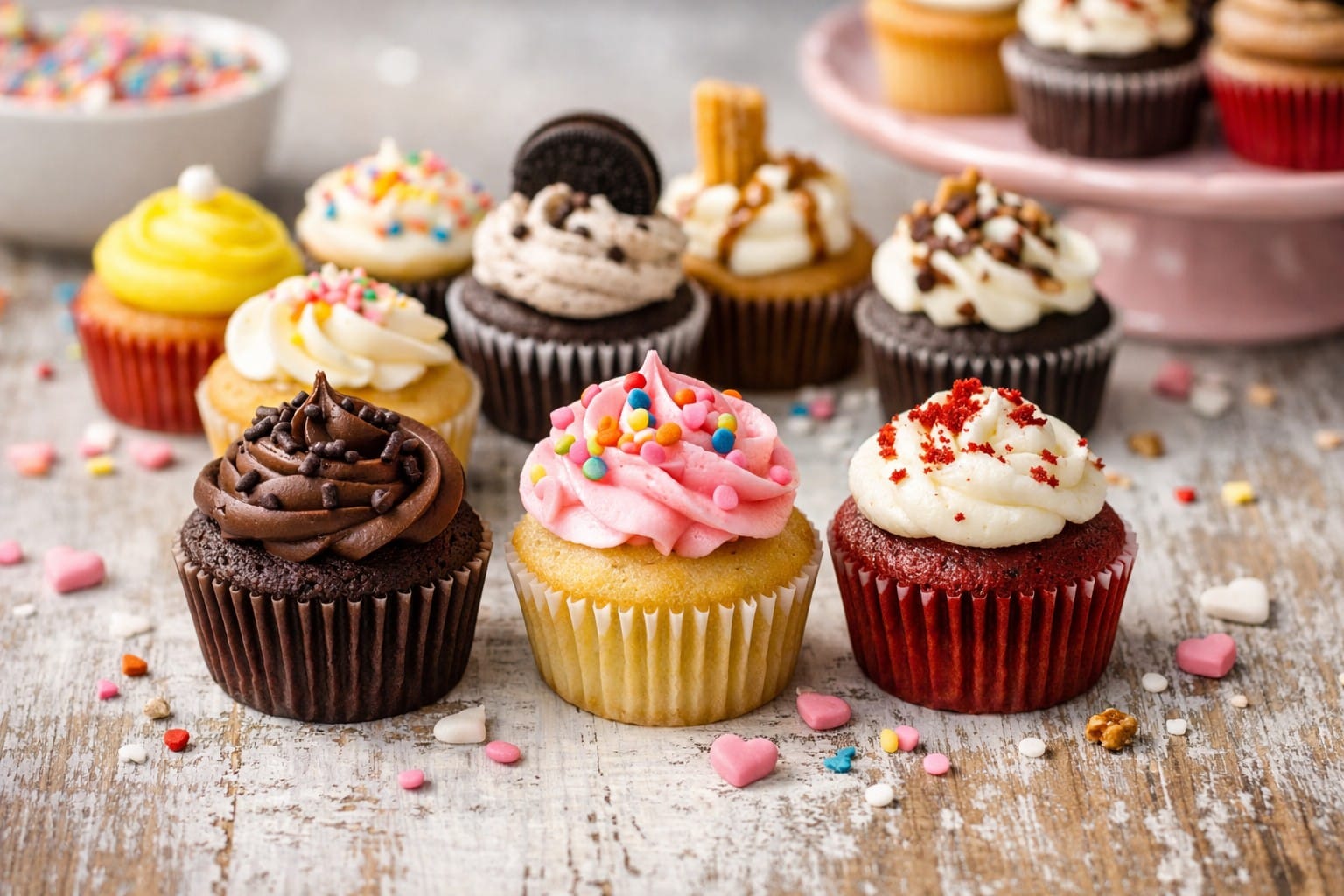
Mini cupcakes may be small, but they deliver big payoff. They bake faster, feel lighter to eat, and are perfect when you want variety without committing to a full-size dessert. For home bakers, mini cupcakes are also forgiving, fun to decorate, and great for parties, holidays, or casual treats.
This guide covers everything you need to know about mini cupcakes, including what makes them different from regular cupcakes, the best batter choices, baking tips, frosting ideas, common mistakes, variations, storage, and expert advice to help you get consistent results at home.
What Are Mini Cupcakes?
Mini cupcakes are smaller versions of standard cupcakes, usually baked in a mini muffin pan. Each one is about two to three bites, making them easy to serve and easy to eat.
Because of their size, mini cupcakes feel playful and approachable. People often eat more than one flavor, which makes them ideal for dessert tables and gatherings.
Why Mini Cupcakes Are So Popular
Mini cupcakes solve a lot of dessert problems.
They bake quickly, which saves time. They’re portion-friendly, so guests don’t feel weighed down. They allow multiple flavors in one batch. They’re visually appealing, especially when decorated simply.
For many bakers, mini cupcakes strike the perfect balance between effort and reward.
Mini Cupcakes vs Regular Cupcakes
The main difference comes down to size and timing.
Mini cupcakes use the same batter as regular cupcakes, but they bake much faster. Texture can be slightly softer because there’s less baking time. Frosting ratios also change, since too much frosting can overwhelm a small cupcake.
Once you adjust for scale, the process feels very familiar.
Best Batter for Mini Cupcakes
Most cupcake batters work well for mini cupcakes.
Vanilla, chocolate, red velvet, carrot cake, and funfetti are all great choices. Moist batters made with oil or buttermilk tend to work best because they stay soft even if slightly overbaked.
Very dense batters should be avoided, as they can feel heavy in such a small size.
Tools You’ll Need
Mini cupcakes don’t require special equipment beyond a few basics.
A mini muffin pan is essential. Paper liners help with easy removal. A small cookie scoop or teaspoon helps portion batter evenly. A piping bag or zip-top bag makes frosting easier.
Even portions are especially important with mini cupcakes.
How Full Should You Fill Mini Cupcake Liners?
This is a common question.
Fill mini cupcake liners about two-thirds full. Overfilling causes overflow and misshapen tops. Underfilling leads to flat cupcakes.
Because the cups are small, even a little extra batter can make a big difference.
Baking Time and Temperature
Mini cupcakes usually bake at the same temperature as regular cupcakes, typically 350°F.
Baking time is much shorter, often between 10 and 14 minutes. Start checking early, because overbaking happens fast at this size.
When in doubt, check a minute sooner than you think.
How to Tell When Mini Cupcakes Are Done
Visual cues matter more than timing.
The tops should look set and spring back lightly when touched. A toothpick inserted in the center should come out clean or with a few moist crumbs.
Dry mini cupcakes usually mean they stayed in the oven too long.
Common Mini Cupcake Mistakes
Overbaking is the biggest issue. Uneven sizes can cause uneven baking. Too much frosting throws off balance. Overmixing batter leads to dense texture.
Most mistakes come from treating mini cupcakes exactly like regular ones without adjusting timing and portions.
Frosting Mini Cupcakes the Right Way
Mini cupcakes need less frosting than you think.
A small swirl or dollop works best. Tall frosting peaks can overpower the cupcake and make them messy to eat.
Buttercream, cream cheese frosting, and whipped frosting all work well. Choose something smooth and pipeable.
Easy Decorating Ideas for Mini Cupcakes
Simple decorations look best on mini cupcakes.
Sprinkles add color without effort. Mini chocolate chips or pearls work well. A small berry or candy topper adds charm. Dusting with cocoa powder or powdered sugar keeps things elegant.
Clean and simple usually wins.
Flavor Ideas That Work Especially Well
Mini cupcakes shine when you offer variety.
Chocolate with vanilla frosting. Vanilla with chocolate frosting. Lemon with cream cheese frosting. Red velvet with cream cheese frosting. Funfetti with vanilla buttercream.
Mixing flavors keeps things interesting without extra work.
Filled Mini Cupcakes
Yes, you can fill mini cupcakes, but keep it minimal.
Use a piping tip or small knife to remove a tiny center. Fill with jam, ganache, or caramel. Replace the top or frost over it.
A little filling goes a long way.
Making Mini Cupcakes Ahead of Time
Mini cupcakes are great for prep.
Bake them a day ahead and store unfrosted at room temperature. Frost the day of serving for best appearance and texture.
This keeps them fresh and prevents soggy liners.
How to Store Mini Cupcakes
Unfrosted mini cupcakes keep well at room temperature for one to two days.
Frosted cupcakes depend on the frosting. Buttercream works at room temperature for short periods. Cream cheese frosting requires refrigeration.
Bring chilled cupcakes to room temperature before serving.
Freezing Mini Cupcakes
Mini cupcakes freeze very well when unfrosted.
Wrap tightly and freeze for up to three months. Thaw at room temperature before decorating.
Freezing helps when you need desserts ready in advance.
Mini Cupcakes for Parties and Events
Mini cupcakes are ideal for gatherings.
They’re easy to grab, easy to serve, and easy to portion. Guests can try multiple flavors without feeling full.
They also photograph well, which makes them popular for celebrations.
Making Mini Cupcakes Gluten-Free
Most cupcake recipes adapt well to mini size.
Use a one-to-one gluten-free flour blend. Watch baking time closely, as gluten-free cupcakes can dry out faster.
Flavor stays strong even with the size change.
Dairy-Free and Egg-Free Options
Mini cupcakes work well with alternative ingredients.
Plant-based milk, oil, and egg replacers all perform well. Because mini cupcakes are small, texture differences are often less noticeable.
They’re a good option for mixed-diet crowds.
Frequently Asked Questions
Mini cupcakes bake faster than regular cupcakes. Fill liners two-thirds full. Use the same batter as standard cupcakes. Less frosting is better. Check for doneness early.
These tips solve most beginner concerns.
Expert Baking Tips
Use an oven thermometer for accuracy. Rotate the pan if your oven has hot spots. Let cupcakes cool fully before frosting to avoid melting.
Details matter more when desserts are small.
Final Thoughts
Mini cupcakes prove that smaller really can be better. They’re quick to bake, easy to decorate, and perfect for sharing. With the right timing and a light hand on frosting, they deliver everything people love about cupcakes in a more playful, flexible form.
Once you start baking mini cupcakes, you’ll find yourself reaching for them again and again. They’re simple, charming, and always a hit.