
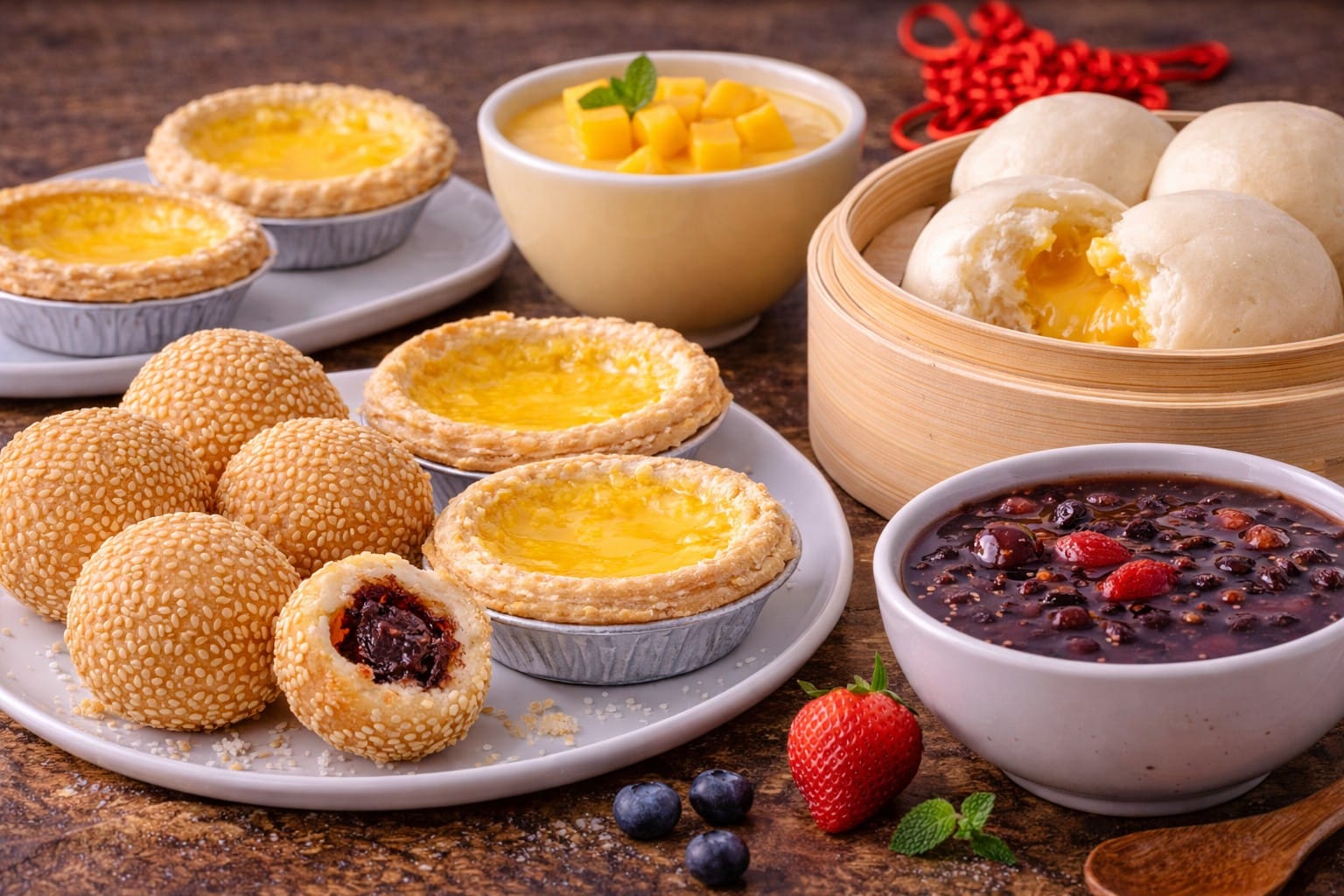
Chinese desserts are gentle, balanced, and often less sweet than Western treats. Instead of heavy frosting or rich chocolate, they focus on texture, natural sweetness, and comforting flavors. Many are tied to family traditions, festivals, and everyday meals, making them feel warm and familiar rather than over-the-top indulgent.
This guide walks through the world of Chinese desserts in a clear, beginner-friendly way. You’ll learn what defines them, the most popular types, key ingredients, how they’re made, common mistakes, variations, and tips for enjoying or recreating them at home.
What Makes Chinese Desserts Different
Chinese desserts are built around harmony. Sweetness is present, but it never overwhelms the palate. Texture matters just as much as flavor, which is why many desserts are chewy, silky, or softly set.
Common characteristics include:
- Mild sweetness
- Soft, chewy, or jelly-like textures
- Natural ingredients like beans, rice, fruit, and nuts
- Warm desserts served after meals or cold desserts for hot weather
- Strong cultural and seasonal connections
Instead of feeling like a sugar rush, Chinese desserts often feel soothing.
Common Ingredients in Chinese Desserts
Many Chinese desserts rely on pantry staples rather than butter and cream.
Frequently used ingredients include:
- Glutinous rice flour
- Rice flour
- Red beans and mung beans
- Black sesame
- Lotus seed paste
- Coconut milk
- Ginger
- Taro
- Sweet rice
- Rock sugar or cane sugar
These ingredients create depth without heaviness.
Popular Traditional Chinese Desserts
Chinese desserts vary by region, but some treats are loved almost everywhere.
Tang Yuan
Tang yuan are soft glutinous rice balls usually filled with black sesame, peanut, or red bean paste. They are served in warm, lightly sweetened water or ginger syrup.
This dessert is especially popular during the Lantern Festival and symbolizes family unity.
Mooncakes
Mooncakes are dense pastries traditionally eaten during the Mid-Autumn Festival. They have thin pastry shells filled with lotus seed paste, red bean paste, or salted egg yolks.
Modern versions now include flavors like custard, chocolate, and matcha.
Red Bean Soup
Red bean soup is a simple dessert made by simmering adzuki beans with sugar until soft and creamy. It can be served warm or chilled.
It’s comforting, filling, and often enjoyed year-round.
Sesame Balls
Also called Jian Dui, these are deep-fried glutinous rice balls coated in sesame seeds. The inside is usually filled with sweet red bean paste.
The outside is crispy, while the inside stays chewy.
Almond Jelly
Almond jelly is a light, refreshing dessert made with almond-flavored milk and gelatin or agar-agar. It’s usually served cold with fruit.
This dessert is especially popular during summer.
Steamed Chinese Desserts
Steaming is a common cooking method in Chinese cuisine, including desserts.
Popular steamed desserts include:
- Steamed sponge cakes
- Rice cakes
- Custard buns
- Sweet pumpkin cakes
Steaming keeps desserts moist and soft without added fat.
Rice-Based Chinese Desserts
Rice plays a huge role in Chinese sweets.
Examples include:
- Sticky rice cakes
- Sweet rice puddings
- Glutinous rice rolls
- Layered rice flour cakes
These desserts are filling and often eaten in small portions.
Chinese Bakery-Style Desserts
Modern Chinese bakeries blend Western techniques with Chinese flavors.
Common bakery-style desserts:
- Milk bread buns with custard filling
- Sponge cakes with light cream
- Swiss rolls flavored with taro or matcha
- Pineapple buns with sweet topping
These desserts are softer and less sweet than traditional Western bakery items.
Sweet Soups and Dessert Soups
Dessert soups are very common in Chinese cuisine.
Popular varieties include:
- Black sesame soup
- Sweet potato soup
- Lotus seed soup
- Snow fungus soup
These are usually served warm and are believed to be nourishing.
How Sweet Are Chinese Desserts
Chinese desserts are intentionally mild. Sugar enhances ingredients rather than dominating them. This makes them appealing to people who prefer subtle flavors or want something lighter after a meal.
If you’re used to Western desserts, the sweetness may feel gentle at first, but it grows on you quickly.
Tips for Making Chinese Desserts at Home
You don’t need advanced skills to get started.
Helpful tips:
- Measure glutinous rice flour carefully
- Add sugar gradually and taste as you go
- Watch texture more than color
- Don’t rush steaming or simmering
- Use fresh fillings for better flavor
Texture is often more important than appearance.
Common Mistakes to Avoid
Some mistakes can affect the final result.
Avoid:
- Overcooking glutinous rice dough
- Using too much sugar
- Skipping soaking steps for beans
- Overfilling rice balls
- Rushing cooling time for jellies
Patience leads to better texture.
Easy Chinese Desserts for Beginners
If you’re new, start simple.
Beginner-friendly options:
- Almond jelly
- Red bean soup
- Coconut milk tapioca
- Steamed sponge cake
- Sweet rice balls without filling
These recipes build confidence quickly.
Chinese Desserts for Festivals
Many desserts are tied to holidays.
Examples:
- Mooncakes for Mid-Autumn Festival
- Tang yuan for Lantern Festival
- Sticky rice cakes for Lunar New Year
- Longevity buns for birthdays
Food often carries symbolic meaning.
Modern Twists on Chinese Desserts
Newer versions adapt classic flavors to modern tastes.
Examples include:
- Matcha mooncakes
- Mango sago
- Black sesame ice cream
- Custard-filled buns
- Chinese-style cheesecakes
These blends make traditional flavors more accessible.
How to Store Chinese Desserts
Storage depends on the dessert type.
Refrigerate:
- Jellies
- Custard-based desserts
- Cream-filled pastries
Freeze:
- Unfilled glutinous rice dough
- Some steamed cakes
Consume fresh when possible, since texture changes over time.
Serving Chinese Desserts
Chinese desserts are usually served in small portions.
They pair well with:
- Hot tea
- Light meals
- Family-style dining
Presentation is simple and clean.
Frequently Asked Questions
Are Chinese desserts healthy
Many are lighter than Western desserts, but they still contain sugar.
Do Chinese desserts use dairy
Traditional ones rarely use dairy.
Why are many desserts chewy
Glutinous rice flour creates that signature texture.
Can I reduce sugar
Yes, most recipes allow easy adjustment.
Are Chinese desserts hard to make
Most are simple once you understand the texture.
Expert Insight
Experienced cooks focus on balance rather than precision. Texture, temperature, and ingredient quality matter more than decoration. When done right, Chinese desserts feel comforting, not heavy, and leave you satisfied without feeling overfull.
Final Thoughts
Chinese desserts offer a refreshing change from rich, sugar-heavy sweets. They highlight texture, subtle sweetness, and tradition, making them perfect for anyone who enjoys gentle flavors and comforting food.
Whether you try a warm bowl of sweet soup, chewy rice balls, or a slice of bakery-style cake, Chinese desserts invite you to slow down and enjoy something quietly special.