
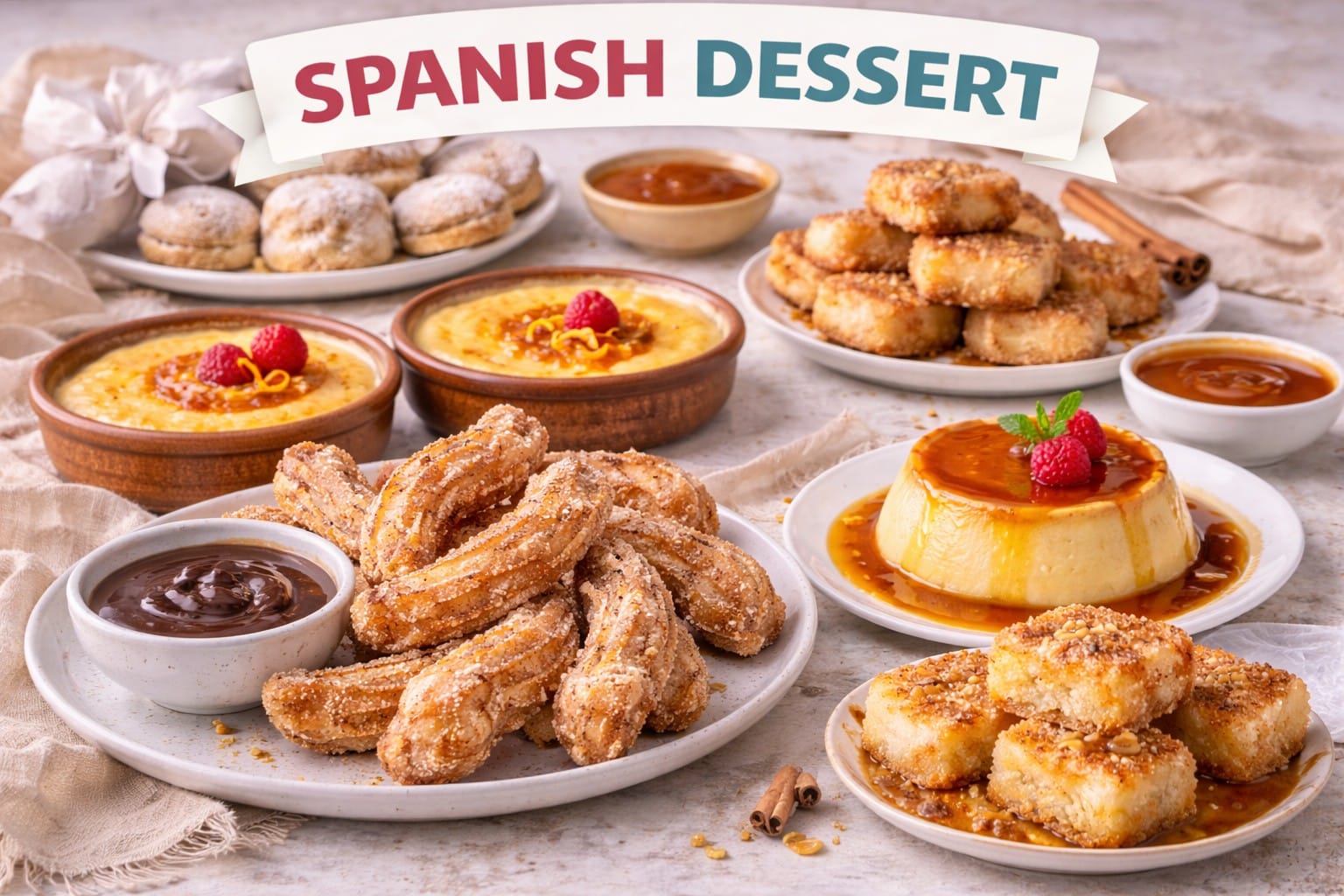
Spanish desserts are full of flavor, history, and variety. From creamy custards to fried treats and delicate pastries, Spain offers a wide range of sweets that reflect its diverse regions and rich culinary traditions. Spanish desserts often combine simple ingredients like eggs, milk, sugar, and almonds with unique techniques, creating desserts that are both comforting and elegant.
This guide covers the most popular Spanish desserts, essential ingredients, step-by-step recipes, tips for perfect results, storage advice, variations, and expert insights so you can enjoy authentic Spanish sweets at home.
What Makes Spanish Desserts Unique
Spanish desserts often balance sweetness with rich textures. Many rely on eggs for structure, milk or cream for richness, and nuts or fruit for flavor. Regional ingredients also influence desserts—for example, almonds in Andalusia, oranges in Valencia, and turrón in Catalonia.
Some hallmarks of Spanish desserts include:
- Custards and flans
- Fried pastries and fritters
- Nut-based sweets
- Use of spices like cinnamon and citrus zest
- Layered or decorative presentation
Popular Spanish Desserts
1. Churros
Fried dough sticks, crisp on the outside and soft on the inside, traditionally dusted with sugar and served with thick hot chocolate for dipping.
2. Flan
A creamy caramel custard dessert made from eggs, milk, and sugar. Flan is smooth, rich, and slightly sweet, often served chilled.
3. Tarta de Santiago
An almond cake from Galicia, flavored with lemon zest and dusted with powdered sugar, often decorated with the cross of Saint James.
4. Crema Catalana
Similar to French crème brûlée, it is a creamy custard flavored with cinnamon and lemon zest, topped with a caramelized sugar crust.
5. Torrijas
A Spanish take on French toast, made by soaking bread in milk and eggs, frying it, and drizzling it with honey or syrup, popular during Lent.
6. Polvorones and Mantecados
Traditional Spanish shortbread cookies made with almonds, flour, and lard or butter, usually eaten around Christmas.
7. Leche Frita
“Fried milk” squares, where a thick milk pudding is coated in flour and egg, fried, and dusted with cinnamon sugar.
8. Turrón
A nougat made with almonds, honey, and sugar, popular during the holiday season. Soft or crunchy varieties exist.
Essential Ingredients in Spanish Desserts
- Eggs, milk, and cream for custards and puddings
- Sugar and honey for sweetness
- Flour for cakes and fried pastries
- Almonds, walnuts, or hazelnuts for flavor and texture
- Cinnamon, citrus zest, or anise for aromatic notes
- Butter, lard, or olive oil depending on the recipe
Step-by-Step Recipe: Spanish Flan
Ingredients:
- 4 large eggs
- 2 cups whole milk
- ¾ cup sugar
- 1 teaspoon vanilla extract
- ¼ cup sugar (for caramel)
Instructions:
- Preheat the oven to 350°F (175°C).
- In a saucepan, melt ¼ cup sugar over medium heat until it turns golden caramel. Pour the caramel into a flan mold and swirl to coat the bottom.
- In a bowl, whisk eggs, milk, sugar, and vanilla until smooth.
- Pour the mixture over the caramel in the mold.
- Place the flan mold in a larger baking dish and add hot water halfway up the sides (water bath).
- Bake for 45–50 minutes or until set.
- Cool, then refrigerate for at least 2 hours.
- Run a knife around the edges and invert onto a plate to serve.
Tips for Perfect Spanish Desserts
- Use fresh, high-quality ingredients like farm-fresh eggs and whole milk.
- Don’t rush custards—they need gentle cooking for smooth texture.
- For fried desserts like churros or torrijas, maintain consistent oil temperature for even cooking.
- Chill desserts like flan or crema catalana thoroughly before serving.
- Spice and zest can be subtle but elevate flavor significantly.
Creative Variations
- Chocolate Churros: Add cocoa to the dough or drizzle with chocolate sauce.
- Flan with Orange Zest: Add a hint of citrus for a fresh twist.
- Mini Tarta de Santiago: Make single-serve almond cakes dusted with powdered sugar.
- Leche Frita with Cinnamon: Sprinkle extra cinnamon sugar on top for extra aroma.
- Holiday Turrón: Mix in dried fruits or chocolate for festive variations.
Storing Spanish Desserts
- Custards and flans: Refrigerate in airtight containers for up to 3 days.
- Fried pastries: Best eaten fresh, but can be stored in airtight containers for a day or two.
- Cakes and turrón: Store in a cool, dry place or wrap well to prevent drying.
Serving Ideas
- Serve churros with thick hot chocolate for dipping.
- Plate flan with a drizzle of caramel sauce and a sprinkle of citrus zest.
- Slice Tarta de Santiago and serve with fresh berries or a dusting of powdered sugar.
- Garnish crema catalana with caramelized sugar crust at the last minute for a dramatic finish.
Frequently Asked Questions
Are Spanish desserts very sweet?
They are typically moderately sweet, with natural flavors like almond, cinnamon, and citrus standing out.
Can I make churros at home?
Yes, with simple ingredients: flour, water, sugar, and oil. Pipe and fry carefully.
Do I need special equipment?
Some desserts, like flan, require a water bath; churros benefit from a piping bag with a star tip.
Which desserts are best for beginners?
Flan, Tarta de Santiago, or torrijas are easier starting points.
Expert Insight
Chefs emphasize balance and texture in Spanish desserts. Custards should be silky, fried pastries crisp outside and tender inside, and nut-based sweets moist and aromatic. Patience in preparation, especially chilling custards and careful frying, is key to authentic results.
Final Thoughts
Spanish desserts are a celebration of flavors, textures, and tradition. They offer something for every occasion—crispy fried treats, creamy custards, nutty cakes, or festive holiday sweets. With simple ingredients and careful technique, you can bring the taste of Spain to your home kitchen.
From churros dipped in chocolate to smooth flan and almond cakes, Spanish desserts showcase how humble ingredients like eggs, milk, and nuts can become extraordinary sweets. Whether for a family gathering, holiday celebration, or simple everyday treat, Spanish desserts are sure to impress and delight.