
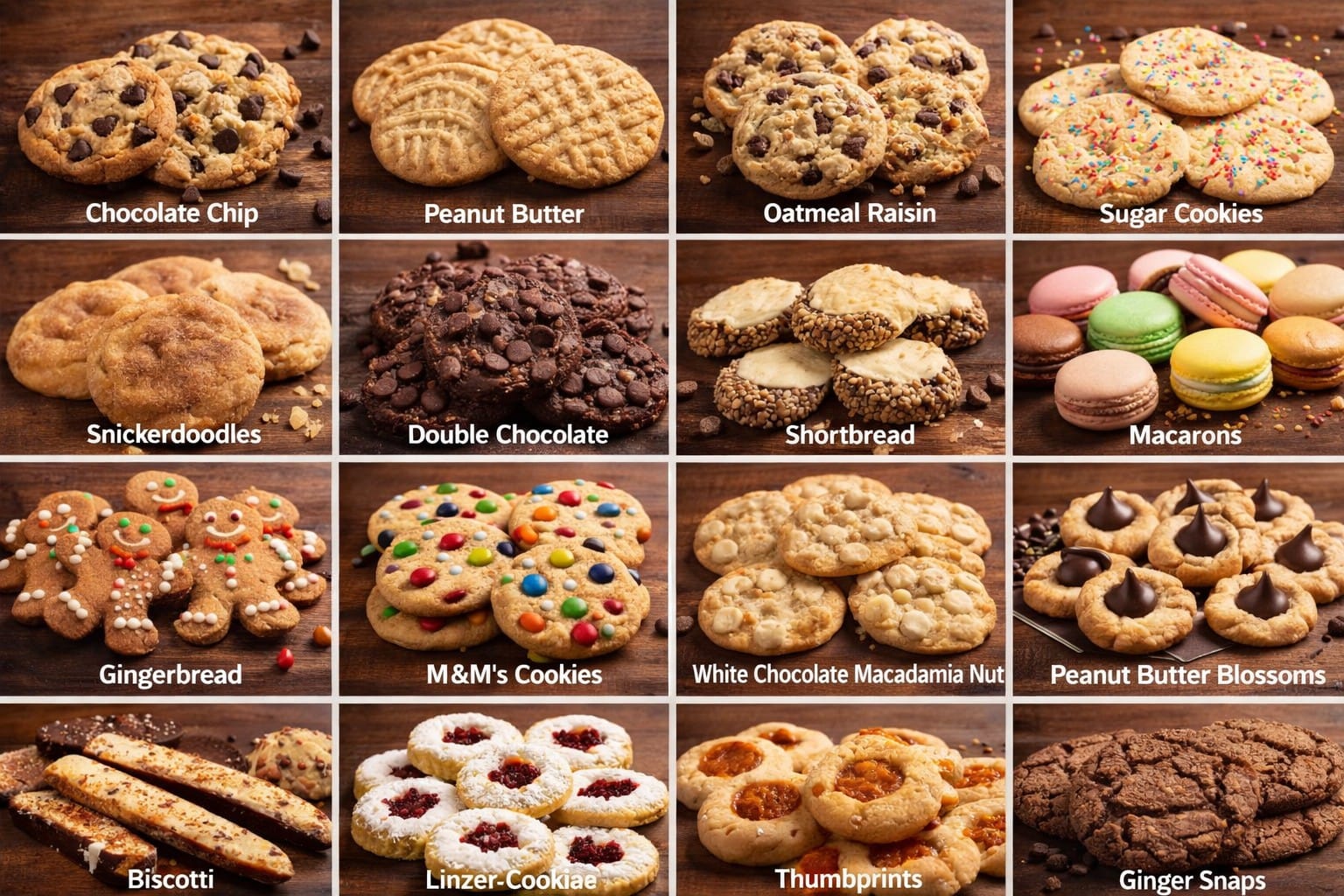
Cookies are one of the most loved desserts in the world, and for good reason. They’re simple, comforting, endlessly customizable, and perfect for both beginner and experienced bakers. From soft and chewy classics to crisp, delicate treats, there are many different types of cookies, each with its own texture, flavor, and baking method.
This guide walks you through the main types of cookies you should know. You’ll learn what makes each type unique, popular examples, baking tips, and how to choose the right cookie for your mood or occasion. Whether you bake from scratch or just love learning about desserts, this list gives you a clear picture of the cookie world.
Drop Cookies
Drop cookies are the most common and beginner-friendly type of cookie.
The dough is soft and spooned or scooped directly onto a baking sheet. As the cookies bake, they spread naturally, creating soft centers and slightly crisp edges.
Chocolate chip cookies are the most famous example. Oatmeal cookies, peanut butter cookies, and double chocolate cookies also fall into this category.
These cookies are forgiving and easy to customize. Add nuts, chocolate chips, dried fruit, or spices without changing the base recipe much.
Bar Cookies
Bar cookies are baked in a pan and cut into squares or rectangles.
Instead of scooping individual cookies, the dough or batter is spread evenly into a baking dish. After baking and cooling, the cookies are sliced into portions.
Brownies, blondies, lemon bars, and cookie bars are popular examples. This type is ideal for feeding a crowd or when you want less hands-on shaping.
Bar cookies often have a soft, dense texture and can include layers like crusts, fillings, or toppings.
Rolled Cookies
Rolled cookies are made from firm dough that’s rolled out and cut into shapes.
This type requires chilling, rolling, and cutting, which makes it more time-consuming but also more creative. Sugar cookies and gingerbread cookies are the most common rolled cookies.
These cookies hold their shape well, making them perfect for holidays, decorating, and themed events. Royal icing, glaze, and sprinkles are often used for decoration.
Rolled cookies focus more on structure than spread.
Cutout Cookies
Cutout cookies are a close cousin to rolled cookies but deserve their own category.
The dough is rolled out and cut with cookie cutters into specific shapes. What sets them apart is their sturdy dough, which keeps designs crisp after baking.
Holiday sugar cookies, Halloween cookies, and themed celebration cookies fit here. The dough usually contains less leavening so the shapes don’t puff or distort.
Decorating is a big part of the appeal.
Pressed Cookies
Pressed cookies are made using a cookie press.
The dough is soft but thick, allowing it to be pressed through decorative discs directly onto a baking sheet. Spritz cookies are the most well-known example.
These cookies are usually smaller, crisp, and buttery. Because the dough is rich and smooth, pressed cookies don’t need icing to be flavorful.
They’re popular during the holidays and look elegant with minimal effort.
Refrigerator Cookies
Refrigerator cookies, also called slice-and-bake cookies, are shaped into logs and chilled before baking.
Once firm, the dough is sliced into rounds and baked. This method creates evenly shaped cookies with very little effort on baking day.
Pillsbury-style slice-and-bake cookies are a commercial version of this type. Homemade versions often include chocolate chip slices, pinwheel cookies, or patterned doughs.
They’re perfect for make-ahead baking.
Molded Cookies
Molded cookies are shaped by hand before baking.
The dough is rolled into balls or shaped into specific forms, sometimes filled or coated. Peanut butter cookies with fork marks and thumbprint cookies are classic molded cookies.
Because they’re shaped individually, they often have a more homemade, rustic look. This type gives you control over size and presentation.
Molded cookies usually bake up thick and tender.
Filled Cookies
Filled cookies contain a surprise inside.
The filling can be jam, chocolate, caramel, cream, or nut paste. Examples include thumbprint cookies, sandwich cookies, and stuffed cookies.
These cookies require a bit more technique, since sealing the filling properly matters. When done well, the contrast between cookie and filling makes them extra indulgent.
They’re popular for special occasions and dessert platters.
Sandwich Cookies
Sandwich cookies consist of two cookies with a filling in between.
The cookies themselves are often crisp or soft but sturdy enough to hold filling. The filling can be frosting, ganache, jam, or cream.
Oreos are the most famous example, but homemade sandwich cookies include whoopie pies, shortbread sandwiches, and macarons.
Texture balance is key for this type.
Shortbread Cookies
Shortbread cookies are rich, buttery, and crumbly.
They’re made with a simple ratio of butter, sugar, and flour. There are no eggs, which gives shortbread its signature tender texture.
These cookies are lightly sweet and perfect with tea or coffee. They can be plain or flavored with chocolate, citrus zest, or nuts.
Shortbread focuses on quality ingredients and precision.
Biscotti
Biscotti are twice-baked cookies.
They’re baked once as a loaf, sliced, then baked again to dry them out. This creates a firm, crunchy texture meant for dipping.
Almond biscotti are classic, but many flavors exist, including chocolate, cranberry, and pistachio.
They’re popular with coffee and store well for long periods.
No-Bake Cookies
No-bake cookies don’t require an oven.
They’re made by cooking ingredients on the stovetop or simply mixing and chilling. Common examples include chocolate peanut butter no-bake cookies and oat-based no-bake treats.
These cookies are quick, convenient, and great for warm weather or when you don’t want to turn on the oven.
Texture depends on chilling rather than baking.
Gluten Free Cookies
Gluten free cookies use alternative flours instead of wheat.
Almond flour, oat flour, rice flour, and gluten free blends are commonly used. Chocolate chip cookies, brownies, and oatmeal cookies all have gluten free versions.
When balanced properly, gluten free cookies can taste just as good as traditional ones.
The key is moisture and proper flour selection.
Vegan Cookies
Vegan cookies are made without eggs or dairy.
Butter is replaced with plant-based alternatives, and eggs are substituted with flax eggs, applesauce, or other binders.
Chocolate chip, oatmeal, and peanut butter cookies are popular vegan options.
These cookies often rely on creative substitutions rather than strict rules.
Soft Cookies
Soft cookies focus on moisture and tenderness.
They often include brown sugar, extra fat, or ingredients like cream cheese or sour cream. Lofthouse-style sugar cookies are a well-known example.
These cookies stay plush and cake-like, even days after baking.
Soft cookies are comforting and crowd-pleasing.
Crispy Cookies
Crispy cookies are thin and crunchy.
They spread more during baking and often contain more sugar or butter. Lace cookies, wafer cookies, and thin sugar cookies fall into this category.
They snap instead of bend and pair well with tea or coffee.
Baking time is critical for crispness.
Chewy Cookies
Chewy cookies strike a balance between soft and firm.
They use brown sugar, melted butter, and careful baking to stay tender inside. Chocolate chip cookies are the best example.
Chewiness is one of the most desired cookie textures.
Small ingredient changes can make a big difference here.
Holiday Cookies
Holiday cookies include many types but share a festive purpose.
Christmas cookies, Halloween cookies, and Easter cookies often combine rolled, cutout, and decorated styles.
These cookies are more about tradition and presentation than strict rules.
They bring people together.
Choosing the Right Type of Cookie
The best cookie depends on your goal.
For beginners, drop cookies and bar cookies are easiest. For decorating, rolled and cutout cookies work best. For gifting, biscotti and shortbread store well. For quick treats, no-bake cookies are ideal.
Knowing the types helps you choose confidently.
Common Cookie Baking Mistakes
Overbaking dries cookies out. Using the wrong flour changes texture. Skipping chilling causes spreading. Overmixing creates toughness.
Understanding cookie types helps avoid these problems.
Expert Insight
Cookies may seem simple, but each type follows its own logic. Texture, spread, and structure all depend on how the dough is mixed, shaped, and baked. Once bakers understand these categories, recipes stop feeling random and start making sense. That knowledge turns trial and error into confidence.
Cookies reward curiosity.
Final Thoughts
There are many types of cookies, but each one fits into a clear family with shared traits. From drop cookies and bar cookies to cutout, pressed, and filled styles, understanding these categories helps you bake smarter and enjoy cookies more fully.
Once you know the types of cookies, choosing what to bake becomes easier, more fun, and far more satisfying.