
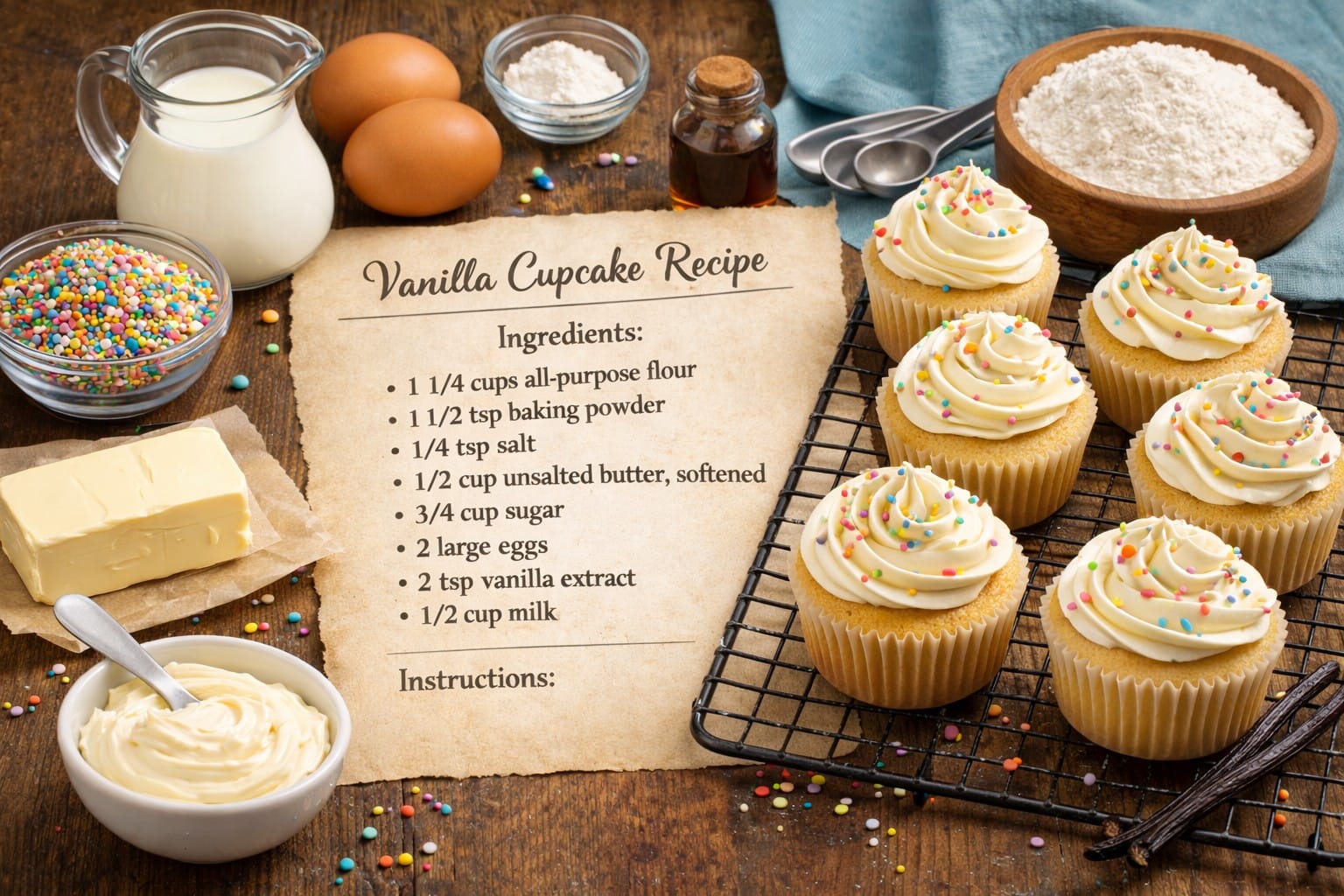
A good vanilla cupcake recipe is something every home baker should have. Vanilla cupcakes may look simple, but when they’re done right, they’re anything but boring. The best ones are light, tender, moist, and full of warm vanilla flavor without tasting plain or dry. This guide walks you through a reliable vanilla cupcake recipe while explaining why each step matters, how to avoid common mistakes, and how to customize the cupcakes for any occasion.
Whether you’re baking for birthdays, holidays, or casual cravings, this vanilla cupcake recipe is designed to give you consistent results using basic ingredients and easy techniques.
Why This Vanilla Cupcake Recipe Works So Well
Vanilla cupcakes can easily turn dense or dry if the balance is off. This recipe focuses on structure and moisture without overcomplicating the process. Butter provides flavor, oil helps retain moisture, and milk softens the crumb. Gentle mixing keeps the cupcakes light instead of tough.
The goal here is balance. Every ingredient has a purpose, and nothing is added just for show.
Ingredients You’ll Need
This vanilla cupcake recipe uses ingredients you probably already have.
All-purpose flour forms the structure. Granulated sugar adds sweetness and moisture. Unsalted butter gives flavor. A small amount of oil keeps the cupcakes soft for longer. Eggs bind everything together. Milk adds tenderness. Baking powder creates lift. Salt enhances flavor. Vanilla extract is the star and should be good quality if possible.
Using fresh ingredients makes a noticeable difference in simple recipes like this.
Choosing the Right Vanilla
Vanilla flavor carries the entire cupcake, so quality matters.
Pure vanilla extract offers the best flavor. Vanilla bean paste adds visible specks and a slightly deeper taste. Imitation vanilla works in a pinch but won’t taste as rich.
When vanilla is the main flavor, it’s worth using the good stuff.
Butter vs Oil in Vanilla Cupcakes
Butter gives vanilla cupcakes their classic flavor, while oil helps them stay moist.
This recipe uses both to get the best of each. Butter adds richness. Oil keeps the crumb soft, even after refrigeration.
That combination creates cupcakes that taste good on day one and day two.
Essential Tools for Baking Cupcakes
You don’t need fancy equipment, but a few tools help.
A standard muffin pan ensures even baking. Paper liners prevent sticking. A hand mixer or stand mixer helps cream butter and sugar properly. Measuring cups, bowls, and a rubber spatula are essentials. An ice cream scoop makes portioning easy and consistent.
Even sizes mean even baking.
Step-by-Step Vanilla Cupcake Recipe
Start by preheating your oven to 350°F and lining a muffin pan with paper liners.
In a bowl, whisk together flour, baking powder, and salt. Set aside.
In another bowl, beat softened butter and sugar until light and fluffy. This step adds air, which helps cupcakes rise. Add oil and mix briefly.
Add eggs one at a time, mixing just until combined. Stir in vanilla.
Add the dry ingredients in two parts, alternating with milk. Mix gently and stop as soon as the batter looks smooth.
Fill cupcake liners about two-thirds full. Bake for 18 to 22 minutes, until the tops spring back lightly.
Let cupcakes cool completely before frosting.
Why Creaming Butter and Sugar Matters
Creaming creates tiny air pockets in the batter.
Those air pockets expand in the oven, giving cupcakes a soft, fluffy texture. Skipping or rushing this step often leads to dense cupcakes.
Take your time here. It pays off.
How to Tell When Vanilla Cupcakes Are Done
Cupcakes bake quickly, so timing is important.
The tops should look set and lightly golden. A toothpick inserted in the center should come out clean or with a few crumbs. Overbaking dries cupcakes fast.
Check early rather than late.
Common Vanilla Cupcake Mistakes
Dry cupcakes usually come from overbaking or too much flour. Dense cupcakes often mean overmixing or under-creaming butter and sugar. Sunken cupcakes can happen if the oven door is opened too early. Pale cupcakes may need a few more minutes in the oven.
Most issues are easy to fix once you know the cause.
How to Make Vanilla Cupcakes Extra Moist
Moisture comes from balance, not shortcuts.
Measure flour correctly by spooning and leveling. Use room-temperature ingredients so they mix evenly. Don’t overbake. Adding a bit of oil or milk helps maintain softness.
Small adjustments make a big difference.
Easy Vanilla Frosting Options
Vanilla cupcakes pair with almost any frosting.
Classic vanilla buttercream keeps things traditional. Chocolate buttercream adds contrast. Cream cheese frosting brings tang. Whipped frosting feels lighter and less sweet. Fruit-flavored frostings work beautifully for spring and summer.
Choose frosting based on balance, not just looks.
Simple Vanilla Buttercream Recipe
Vanilla buttercream is easy to make and customize.
Beat softened butter until creamy. Add powdered sugar gradually. Mix in vanilla, salt, and a splash of milk or cream. Beat until smooth and fluffy.
Adjust sweetness and thickness to taste.
Decorating Vanilla Cupcakes Without Stress
Cupcakes don’t need perfect piping to look good.
Use a spoon or offset spatula for swirls. Add sprinkles, berries, or shaved chocolate. Keep decorations simple and intentional.
Sometimes less looks better.
Flavor Variations Using This Recipe
This vanilla cupcake recipe adapts easily.
Add lemon zest for lemon cupcakes. Stir in almond extract for a bakery-style flavor. Fold in sprinkles for funfetti. Add spices like cinnamon or nutmeg for warmth.
One base recipe can create many desserts.
Filled Vanilla Cupcakes
Filled cupcakes feel special but aren’t difficult.
After baking, remove a small center from each cupcake. Fill with jam, pastry cream, lemon curd, or chocolate ganache. Frost as usual.
The filling adds flavor and moisture.
Making Cupcakes Ahead of Time
Unfrosted cupcakes can be baked one day ahead and stored covered at room temperature.
Frosting can also be made ahead and refrigerated. Bring it back to room temperature and rewhip before using.
Planning ahead saves time.
How to Store Vanilla Cupcakes
Unfrosted cupcakes keep at room temperature for up to two days.
Frosted cupcakes depend on the frosting. Buttercream cupcakes can sit out for several hours. Cream cheese frosting requires refrigeration.
Always bring chilled cupcakes to room temperature before serving.
Freezing Vanilla Cupcakes
Vanilla cupcakes freeze well.
Wrap unfrosted cupcakes tightly and freeze for up to three months. Thaw at room temperature before frosting.
Freezing is helpful for batch baking.
Making the Recipe Gluten-Free
Use a one-to-one gluten-free baking flour blend.
Check that your baking powder is gluten-free. Texture may be slightly softer, but flavor stays excellent.
Vanilla adapts well to gluten-free baking.
Dairy-Free and Egg-Free Options
Dairy-free cupcakes work using plant-based milk and vegan butter.
Egg-free versions can use applesauce or commercial egg replacers. Texture changes slightly but remains tender.
Vanilla is forgiving and flexible.
Frequently Asked Questions
Vanilla cupcakes bake at 350°F. Most recipes yield twelve cupcakes. Fill liners two-thirds full for best rise. Room-temperature ingredients mix better. Overmixing causes dense cupcakes.
These basics solve most baking concerns.
Expert Baking Tips
Weigh ingredients when possible for accuracy. Rotate the pan halfway through baking if your oven has hot spots. Let cupcakes cool fully before frosting to prevent melting.
Good habits create consistent results.
Final Thoughts
A reliable vanilla cupcake recipe is a foundation every home baker needs. These cupcakes are soft, flavorful, and easy enough for beginners while still satisfying for experienced bakers.
Once you master this recipe, you’ll find yourself using it again and again, changing flavors, fillings, and frostings to suit any moment. Vanilla cupcakes may be simple, but when baked with care, they’re truly timeless.