
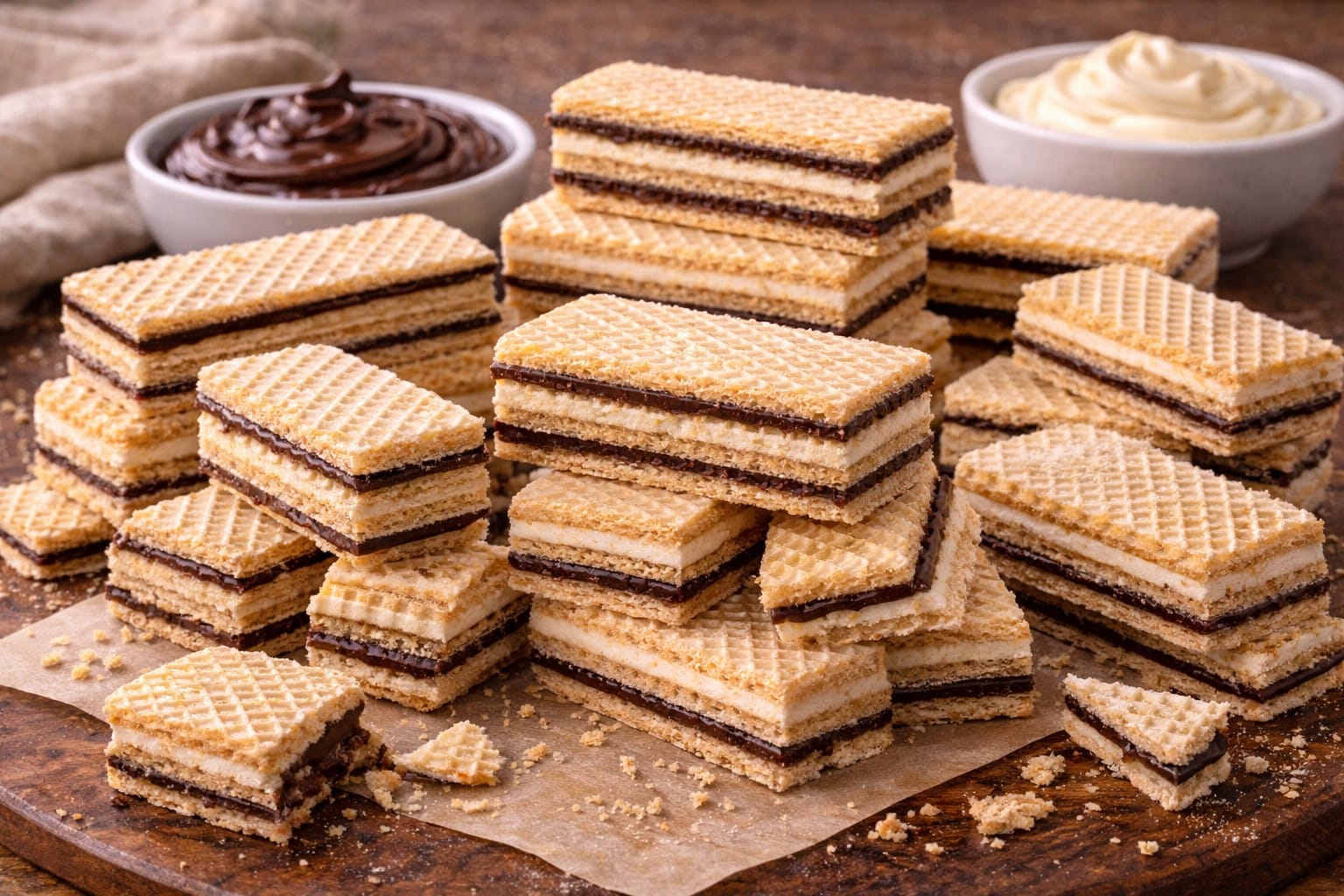
Wafer cookies are light, crisp, and quietly addictive. They don’t shout for attention like frosted cookies or thick brownies, yet once you start eating them, it’s hard to stop. Thin layers, gentle sweetness, and creamy fillings make wafer cookies one of the most versatile treats in the dessert world.
This guide covers wafer cookies from every angle. You’ll learn what wafer cookies are, how they’re different from other cookies, common types, ingredients, how they’re made at home, tips for crisp results, mistakes to avoid, variations, storage advice, and expert insights so you truly understand why wafer cookies work so well.
What Are Wafer Cookies
Wafer cookies are very thin, crisp cookies baked into flat sheets and often layered with cream fillings. They snap easily when broken and feel light on the palate. Unlike soft or chewy cookies, wafers are all about crunch and clean texture.
Some wafer cookies are plain, while others are sandwiched with flavored creams like vanilla, chocolate, hazelnut, strawberry, or coffee. Many people recognize them from ice cream cakes, dessert decorations, or packaged snack cookies.
What Makes Wafer Cookies Different
Wafer cookies stand apart because of their structure. They are baked thinner than almost any other cookie and contain very little moisture.
Key differences include:
- Thin, crisp texture
- Mild sweetness
- Minimal fat compared to butter cookies
- Often layered or filled
- Designed to stay crunchy
Because they’re light, wafer cookies pair well with richer desserts.
Common Ingredients in Wafer Cookies
Wafer cookies rely on simple ingredients, but ratios matter a lot.
Typical ingredients include:
- All-purpose flour
- Sugar
- Eggs or egg whites
- Milk or water
- Oil or small amounts of butter
- Vanilla extract
- Salt
Unlike shortbread or drop cookies, wafer dough is closer to a batter. That thin consistency allows it to spread evenly during baking.
How Wafer Cookies Are Made
Traditional wafer cookies are baked using special wafer irons or plates, similar to waffle irons but much thinner. At home, they can be made using a wafer iron, pizzelle maker, or very thinly spread batter on baking sheets.
The goal is even heat and quick baking to remove moisture without browning too much.
Basic Wafer Cookie Process
The method is simple but precise.
First, a thin batter is mixed until smooth. Next, a small amount is spread into a very thin layer. Then the batter is baked until dry and crisp, not soft. Once cooled, the wafers harden fully.
If making filled wafer cookies, cream is spread between layers and pressed together.
Types of Wafer Cookies
Wafer cookies come in many styles across cultures.
Classic Cream-Filled Wafers
These are the most common. Thin wafers layered with flavored cream and cut into rectangles.
Ice Cream Wafers
Used in ice cream sandwiches and cakes. They’re usually slightly thicker and sturdier.
Chocolate-Coated Wafers
Some wafers are partially or fully dipped in chocolate for extra richness.
Rolled Wafer Cookies
These are baked flat, then rolled while warm into tubes. They’re often filled later with cream.
Pizzelle-Style Wafers
Italian pizzelle are thin, crisp, and patterned, sometimes served plain or rolled.
Popular Wafer Cookie Flavors
Wafer cookies are lightly flavored so fillings can shine.
Popular flavors include:
- Vanilla
- Chocolate
- Hazelnut
- Strawberry
- Lemon
- Coffee
- Coconut
Neutral wafers are often paired with bold fillings for balance.
Making Wafer Cookies at Home
Homemade wafer cookies require patience but not advanced skills.
Important steps include:
- Mixing a smooth, lump-free batter
- Spreading batter evenly and thinly
- Baking until fully dry
- Cooling completely before handling
Even slight thickness changes can affect crispness.
Tips for Crispy Wafer Cookies
Crisp texture is everything with wafers.
Helpful tips:
- Spread batter as thin as possible
- Use parchment or silicone mats
- Bake until edges are dry, not pale and soft
- Cool on a rack to prevent steam buildup
- Store immediately in airtight containers
Humidity is the biggest enemy of wafer cookies.
Common Mistakes to Avoid
Wafer cookies can fail if details are ignored.
Avoid:
- Thick batter that won’t spread
- Underbaking, which causes chewiness
- Stacking wafers while warm
- Exposing wafers to humid air
- Overfilling with cream
Crispness depends on dryness and cooling.
Wafer Cookie Fillings
Fillings turn wafers into a complete dessert.
Common fillings include:
- Vanilla buttercream
- Chocolate cream
- Hazelnut spread
- Peanut butter cream
- Coffee-flavored frosting
- Strawberry or raspberry cream
Fillings should be smooth and not overly wet.
Assembling Cream-Filled Wafer Cookies
Assembly requires a light hand.
Spread a thin, even layer of cream onto one wafer, then top with another wafer. Press gently to avoid cracking. Chill briefly so the filling sets before cutting or serving.
Too much pressure breaks the wafers.
Wafer Cookies in Desserts
Wafer cookies are often used as ingredients rather than standalone snacks.
Common uses:
- Ice cream cakes
- Cheesecake crusts
- Dessert layers
- Toppings for puddings
- Garnishes for plated desserts
Their crunch adds contrast to soft desserts.
Wafer Cookies vs Wafers vs Biscuits
The terms can be confusing.
Wafer cookies are thin baked cookies, often layered or filled. Wafers may refer to communion wafers or ice cream wafers. Biscuits in some countries describe crisp cookies, including wafers.
Context usually clarifies the meaning.
Are Wafer Cookies Sweet
Wafer cookies are mildly sweet. Their flavor is subtle so they don’t overwhelm fillings or other desserts. This makes them easy to eat in larger quantities without feeling heavy.
If you prefer less sugary treats, wafer cookies are a good option.
Gluten-Free Wafer Cookies
Gluten-free wafer cookies are possible but tricky.
They require:
- Fine gluten-free flour blends
- Very smooth batter
- Careful baking
Texture may differ slightly, but crispness is achievable with practice.
Dairy-Free Wafer Cookies
Many wafer cookies are naturally dairy-free because they use oil instead of butter. Fillings may need adjustment using plant-based fats or spreads.
Always check ingredient labels for packaged versions.
Wafer Cookies for Kids
Wafer cookies are kid-friendly because they’re light and easy to bite. They also crumble less messily than frosted cookies when handled carefully.
Plain wafers or vanilla-filled ones are usually favorites.
How to Store Wafer Cookies
Storage is critical.
Room temperature:
- Store in airtight containers
- Add silica packets if available
- Keep away from heat and humidity
Refrigeration:
- Not recommended unless filled with perishable cream
Freezing:
- Unfilled wafers freeze well
- Fill after thawing for best texture
Once wafers absorb moisture, crispness is hard to restore.
How Long Wafer Cookies Last
Properly stored wafer cookies can last:
- 1 to 2 weeks at room temperature
- Up to 2 months frozen without filling
Cream-filled wafers have shorter shelf lives.
Wafer Cookies for Gifting
Wafer cookies work well as gifts when packaged carefully.
Tips:
- Use airtight tins
- Layer with parchment
- Avoid humid environments
- Include simple flavor labels
Their neat shape makes them easy to stack.
Easy Wafer Cookie Variations
Once you understand the basics, variations are endless.
Ideas include:
- Chocolate wafer sheets
- Matcha-flavored batter
- Citrus zest added to batter
- Cinnamon-spiced wafers
- Espresso-flavored fillings
Small flavor changes go a long way.
Frequently Asked Questions
Are wafer cookies baked or fried
They are baked.
Why are my wafers soft
They were underbaked or exposed to humidity.
Do I need a wafer iron
No, but it helps with consistency.
Are wafer cookies healthy
They are lighter than many cookies but still contain sugar.
Can I eat them plain
Yes, plain wafers are common.
Expert Insight
Experienced bakers treat wafer cookies as a precision dessert. Thickness control, moisture management, and timing matter more than decoration. Once crispness is achieved, everything else becomes easier. Keeping wafers dry from start to finish is the real secret.
Final Thoughts
Wafer cookies may look simple, but they play an important role in desserts around the world. Their light crunch, gentle sweetness, and versatility make them ideal both as a snack and as a building block in more complex desserts.
Whether you enjoy them plain, filled with cream, or layered into cakes and ice cream treats, wafer cookies prove that not all great desserts need to be rich or heavy. Sometimes, thin, crisp, and simple is exactly what works best.