
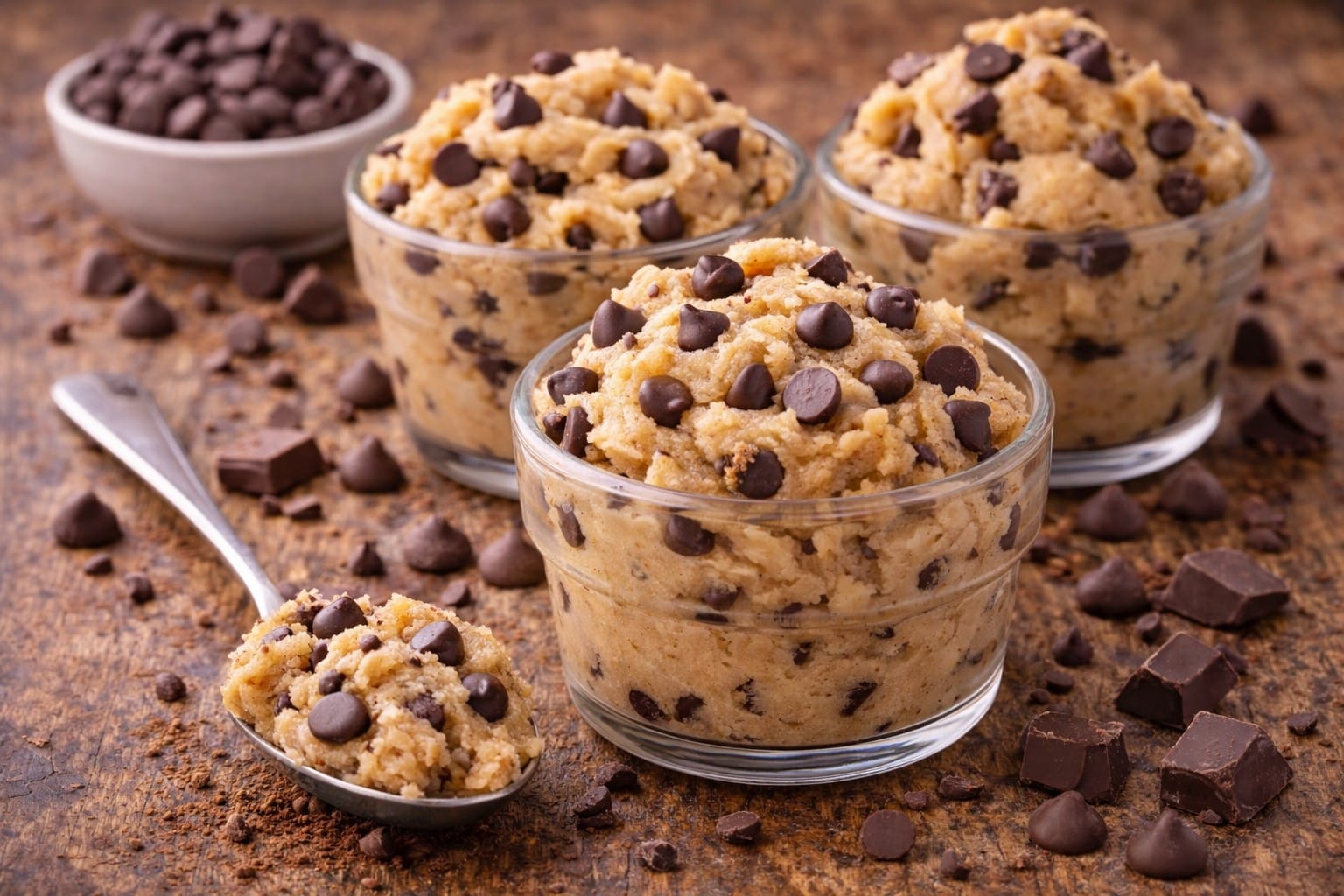
Edible cookie dough is the answer to a question many of us have asked while baking: why wait for cookies to bake when the dough is the best part? Unlike traditional cookie dough, this version is made specifically to be eaten raw, with simple steps that make it safe, smooth, and irresistibly good.
This guide covers everything you need to know about edible cookie dough, including what it is, why it’s different from regular dough, ingredients, step-by-step preparation, tips for perfect texture, common mistakes, flavor variations, substitutions, storage, FAQs, and expert insights for home bakers.
What Is Edible Cookie Dough?
Edible cookie dough is a no-bake dessert designed to be eaten straight from the bowl. It looks and tastes like classic cookie dough but removes or treats ingredients that are unsafe to eat raw.
The biggest difference is that edible cookie dough contains no raw eggs and uses heat-treated flour. These changes make it safe while keeping the familiar flavor and texture people love.
Why Regular Cookie Dough Isn’t Safe to Eat
Traditional cookie dough contains raw eggs and untreated flour. Raw eggs can carry bacteria, and raw flour can also be unsafe because it hasn’t been cooked or processed to kill germs.
Edible cookie dough solves both problems without sacrificing taste. That’s why it has become so popular in recent years, especially for families and beginner bakers.
What Edible Cookie Dough Tastes Like
Good edible cookie dough tastes just like classic chocolate chip cookie dough before baking. It’s sweet, buttery, and slightly grainy in a comforting way, with plenty of chocolate in every bite.
The texture is soft and scoopable, not sticky or dry. When done right, it feels indulgent without being heavy.
Essential Ingredients You’ll Need
Edible cookie dough uses basic pantry ingredients.
All-purpose flour is heat-treated to make it safe. Butter adds richness and structure. Brown sugar gives moisture and that classic cookie flavor. White sugar adds sweetness. Milk helps adjust consistency. Vanilla enhances flavor. Salt balances sweetness. Chocolate chips or mix-ins add texture and interest.
Every ingredient plays a role, so balance matters.
How to Heat-Treat Flour at Home
Heat-treating flour is simple and important.
Spread flour evenly on a baking sheet and bake it briefly until it reaches a safe temperature. Let it cool completely before using. This step removes potential bacteria without changing flavor.
Skipping this step is the most common mistake people make.
Step-by-Step Overview
Start by heat-treating the flour and letting it cool. Cream butter and sugars together until smooth and fluffy. Add vanilla and salt, mixing well. Slowly add the cooled flour, mixing gently. Add milk a little at a time until the dough reaches a soft, scoopable texture. Fold in chocolate chips or desired mix-ins.
Taste and adjust sweetness or milk as needed.
Choosing the Right Butter
Butter affects flavor and texture more than many realize.
Unsalted butter gives better control over salt levels. Softened butter blends smoothly and prevents lumps. Melted butter creates a looser, slightly glossy dough, while softened butter keeps it thicker.
Most people prefer softened butter for classic texture.
Brown Sugar vs White Sugar
Brown sugar adds moisture and a caramel-like depth. White sugar adds sweetness and a cleaner finish. Using both creates balance.
All brown sugar results in softer dough. All white sugar creates a slightly grainier texture. A mix gives the best result.
Chocolate Chips and Mix-Ins
Chocolate chips are classic, but edible cookie dough is flexible.
Mini chips distribute evenly. Chunks create gooey pockets. White chocolate adds sweetness. Sprinkles make it fun. Crushed cookies add texture. Peanut butter chips bring richness.
Choose mix-ins based on how you plan to serve it.
Tips for Perfect Texture
Add milk slowly to avoid runny dough. Let the dough rest briefly after mixing so flour fully hydrates. Use room-temperature ingredients for smooth blending. Adjust sweetness before adding mix-ins.
Texture should be soft but hold its shape when scooped.
Common Mistakes to Avoid
Using raw flour makes it unsafe. Adding too much milk turns it into batter. Overmixing makes dough greasy. Skipping salt flattens flavor. Adding mix-ins too early can make blending uneven.
Small mistakes can change the experience.
Popular Flavor Variations
Edible cookie dough is easy to customize.
Chocolate cookie dough uses cocoa powder. Funfetti dough includes sprinkles. Peanut butter dough swaps some butter for peanut butter. Brownie batter dough adds cocoa and extra milk. Sugar cookie dough skips chocolate and adds almond extract.
Each variation starts with the same base.
Edible Cookie Dough Without Butter
Butter-free versions are possible.
Cream cheese creates a tangy, rich dough. Coconut oil adds subtle flavor. Nut butters provide structure and richness. Dairy-free butter substitutes also work well.
Texture may change slightly, but flavor stays satisfying.
Vegan and Dairy-Free Options
Edible cookie dough adapts easily.
Use plant-based butter. Choose dairy-free chocolate chips. Use plant milk instead of dairy milk. Skip eggs entirely.
These versions still taste indulgent and familiar.
Gluten-Free Edible Cookie Dough
Gluten-free flour blends work well when heat-treated. Almond flour also works and doesn’t need heat treatment, though texture becomes softer and slightly nutty.
Always choose finely ground flour for smooth results.
How to Serve Edible Cookie Dough
Edible cookie dough can be served many ways.
Scoop it into small bowls. Roll into bite-sized balls. Use as a dip with pretzels or graham crackers. Layer it into dessert jars. Add it to ice cream as a mix-in.
Presentation makes it feel like a true dessert.
Edible Cookie Dough for Parties
For gatherings, edible cookie dough is a crowd-pleaser.
Offer multiple flavors. Provide small scoops for portion control. Serve chilled for firmer texture. Pair with fruit, cookies, or wafers.
It’s fun, nostalgic, and easy to share.
Storage Tips
Store edible cookie dough in an airtight container in the refrigerator. It stays fresh for up to five days. For longer storage, freeze it in portions and thaw before serving.
Chilling firms the dough slightly and deepens flavor.
Can You Freeze Edible Cookie Dough?
Yes, it freezes very well.
Freeze in scoops or flattened portions. Thaw in the refrigerator or at room temperature. Texture remains smooth if stored properly.
Freezing is great for make-ahead treats.
Frequently Asked Questions
Edible cookie dough is safe when flour is heat-treated and eggs are excluded. It tastes like classic cookie dough. Texture can be adjusted with milk. It should be stored chilled. It can be frozen for later use.
These answers cover common concerns.
Expert Insight
The secret to great edible cookie dough is restraint. Adding too many mix-ins or liquid quickly ruins balance. When ingredients are added slowly and tasted often, the result is smooth, rich, and satisfying without being overly sweet.
Patience and tasting make all the difference.
Final Thoughts
Edible cookie dough brings pure joy without the wait or worry. It’s simple to make, endlessly customizable, and perfect for beginner bakers and dessert lovers alike.
With the right ingredients and a few careful steps, you can enjoy safe, creamy, homemade cookie dough anytime. Sometimes the best desserts are the ones that never see the oven.