
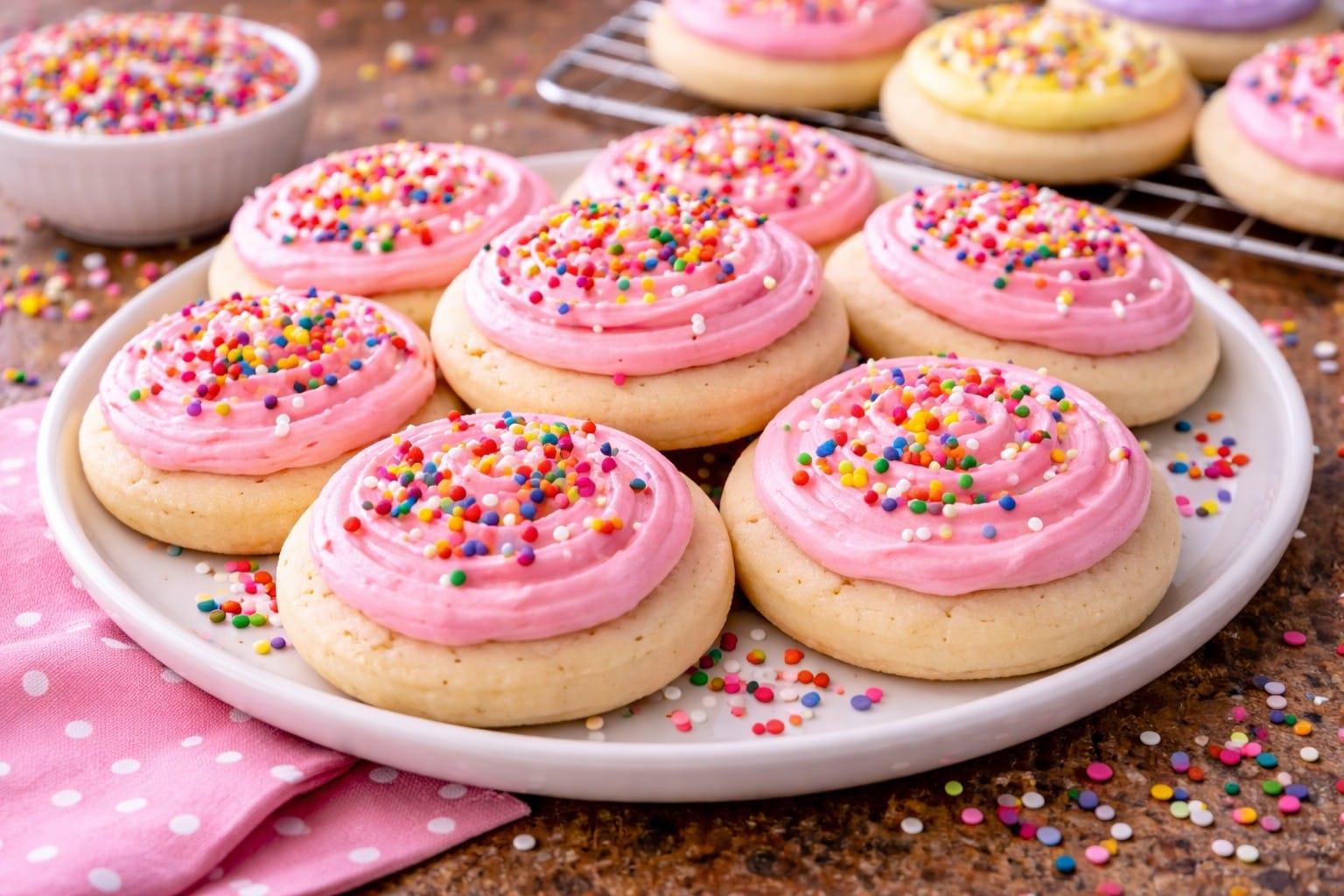
Lofthouse cookies are hard to miss. They’re thick, soft sugar cookies topped with a generous swirl of pastel frosting and finished with colorful sprinkles. You see them at grocery stores, parties, school events, and holidays, and people tend to have strong opinions about them. Some love their cake-like softness, while others find them overly sweet. Either way, Lofthouse cookies have become an unmistakable part of modern dessert culture.
This guide explains what Lofthouse cookies are, what makes them unique, how they taste, why they’re so soft, how to use them in desserts, storage tips, variations, FAQs, and expert insight for home bakers and dessert lovers.
What Are Lofthouse Cookies?
Lofthouse cookies are soft sugar cookies known for their pillowy texture and thick layer of frosting. Unlike traditional rolled sugar cookies, they’re more like miniature sheet cakes shaped into rounds.
They’re typically sold fully baked and decorated, making them a grab-and-go dessert rather than a baking project. Their defining features are softness, sweetness, and bright frosting colors that often change with the season.
Where Lofthouse Cookies Come From
Lofthouse cookies are named after the company that popularized them in grocery stores across the United States. They became especially common in the 1990s and early 2000s, showing up at birthdays, classrooms, and office celebrations.
Seasonal designs helped cement their popularity. Pink frosting for Valentine’s Day, orange for Halloween, red and green for Christmas, and pastel shades for spring made them feel festive without effort.
Over time, the style became so recognizable that many similar versions appeared.
What Do Lofthouse Cookies Taste Like?
Lofthouse cookies taste sweet, mild, and vanilla-forward. The cookie itself is soft and lightly flavored, while the frosting adds most of the sweetness.
The flavor isn’t complex or buttery like bakery sugar cookies. Instead, it’s gentle and approachable, designed to appeal to a wide range of tastes. The frosting is smooth, sugary, and slightly creamy, balancing the plain cookie underneath.
People who enjoy cake-like desserts often love them.
Texture: The Biggest Defining Feature
Texture is what truly sets Lofthouse cookies apart.
They’re extremely soft, almost sponge-like, with very little chew. The cookie crumbles easily and feels light rather than dense. Frosting adds a creamy contrast, but the overall experience is tender and airy.
They’re not meant to be crisp or chewy. Softness is the goal.
Why Are Lofthouse Cookies So Soft?
Several factors contribute to their texture.
They’re made with a higher moisture content than standard sugar cookies. Fat and sugar ratios favor softness. Leavening helps create a cake-like crumb. Commercial versions often use ingredients that help retain moisture and extend shelf life.
All of this works together to prevent drying out.
Ingredients Overview
Lofthouse-style cookies use familiar baking ingredients.
Flour provides structure. Sugar adds sweetness. Fat creates tenderness. Eggs bind everything together. Leavening gives lift. Vanilla adds flavor. Frosting is typically made with sugar, fat, flavoring, and color.
The ingredient list is simple, but the ratios matter more than complexity.
Frosting: More Than Just Decoration
The frosting plays a major role.
It adds sweetness, moisture, and visual appeal. Without frosting, the cookie would taste plain to many people. The thick layer balances the mild base and makes the cookie feel indulgent.
Sprinkles don’t add much flavor, but they add texture and nostalgia.
Lofthouse Cookies vs Traditional Sugar Cookies
These two desserts serve different purposes.
Traditional sugar cookies are buttery, slightly crisp at the edges, and often rolled and cut. Lofthouse cookies are soft, thick, and cake-like. One focuses on flavor depth, while the other focuses on softness and sweetness.
Preference often depends on texture rather than taste alone.
Why People Love Lofthouse Cookies
Fans appreciate their softness and simplicity. They’re easy to eat, easy to serve, and familiar. The frosting feels fun and celebratory, even on ordinary days.
They’re also strongly tied to memories. For many people, Lofthouse cookies remind them of school parties, holidays, and casual gatherings.
That emotional connection matters.
Why Some People Don’t Like Them
Not everyone enjoys the texture or sweetness.
Some find them too soft. Others think the frosting is overly sweet. People who prefer buttery or chewy cookies may feel unsatisfied.
These reactions usually come down to expectations rather than quality.
How to Serve Lofthouse Cookies
They’re designed to be served as-is.
Place them on a platter for parties. Pair them with coffee or milk. Serve them chilled for a firmer texture. Stack them for casual gatherings.
No preparation is required, which adds to their appeal.
Using Lofthouse Cookies in Desserts
These cookies work surprisingly well in other desserts.
They can be crumbled into trifles. Used as a base for dessert jars. Layered with pudding or whipped cream. Turned into cake pops. Chopped and folded into ice cream.
Their softness blends easily into creamy desserts.
Lofthouse Cookie Crusts
A cookie crust made with Lofthouse cookies is sweet and soft.
Crush cookies gently. Mix with melted butter. Press into a pan lightly rather than firmly. Chill to set.
This type of crust works best for no-bake desserts where softness is welcome.
Homemade Lofthouse-Style Cookies
Many home bakers recreate the style at home.
Homemade versions use sour cream or yogurt for moisture. Cake flour helps with tenderness. Soft frosting is spread thickly once cookies cool.
Homemade cookies often taste fresher and less sweet while keeping the signature softness.
Tips for Making Them at Home
Don’t overbake. Underbaking keeps them soft. Let cookies cool completely before frosting. Use gel food coloring for vibrant frosting. Spread frosting generously rather than thinly.
Gentle handling preserves texture.
Flavor Variations
Lofthouse cookies adapt well to flavors.
Lemon adds brightness. Almond extract creates bakery-style flavor. Chocolate cookies with vanilla frosting offer contrast. Seasonal spices work for holidays.
The base cookie stays mild to support variations.
Ingredient Substitutions
Dairy-free butter substitutes can work. Plant-based milk replaces dairy milk easily. Gluten-free flour blends may work but can change texture slightly. Natural food coloring can replace artificial dyes.
Texture may vary, but softness is still achievable.
Storage Tips
Store Lofthouse cookies in an airtight container. Keep them at room temperature or slightly chilled. Avoid heat, which softens frosting too much.
Proper storage helps them stay tender.
Shelf Life
Store-bought versions last longer due to preservatives. Homemade versions are best within three days. Refrigeration can extend life but slightly firms texture.
Freshness affects softness first.
Frequently Asked Questions
Lofthouse cookies are meant to be soft. Frosting provides most of the sweetness. They differ from sugar cookies in texture. Homemade versions taste fresher. They work well in layered desserts.
These answers address common curiosity.
Expert Insight
Lofthouse cookies succeed because they know exactly what they are. They don’t try to be crisp, chewy, or complex. Instead, they focus on softness, color, and nostalgia.
When judged by their own goal, they do that job very well.
Final Thoughts
Lofthouse cookies are unmistakable. Their soft texture, thick frosting, and playful appearance make them a staple at casual celebrations. While they’re not for everyone, they bring comfort and familiarity to many dessert tables.
For home bakers and dessert lovers, understanding what makes Lofthouse cookies unique helps set expectations. Whether you love them or simply appreciate their place in dessert culture, they’ve earned their spot as one of the most recognizable cookies around.